If you’ve ever delved into rhyme, you know rhyming can be a complicated business. Not only is there a boatload of elements to consider such as true rhymes, near rhymes, forced rhymes, end rhymes, and internal rhymes, but there’s also a slew of specific rhyming patterns with names like iamb, trochee, anapest, dactyl, and spondee. (If you know these terms, you definitely deserve some extra rhyming brownie points!)
The good news is–you don’t have to know these terms to write fun, frolicking stories in rhyme.
For me, writing in rhyme is all about the rhythm. As a former dance major, I’m drawn to the rhythm of the words and the beat they create when they’re spoken aloud. When I first began writing in rhyme, I thought it was all about creating patterns based on the number of syllabic beats in a line, as if each syllable received the same weight.
But I was mistaken.
Instead, I discovered that each word has its own rhythm depending on which syllables are stressed. Writing a line creates a certain rhythm that ultimately shapes the rhythm of the stanza.
Picture books contain a variety of rhythms. For example, in the first stanza of She Did It! by Jennifer Ericsson, the rhythm feels like a march that matches the energetic quality of the characters she’s writing about.
Four sisters, different sizes.
Four sisters, early risers.
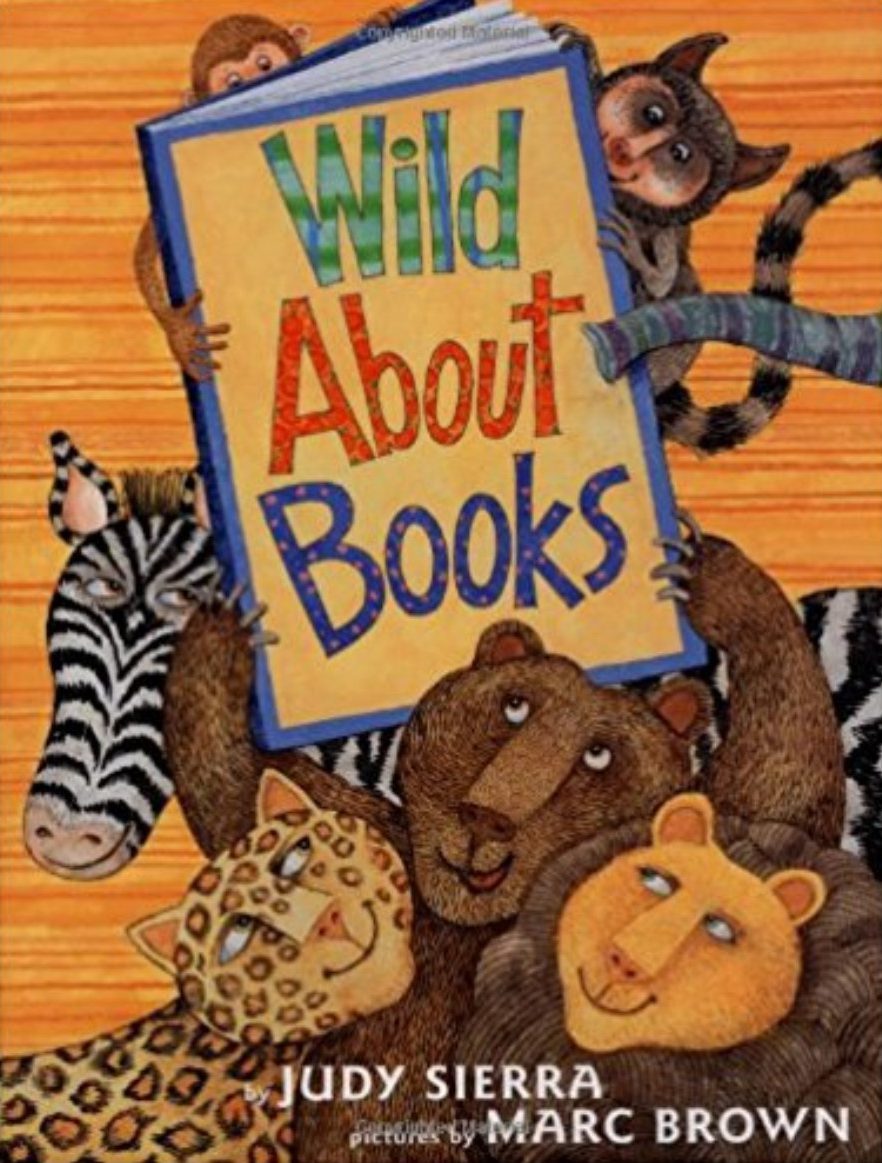
However, in Judy Sierra’s book Wild About Books, the rhythm of the text feels steady and lyrical as if the reader is chugging along with the librarian as she drives the bookmobile to the zoo.
It started the summer of 2002,
When the Springfield librarian, Molly McGrew,
By mistake drove her bookmobile into the zoo.
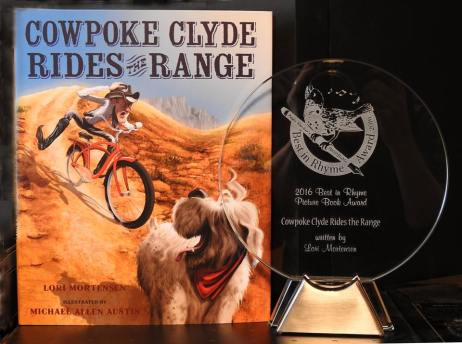
As the examples also demonstrated, the rhythm you choose should enhance the story you want to tell. In my picture book Cowpoke Clyde Rides the Range, I wrote lines with a rhythm that moseys along just like Cowpoke Clyde.
Cowpoke Clyde poked at an ad.
“Looky, Dawg, at this here fad.
It says that when my chores are done,
I’m s’posed to ride a bike fer fun.”
Once I established the rhythmic pattern, the bigger challenge became finding fresh rhymes that supported the story. One of my favorite rhyming tools is an online rhyming dictionary. Whenever I need to find a rhyme, I plug in a word and bingo! All the rhyming options appear on the screen. As I study the options, unexpected combinations of rhymes can enrich the story in new and surprising ways as it did in this stanza:
The more Clyde thunk, the more he smiled
at ridin’ something not so wild.
It wouldn’t eat. It wouldn’t stray.
It wouldn’t buck or bite or neigh!
Smiled and wild? Stray and neigh? I hadn’t planned on writing that, but when I made those rhyming connections, the stanza fell neatly into place.
Sometimes rhymes don’t work because good rhyming options simply don’t exist. When that happens, I have to take a step back and find a word with better rhyming choices. It can be a time consuming process, but with patience and a bit of serendipitous luck, I eventually fit the words together like pieces of a puzzle.
The ultimate test for a rhyming manuscript is to read it aloud. Once you know the rhythm, you’ll hear if a line is missing a beat, if there are too many beats, or places where a reader stumbles. When you’ve written the text successfully, anyone should be able to read it without a blip or a hiccup.
Rhyming can be a complicated business. But it’s a lot easier if you approach it with rhythm and rhyme in mind.
When award-winning author, Lori Mortensen, is not letting her cat in, or out, or in–she’s tapping away at her computer, conjuring, coaxing, and prodding her latest stories to life. All that tapping has resulted in the publication of more than 70 books and over 350 stories and articles. Recent releases include Chicken Lily (Henry Holt 2016), Mousequerade Ball (Bloomsbury, 2016) illustrated by New York Times bestselling illustrator Betsy Lewin, and Cowpoke Clyde Rides the Range (Clarion, 2016) a sequel to Cowpoke Clyde & Dirty Dawg, one of Amazon’s best picture books of 2013. Visit her website at http://www.lorimortensen.com for more information about teacher guides, book trailers, reviews, and more.
Chicken Lily, Henry Holt
“Nice addition to story times . . . and good for anyone who’s a little chicken.”–Kirkus Reviews
Cowpoke Clyde Rides the Range, Clarion
“Another doggone funny cowboy caper, chock full of chuckles.”–Starred Kirkus Reviews
Mousequerade Ball, Bloomsbury
“A surefire storytime selection.”—School Library Journal
Cowpoke Clyde and Dirty Dawg, Clarion
“Plumb funny fer sure.”—Starred Kirkus Review
Cindy Moo, HarperCollins
“Mo(ooo)ve aside your other cow tales, because this lovable bovine really does take off.”—Booklist
Coming Soon
If Wendell Had a Walrus, illustrated by Matt Phelan, Henry Holt, Winter, 2018
Away With Words – The Daring Story of Isabella Bird, Peachtree, 2018
195 thoughts on “Rhyme Revolution 2017 Day 1 ~ Lori Mortensen ~ Rhythm and Rhyme”
READ IT ALOUD WITHOUT A BLIP OR A HICCUP. That is great advice, Lori…easier said than done…but oh so important. When I first started writing in rhyme, I didn’t realize you weren’t supposed to bend the words to fit the meter. I’m still learning which is why I LOVE people like you who really know how to do it! Thanks so much for a great post!
Rhyme Revolution is off to a super start, Angie!
Rhyming is an art only a few can master . I’ve always thought those with musical talent (or dance) make the best rhyme writers. Thank you for your post.
With all the reflections about writing (and dancing!) with rhythm, I could feel the motivational beat of this post! Thanks for sharing your exciting journey, Lori.
Thanks for sharing, Lori. Like you, the more I write in rhyme, the more I’m aware of forced-rhymes. Thank goodness for online rhyming dictionaries. I just love Cowpoke Clyde imagining that his bike, complete with teeth, won’t bite.
Thanks, Lynette. Yes, thank goodness for online rhyming dictionaries. Back in the day, I used a hardcopy which was much more tedious. By the time I discovered an online version, my rhyming dictionary was the most dog-eared and well-worn book in the house.
Some of my manuscripts automatically come out rhyming and I know I have so much to learn. I just love Cowpoke Clyde too! Thank you for the post and the advice.
Rhyming is definitely “complicated business”, but it’s fun to play with rhythm and rhyme. I’m looking forward to reading COWPOKE CLYDE RIDES THE RANGE. Thanks for a great post.
What a great start to the month. You advice about stepping back and making sure that the rhyme is not forced. Reading aloud is essential. Thank you for such great inspiration! Looking forward to your new books coming out.
Thanks Deborah. You’re welcome. Getting it right can take a lot of time, but when it all comes together, it’s magical. (I’m looking forward to my new books too! Two years is a long wait!)
A wonderful way to begin the day, the week, and the month! Thanks for your informative post, Lori! The ability and talent to write such lyrical stories is a gift indeed
Lori,
Thanks for these great tips. I’ve also found that I need someone else to read my rhyming MS as I can make them work when I read it out loud because I know how I want it to sound. Another way my critique group helps me.i’m going to check out Rhyme zone. I also purchased a paper edition of a Rhyming Dictionary from Amazon that I take everywhere.
Thanks, setwiggs. Yes, reading one’s own rhyme can be deceptive because we know the way we want it to sound versus the way someone else who is unfamiliar with the text, is going to read it. My hardcopy of my rhyming dictionary is the most well-worn book in the house. (Thank goodness for the online version!)
Thanks for the great post Lori! I love the online rhyming dictionary too although I have a special fondness for an old rhyming dictionary I picked up at a used book sale some years ago. As a songwriter, I appreciate well-crafted rhythmical phrases and yours are such a delight!
What a great way to start the revolution month, with Lori! Her writing is a wonderful example of what can be done with great rhyme! It’s good to know that she uses a few tools along the way!
Great post, Lori! Thanks for sharing your techniques. I almost always find myself tapping my desk, lap or toes as I compose a rhyming text – that beat cannot be denied!
Hi, Lori! I love a good rhyming book. I always approach rhyme with caution, I know it’s a complicated business and I don’t think I’ll ever have the guts to write a rhyming book. As a PB writer I think it’s important to understand it, and sprinkle it here and there in my stories. Thanks!
I love the idea of using an online rhyming dictionary, Lori! So much easier to plug in the word while you’re working on other things and then see where it takes you. Great advice! Patti Richards
Reblogged this on Sensibility and Sense and commented:
I’m participating in Angie Karcher’s Rhyming Revolution this month, so I thought I’d share the posts I find most inspiring. This one, by Lori Mortensen is chock full of great rhyming advice. Enjoy!
I really like your explanation about rhythm and rhyme.Rhyming is so much harder than it seems, but so fun too – especially when you get it right! Looks like you sure got it right. Can’t wait to read your books. 🙂
Great post . . .very encouraging. I like that you focus on the rhyme. That makes so much sense. Thanks for the examples to illustrate your points. . . so helpful.
Thank you for sharing your process! Online rhyming dictionaries are invaluable! Do you have a favorite one?
Can’t wait to check out the books you mentioned.
You’re welcome, Shereen. Yes, rhyming dictionaries are invaluable. My favorite is the Rhyme Zone. I also use it to find synonyms and antonyms. So helpful in many ways.
Lori, Thanks for sharing! I’ve struggled to write in rhyme. But I do focus on the musicality of every sentence in my manuscripts. And rhyming picture books are great mentor texts.
Reblogged this on Terry Pierce and commented:
Terrific post about writing in rhyme by Lori Mortensen over at Angie Karcher’s Rhyme Revolution. Lori points out some important points in getting started on writing a story with rhyme and rhythm.
Lori, Love the dancing and putting pieces of the puzzle together ❤ Another important point is the reading out loud with no hiccups or blips. Enjoyed your post.
Thanks Lori for the great start. I love to tap out the rhythm of each line as I go. It helps keep me focused! For me it’s the musical qualities that take over- I get a little list in the terminology.
Inspiring post, Lori. I have many of your books and aspire to write in rhythm and rhyme one day. I’ve learned so much attending Angie’s Rhyme Revolution and her class. I’m looking forward to your new releases. Loved your examples and tips!
Howdy, Lori, and thanks so much for your advice. My procedure is much the same when writing in rhyme–it does take an awful lot of stick-to-it-ness. Love your voice in those Cowpoke books 🙂





 Angie Karcher
READ IT ALOUD WITHOUT A BLIP OR A HICCUP. That is great advice, Lori…easier said than done…but oh so important. When I first started writing in rhyme, I didn’t realize you weren’t supposed to bend the words to fit the meter. I’m still learning which is why I LOVE people like you who really know how to do it! Thanks so much for a great post!
Rhyme Revolution is off to a super start, Angie!
Thanks, Vivian! Yes, it is easier said than done! But so fun to figure it out!
Rhyming is an art only a few can master . I’ve always thought those with musical talent (or dance) make the best rhyme writers. Thank you for your post.
Thanks, Elsa!
With all the reflections about writing (and dancing!) with rhythm, I could feel the motivational beat of this post! Thanks for sharing your exciting journey, Lori.
Thanks Meli, We got the beat, we got the beat, we got the beat . . .Yeah! (A little homage to the Go-Go’s 🙂 )
What a great post. I enjoyed reading the examples and seeing how they related to the different themes of the book.
Thanks, Nicola! It’s fun to see how the rhythm supports the content, isn’t it?
Thanks for sharing, Lori. Like you, the more I write in rhyme, the more I’m aware of forced-rhymes. Thank goodness for online rhyming dictionaries. I just love Cowpoke Clyde imagining that his bike, complete with teeth, won’t bite.
Thanks, Lynette. Yes, thank goodness for online rhyming dictionaries. Back in the day, I used a hardcopy which was much more tedious. By the time I discovered an online version, my rhyming dictionary was the most dog-eared and well-worn book in the house.
Great post, Lori. Thinking of rhyming as a dance or motion is interesting to me. I’ll have to give that a try. Thanks.
Thanks, Maria.Have fun rhyming . . . and dancing!
Matching the rhythm of the rhyme to match the feel of the story and its characters is a wonderful point. Thank you, Lori, for that information.
Thanks Stella. You’re welcome. 🙂
I’ve never been able to learn all the names for the different meters. Like you, I feel it’s all about finding the rhythm. Thanks for a great post!
Thanks Rebecca! (I still don’t know all the names, but finding that rhythm will take rhymers far.)
Some of my manuscripts automatically come out rhyming and I know I have so much to learn. I just love Cowpoke Clyde too! Thank you for the post and the advice.
Thanks Nadine. You’re welcome. (I’m plumb tickled you love Cowpoke Clyde too!)
Rhyming is definitely “complicated business”, but it’s fun to play with rhythm and rhyme. I’m looking forward to reading COWPOKE CLYDE RIDES THE RANGE. Thanks for a great post.
Thanks gweddle. You’re welcome. Yes, it is fun to play around with rhythm and rhyme. (Dancing is fun too!)
Yes! Rhythm and rhyme go hand in hand. Thanks for getting the word out.
Thanks Cindy. You’re welcome.
Thanks, Lori!
Thanks for your comment, Michael. You’re welcome.
What a great start to the month. You advice about stepping back and making sure that the rhyme is not forced. Reading aloud is essential. Thank you for such great inspiration! Looking forward to your new books coming out.
Thanks Deborah. You’re welcome. Getting it right can take a lot of time, but when it all comes together, it’s magical. (I’m looking forward to my new books too! Two years is a long wait!)
Great post with great tips. Your emphasis on rhythm is definitely eye opening! Thanks, Lori!
Thanks, Jessica. You’re welcome.
Thank Lori. Great tipos to focus on rhythm and rhyme.
Maritza M. Mejia
Great post to start us off! Loved your examples, Lori.
Thanks pathaap. You’re welcome. 🙂
thanks for the examples. Writing in rhyme takes a lot of practice and RhymeZone helps, too.
Thanks Janet. You’re welcome. Rhyming does take practice and the Rhyme Zone makes it so much easier. .
Thank you Lori for your emphasis on the rhythm and rhyme using an online rhyming dictionary. Good tips!
Thanks, Maritza. You’re welcome. (The rhyming dictionary is soooo helpful!)
A wonderful way to begin the day, the week, and the month! Thanks for your informative post, Lori! The ability and talent to write such lyrical stories is a gift indeed
Thanks, Anne. I’m glad my post was helpful and informative.
Lori,
Thanks for these great tips. I’ve also found that I need someone else to read my rhyming MS as I can make them work when I read it out loud because I know how I want it to sound. Another way my critique group helps me.i’m going to check out Rhyme zone. I also purchased a paper edition of a Rhyming Dictionary from Amazon that I take everywhere.
Thanks, setwiggs. Yes, reading one’s own rhyme can be deceptive because we know the way we want it to sound versus the way someone else who is unfamiliar with the text, is going to read it. My hardcopy of my rhyming dictionary is the most well-worn book in the house. (Thank goodness for the online version!)
Yeah! Lori rocks!
Thanks supermario6! (That’s what I keep saying, but my family won’t listen–ha, ha!)
Thanks for the great post Lori! I love the online rhyming dictionary too although I have a special fondness for an old rhyming dictionary I picked up at a used book sale some years ago. As a songwriter, I appreciate well-crafted rhythmical phrases and yours are such a delight!
What a great way to start the revolution month, with Lori! Her writing is a wonderful example of what can be done with great rhyme! It’s good to know that she uses a few tools along the way!
Thanks for your comments, Sherry! (It would take ten times longer without the online rhyming dictionary.)
Thanks for a great post, Lori. I reserved the books you mentioned so I can read the entire story! Thanks for some practical insights into rhyming!
Thanks, kirsticall. You’re welcome. Enjoy the books–they’re wonderful!
Great post, Lori! Thanks for sharing your techniques. I almost always find myself tapping my desk, lap or toes as I compose a rhyming text – that beat cannot be denied!
Thanks katey. You’re welcome. No, the beat cannot be denied! 🙂
Hi, Lori! I love a good rhyming book. I always approach rhyme with caution, I know it’s a complicated business and I don’t think I’ll ever have the guts to write a rhyming book. As a PB writer I think it’s important to understand it, and sprinkle it here and there in my stories. Thanks!
Lovin’ ole Clyde. As a lifelong rhymer, I so appreciate this post from a master poet!
Thanks, Sherri! You’re too kind! (I love ol’ Clyde too!)
Great post! I realize I still have a lot to learn about rhyming.
Thanks for your comment, Arin! (I’m still learning!)
I like that perspective of dancing being like rhythm. And now I’ve got three new books to read! Yeah! Thanks for the wonderful post, Lori!
Thanks Ann. You’re welcome.
Thank you, Lori. Great examples showing how the rhythm can match the mood of the book.
Thanks David. You’re welcome. 🙂
I love the idea of using an online rhyming dictionary, Lori! So much easier to plug in the word while you’re working on other things and then see where it takes you. Great advice! Patti Richards
Thanks Patti. Yes, the online rhyming dictionary is a life-saver.
Reblogged this on Sensibility and Sense and commented:
I’m participating in Angie Karcher’s Rhyming Revolution this month, so I thought I’d share the posts I find most inspiring. This one, by Lori Mortensen is chock full of great rhyming advice. Enjoy!
Ooh, thanks Patti! I appreciate shares.
I really like your explanation about rhythm and rhyme.Rhyming is so much harder than it seems, but so fun too – especially when you get it right! Looks like you sure got it right. Can’t wait to read your books. 🙂
Thanks Danielle. I’m glad my post was helpful. Trying to get it right and challenging and exciting.
Great post . . .very encouraging. I like that you focus on the rhyme. That makes so much sense. Thanks for the examples to illustrate your points. . . so helpful.
Thanks svaisnoras. I’m glad it was helpful and encouraging.
What a clear and motivating article! I especially like how Lori shows the connection between the rhythm and the story line.
Thanks, Margaret. I’m glad it was helpful.
Thank you for sharing your process! Online rhyming dictionaries are invaluable! Do you have a favorite one?
Can’t wait to check out the books you mentioned.
You’re welcome, Shereen. Yes, rhyming dictionaries are invaluable. My favorite is the Rhyme Zone. I also use it to find synonyms and antonyms. So helpful in many ways.
Lori, Thanks for sharing! I’ve struggled to write in rhyme. But I do focus on the musicality of every sentence in my manuscripts. And rhyming picture books are great mentor texts.
Thanks Maju. Happy to share.There is a wealth of information in the variety of picture books out there.
Reblogged this on Terry Pierce and commented:
Terrific post about writing in rhyme by Lori Mortensen over at Angie Karcher’s Rhyme Revolution. Lori points out some important points in getting started on writing a story with rhyme and rhythm.
Cool, Terry! I always appreciate shares and reposts. 🙂
Wonderful post, Lori. You make rhyming sound so easy, but I know it’s not. You gave us some great tips in your post. Thank you.
Thanks, Cathy. I’m glad the post was helpful. (You’re right, talking about rhyme is much easier than actually writing in rhyme!)
Excellent reminder, Lori, that as importantly as the rhyme is how the words flow into the rhythm of the story itself!
Thanks Val. I’m glad it was helpful.
Lori, Love the dancing and putting pieces of the puzzle together ❤ Another important point is the reading out loud with no hiccups or blips. Enjoyed your post.
Thanks Janie. I’m glad you enjoyed it.
Glad to see one of favorite crit sisters lending her wisdom to start off the Rhyme Revolution!
Thanks, Lynne!
What a wonderful post Lori. Thanks for the insights.
Thanks for your comment, Bev! You’re welcome. 🙂
Thank you, Lori. Finding the right rhythm for a story or poem makes the writing so much easier.
Thanks Sydney! You’re welcome and I agree!
Even though agents say not to, I know that I’ve just got to!
Writing in rhyme is not a crime!!!
Thank you so much, Lori.
You’re welcome, Lisa. Thanks for the time to post ’bout my rhyme! 🙂
Thanks Lori for the great start. I love to tap out the rhythm of each line as I go. It helps keep me focused! For me it’s the musical qualities that take over- I get a little list in the terminology.
Thanks, Mary. You’re welcome. I agree, it’s more fun to play with the rhythm than get lost in the technicalities of terminology.
Inspiring post, Lori. I have many of your books and aspire to write in rhythm and rhyme one day. I’ve learned so much attending Angie’s Rhyme Revolution and her class. I’m looking forward to your new releases. Loved your examples and tips!
Char, thanks for your comments and your interest in my books. Glad the post was helpful.
Howdy, Lori, and thanks so much for your advice. My procedure is much the same when writing in rhyme–it does take an awful lot of stick-to-it-ness. Love your voice in those Cowpoke books 🙂
Thanks ammwrites3. I’m plumb tickled it was helpful and you enjoy my Cowpoke Clyde books..
Thank you for sharing rhyming insight and examples. I look forward to reading your books!
Thanks Wendy! You’re welcome. (Enjoy the books!) 🙂
Great post, Lori! Now I’m adding all those books to my library reserve. 🙂
Thanks, Peggy! (There are so many great rhyming books out there for our bookshelves!)