

A Fairy Friend
by Sue Fliess
Illustrated by Claire Keane
2016 Best in Rhyme Award Top 20
Congratulations Sue!
See the Top 20 Best in Rhyme Books for 2016

It’s NOT About the Rhyme!
By Sue Fliess
It’s not about the rhyme. It never is. Well, at least, it never should be. But what it always is about is the story. Or at a very basic level, it’s about the idea you’re trying to convey with words. Writers should think of rhyme as a mechanism or tool—just as illustrations, free verse, graphics, photography, or prose are all ways of telling a story.
My readers ask me all the time, why do you like writing in rhyme? or why do you write in rhyme? And what I tell them is that I always first have an idea or concept for a story. I jot down those ideas, characters, or fragments. When I think there is enough to move forward with, only then do I decide on the best way to put that idea on the page. For me, many times it seems that rhyme fits, but other times, rhyme is not the answer. I’ve written many stories in prose that haven’t sold. Twenty out of my twenty-two picture books are written in rhyme. Which may only mean that I’m simply better at writing in rhyme than prose!
One reason this is true is that rhyme forces me to boil the story to its essence more effectively and keeps me from getting too wordy. I like the challenge. It’s like a puzzle and I find it both fun and satisfying. Some find it constraining, and I can certainly vouch for that during revisions! When a critique group member or an editor requests a plot change—I am suddenly a prisoner to my rhyme scheme. Eventually l figure it out, but only because at this point I’m very comfortable writing in rhyme and have grown accustomed to the challenges it poses during revisions.
Another reason I like writing in rhyme is that I’m a very musical person (you may have seen my song parodies about writing), and I think that’s why my brain gravitates towards rhyme. A rhyming picture book is like a song. And just like song lyrics must tell a story in 3 minutes or less, picture book writers must be able to tell their story in as few words as necessary. Rhyme helps me do that.
So, when you are ruminating about a story, figure out all the parts of that story first. If you think it has staying power and you love the idea, pursue it. But I recommend writing it in prose first. Then once you have your story down, ask yourself if rhyme—or another writing mechanism—will serve the story better. If not, stay the course. If you think rhyme will make it more playful or fun or engaging, without giving you a migraine, by all means, give it a shot. You may have to play around a bit with the tools in your toolbox—and I encourage that. You will discover which way is the best way for you. But no matter how you choose to tell it, always keep your eye on the story.
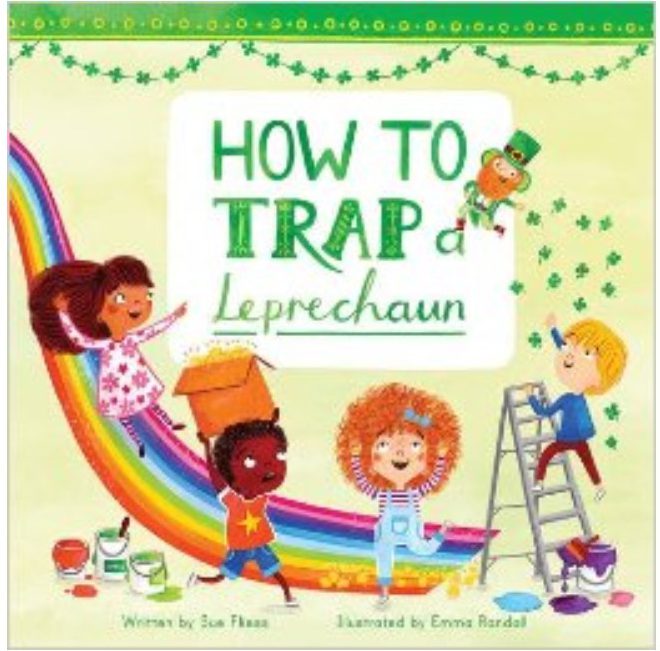
HOW TO TRAP A LEPRECHAUN, Sky Pony Press Watch the trailer.

FROM HERE TO THERE, Albert Whitman & Co. Watch the trailer.
Here is a teacher’s guide that may be of interest:
http://www.suefliess.com/a-fairy-friend


Sue Fliess (“fleece”) is the author of over 20 children’s books including From Here to There, A Fairy Friend, Tons of Trucks, Shoes for Me!, Calling All Cars, and many Little Golden Books. Fliess has also written for The Walt Disney Company. Her background is in copywriting, PR, and marketing, and her articles have appeared in O the Oprah Magazine, Huffington Post, Writer’s Digest, Education.com, and more. Her picture books have received honors from the Society of Children’s Books Writers and Illustrators, have been used in school curriculums, museum educational programs, and have even been translated into French. She’s a member of SCBWI, Children’s Book Guild of DC, and does book signings, school visits, and speaking engagements. Sue lives with her family and their dog Charlie in No. Virginia. Visit her at www.suefliess.com.
Instagram: suefliess

 Angie Karcher
Very good pieces of advice. Thank you for sharing with us!
Great idea to write the story in prose first! I tend to lean toward rhyme too quickly before I’ve fleshed out the complete story arc which just doesn’t work. Thanks for the tips!
I love your advice! Brevity is definitely required in storytelling. Thank you. Headed to check my writing tools to see which I need to use!
Sue, great advice. Above all else it is the story that’s most important. Keeping our manuscripts brief but making sure all the components of the story are present should be our focus. Thanks for your post.
Thank you for sharing your process.
Really enjoy your books. Thank you for sharing your process and reasons for using rhyme.
The point made is so true, so true. The story remains paramount, whether written in prose or rhyme. And when rhyme and rhythm fit the story’s flow and the patterns of words unfold magically, what a delight! Thanks for the helpful insights!
I agree–always keep your eye on the story. Great advice! Thanks, Sue!
Sue, you sound like a master rhymer, for sure. I love that you mentioned being musical helps your writing. I, too, love music, so maybe that’s a tool that will be of use. Thank you. Your books are intriguing.
Love the idea that rhyming should be viewed as a tool to help you tell the story. Great advice, Sue!
Hi Sue – I love your reminder to keep an eye on the story. Thanks for a terrific post. I look forward to reading your books!
Thanks for your insightful post. I will request your books at the library today!
It’s helpful to think of rhyme as a writing tool, rather than as an end goal. I enjoyed this inside look at your writing process.
Using rhyme to produce a succinct story – that’s an area I’m working on. ‘Calling All Cars’ is a story I’d like to read and I can’t wait for a library patron to return it so I can borrow it. Thanks for the post, Sue.
Using rhyme as a tool makes perfect sense. Thank you for the great advice in this post. A library visit is on today’s schedule!
Sue, It’s interesting that rhymes seems to be your strength and that you’re musical. You are so right that the story has to come first!
Thanks for sharing! I like the cover art of your PBs.
I agree. Rhyming is like singing. I too write more rhyming picture books than prose for the very same reasons. Thanks for sharing, Sue. 😉
It’s interesting to read the process a writer uses to arrive at his/her finished story, and Sue, your post this morning is another learning opportunity for us all. Thanks for sharing your process with us. I agree that music can definitely influence those words!
I like how you describe your process, Sue, of scribbling down bits and when there’s enough there, crafting the story. Then, when it fits, using rhyme as a tool as you craft the story. Great advice! Thank you!
Thank you for sharing your process! I also have a tendency to write in rhyme before getting my story down in prose. Thanks for the reminder!
Thank you for this great post! and the Leprechuan book sounds like a fun read!
It’s always about the story! I love the cover for A Fairy Friend, now I must see what enchanting words come with it. 🙂 Thanks for this great post.
I love the idea of writing in prose first to see if the story is viable. I can’t wait to read your books!
Writing in prose first is an excellent tip for keeping things on track. I’m a musical person, too, but haven’t dipped into rhyme yet too much in the PB world. Your words inspire me to play with rhyme more!
Hi Sue! Thank you for sharing your writing process with us today. Im,very happy to have been a Week 1 Winner because I won a copy of A FAIRY FRIEND. I’m trying to read 375+ picture books this year and cannot wait to add it to my list.
Thank you for sharing your writing tips and for the reminder: story first! It’s easy to get lost in the rhyme and lose sight of the story. Congrats on all your success and wishing you a ton more!
Another fabulous post! Thanks so much forereminding us that story comes first, Sue! It’s so tempting to beat out the rhythm and rhyme and then come round to the story after we’re too in love in love with our words to change them! Guilty as charged:) Patti Richards
Reblogged this on Sensibility and Sense and commented:
Totally reblogging this for my own sake. We all need this reminder that story comes first, always! Thanks Sue and Angie!
These books are adorable! I’m glad you linked to the book trailers as well!
Great post, and great advice on writing your story in prose first.
Thanks for sharing with us!
Sue,
I’m going back to review my rhyming MS in prose and then see if Rhyme is the best way to go. Thanks for sharing your process. It helps!
Thank you for sharing with us this great tips.
Thank you for reminding us it is about the story not the rhyme. I love the idea of writing in prose first to flesh out the story and then see if it works in rhyme. I have done the rhyme first and had to go back and break it down to see what wasn’t working.
Keeping your eye on the story is great advice. Thank you, Sue, for sharing this advice and inspiration.
Good advice, Sue. Thanks for sharing.
It’s all about the story. It’s all about the story. It’s all about the story.
I had the pleasure of reviewing Sue Fliess’ wonderful Fairy Friend book! http://literallylynnemarie.blogspot.com/2016/09/pppf-fairy-friend-written-by-sue-fliess.html
I agree, story is most important. Thank you for sharing your trailers!
“Writers should think of rhyme as a mechanism or tool—just as illustrations, free verse, graphics, photography, or prose are all ways of telling a story.” Absolutely–but I’d like to add that I think the age of the reader/listener is also a factor. Teachers and caregivers like the idea of using the predictability rhyme to develop language and pre-reading skills.
I agree. Rhyme is a great mechanism for writing children’s books but, of course, story comes first. Many find it easier to write in prose but, like you, there are some that are more comfortable telling tales in rhyme and do it quite well.
Thanks for sharing your process with us.
Thanks Sue. I also love rhyme for being like a puzzle, but the plot should not be puzzling!
Great advice, Sue! Story first…then comes the fun part! Thanks for sharing!
Story, story, story. Got it! 🙂
Thank you Sue for reminding me to keep my eye on the story!
Thanks for the reminder to have the story first!
Thanks, Sue. It’s always about the story, but sometimes when a catchy rhyme pops in “your” head, it’s hard to beat it out! Well maybe not as hard to beat it out as to remember that you need a story!
Some good advice in your post — figuring out all the parts of a story before trying to get it on paper sounds logical, but I get an idea and try to run with it before I have it worked out. I’m going to try your more, methodical approach. I think it will work better for me. Thanks for sharing what works best for you.
This post is so relatable, in terms of method (conceptualizing the story first, figuring out the course of the arc, and then rhyming). So many times, we ‘re cautioned against writing in rhyme, because “it’s hard to do it well,” or “the rhyme takes over and the story suffers.” But by using this method, we can find ways to make our rhymes serve the stories we want to tell. Thank you so much for these encouraging insights!