I registered the 200th person for RhyPiBoMo today!
Whoo Hoo and Confetti throwing!
**””*'”;;;;”;;;'””;;;::;;;’”'”:::;;;”‘”:::’”’**”**
Thank you to everyone who is participating!
Thanks for helping to make this an April to remember! = )
*
*
Today Someone asked a great question in our Facebook Group…
“If I’m getting started late, where do I find all the previous lessons?”
First, it will be helpful to have this daily guest blogger
calendar and lesson schedule…

This will help you know what you’ve missed and what’s to come!
Each daily lesson is under the guest blogger post for that day.
If you scroll to the bottom of any post, you will find the archives link. You can also find a specific blog post by typing the date of the blog – comma- guest blogger’s name in the search field, in the upper right corner.
This should bring up any blog post you might be looking for.
~~~~~~~~~~~~~~~~~~~~~~~~~~~~~~~~~~~~~~~~~~~~~~~~~~~~~~~~~~~~~~~~~~~~~~~~
Another good question was concerning the Golden Quill Poetry Contest…
Only RhyPiBoMo participants are able to enter this contest.
I mentioned several dates in yesterdays blog post which may have been confusing…
First, you MUST be registered, which means you must register for RhyPiBoMo by April 16th to qualify as a registered participant.
*
The deadline for poetry contest entries is April 26th at Midnight Central Time. You enter the contest by clicking the tab above and following all the directions. Please add your poem in the body of the email as this saves me so much time when gathering the poems for judging.
*
*

I was fortunate to attend a conference session taught by today’s guest blogger, last spring at the Wild, Wild Mid-West Conference. This was a combination of Indiana, Ohio, Michigan and Illinois SCBWI groups coming together…It was a Wild, Wonderful Weekend! Ironically, Liz was teaching a session called “The Watering Trough: Writing Rhyme Editors Thirst For…I listened intently as she spoke about many of the things we are talking about here!
*
*
So, without further ado, I’m honored to present today’s
Golden Quill Guest Blogger
Liz Garton Scanlon

*
*
*
Writing picture books is like being a grown up. At first, when we get started, we think we know everything. And then, as we carry on for a bit, we realize we know pretty much nothing at all. Which I guess means that I have very little to offer you, now that I have a few books under my belt and have been grown up for quite some time. But, here’s what I do have: Lessons learned, from back when I knew everything.
*
*
Lesson #1. Leave The Jazz to the Horn Players:
So I’d written and sold my first picture book – A Sock is a Pocket for Your Toes – and I was feeling good! I tore open the envelope from my editor because, really, what could it possibly contain besides praise, congratulations and some chocolate? Well. Quite a lot, it turns out. Corrections and opinions and strongly worded suggestions, for example. And no chocolate.
*

*
First and foremost, I was asked to even out the meter and syllabics of the piece. I was appalled. “The variety,” I told her when we spoke, “is supposed to read like jazz.” (You guys. I seriously said that. Ego much?)
“No, no, no,” said my editor. “No jazz.”
*

*
And here’s why. When we are teaching children about music – how to listen to it and appreciate it and eventually play it, we don’t start with jazz. We start with rhythm sticks. And repetition. Clapping. And choruses. That’s how we open up those neural pathways and turn on those synapses and create a brain capable of loving jazz. Wow, right? Since then I’ve left the jazz to the horn players, because opening up neural pathways and turning on synapses is plenty big work enough for me.
*
*
Lesson #2. Practice Detachment:
Y’know that “Kill Your Darlings” lesson you get in writing workshops and craft books? The one about deleting writing that you love if it doesn’t work for the piece as a whole? Well, take a double dose of that today. Because here’s what happens when you’re writing in rhyme: Your brain casts about for words that sound right, without caring if they make sense, or move the story forward, or feel organic, meaningful or true. Your brain just doesn’t care. But I’m here to tell you that your editor will feel differently.
*
I’ll admit that I’ve argued for a few beautifully written but woefully inadequate stanzas in my day, and thank goodness I didn’t win those fights. Because what we really want is not just perfect rhyme, but perfect rhyme doing the job it’s meant to do. Perfect rhyme painting the perfect picture or plucking the perfect heartstring or telling the perfect story. These days I care more about loving the final product – the book – than loving each and every couplet or quatrain I write – and may cut — along the way.
*

*
Lesson #3: Play the Fool
When you read your rhyme out loud, it gets better. Who cares what your cats, dogs or human housemates think? Read it aloud again and again and listen for places where it stumbles and sinks, and for places where it sings.
And when other people read your rhyme out loud – to you – it gets better. Who cares if it’s not your best work, if it’s not finished, if it’s not perfect? Have someone unfamiliar with the piece read it to you, and listen with honest ears, willing ears and humility.
*
Honesty, willingness and humility aren’t exactly watchwords when you already know everything, but now that I know not much of all, well…. lesson learned.
Good luck, poets. Write on.
*
*
Bio:
Liz Garton Scanlon is the author of the highly-acclaimed, Caldecott-honored picture book All the World, illustrated by Marla Frazee, as well as The Good-Pie Party, illustrated by Kady McDonald Denton; Happy Birthday, Bunny, illustrated by Stephanie Graegin; and several others, most of which are in rhyme. Upcoming books include In the Canyon, a picture book celebrating the wonder of the Grand Canyon, and her first novel for young readers, The Great Good Summer, due in 2015. Ms. Scanlon is also a poet, a teacher and a frequent & popular presenter at schools, libraries and conferences. To learn more, visit her web site at http://www.LizGartonScanlon.com
*
A Sock is a Pocket for your Toes is a “spur to imaginative thinking.” — School Library Journal

All the World is “an invigorating love song to nature, families and interconnectedness.” — Kirkus, starred review

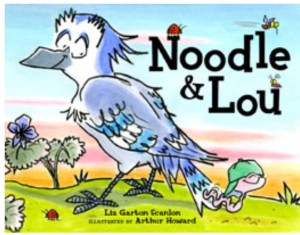
Noodle & Lou offers “unfaltering rhyme and a gentle humor.” — Publisher’s Weekly


Think Big is “turbocharged because of flawless scansion and exuberance.” — Kirkus


Happy Birthday, Bunny is “as memorable and heartfelt as a birthday book gets!” — Publisher’s Weekly, starred review


The Good-Pie Party is “a must for every child who has to move away.” — Kirkus

Thank you Liz Garton Scanlon!
~~~~~~~~~~~~~~~~~~~~~~~~~~~~~~~~~~~~~~~~~~~~~~~~~~~~~~~~~~~~~~~~~~~~~~~~~~~~~~~~~~~~~
RhyPiBoMo Daily Lesson: Friday, April 11th
By Angie Karcher © 2014
Lesson 13
*
I must preface this by saying that this was by far the most fun lesson to write! I hope you enjoy and are dancing in the street when you finish!
Rhythm
*
Rhythm in poetry is made up of the continual tonal rise and fall of speech, by intentionally writing the words in such a way that the inflections will fall at certain points to make a pattern.(write this down)
*
“Rhythm (or “measure”) in writing is like the beat in music. In poetry, rhythm implies that certain words are produced more force- fully than others, and may be held for longer duration. The repetition of a pattern of such emphasis is what produces a “rhythmic effect.” The word rhythm comes from the Greek, meaning “measured motion.”(write this down)
http://www.angelfire.com/ct2/evenski/poetry/rhythm.html
Inflection – is when one syllable in a word is given emphasis when read out loud. Inflection is the key to finding your rhythm when reading orally.(write this down)
*
Is this you?
*
*
*
As I start off today’s lesson, I am drawn back to a quote I found and saved weeks ago by Sudipta Bardhan-Quallan. It was from a post on the Writer’s Rhumpus Blog from September 13, 2012.
*
“One thing I will say about writing in rhyme is that you either hear the rhyme and the rhythm, or you don’t. When I do workshops on writing picture books in rhyme that is the very first thing I tell people. I can teach someone all the basics of rhyme, I can teach them how to read meter, I can teach them what iambic pentameter is, and so on. I can teach them all of those fundamentals but what I cannot teach is that innate ability to feel the rhythm and rhyme when it works. But just because you don’t hear the rhythm of the words doesn’t mean you can’t write picture books — so many wonderful picture books are written in prose. No one should feel like rhyme is essential for telling a picture book story — it’s just one way to do it. Each author needs to find his/her own story and his/her her own path.”
*
http://writersrumpus.com/2013/09/13/interview-with-sudipta-bardhan-quallen-picture-book-author-and-presenter/
*
*
Rhythm is one of those things you are either born with or you aren’t.
Do you feel the rhythm in this song even if you don’t speak the language?
*
*
I can’t sit still when I listen to that song! Honestly! I want to grab a Solo Cup and join in!
*
I have a musical background which I know helps me find the beat, the locomotion of the sound, as it break dances across the page. I can’t sit still when I hear music with a deep base sound reverberating from the speakers. Here is a test…If you listen to this song and can’t sit still, then you have it too. Rhythm, I mean!
*
Michael Jackson – The Way You Make Me Feel
*
How did it make you feel? If you are dancing in your seat, snapping your fingers, and reliving the 80’s right now…then you may have it! Rhythm, I mean!
*
*
Now for an Island sound…
Jimmy Buffet’s Margaritaville has a constant beat…1-2-3-4-1-2-3-4-1-2-3-4-1-2-3-4
*
Snap your fingers on beats 2 and 4 and you will find the rhythm.
*
*
*
Rhythm is internal, it’s in your genes as is your ability to sing, dance, paint, draw and write.
*
So what if you weren’t moved by Michael Jackson’s or Jimmy Buffet’s songs?
Is there still hope?
*
I think so but it’s going to take a lot of work. You must find your inner beat box, the part of your brain where your ears take over your entire body and you can’t, NOT move with the sound or rhythm. I don’t use a double negative lightly so this is the thing…it really is something that is involuntary! You have to snap, clap, move, sway, tap your foot, or stomp your feet!
*
*
Do you need to have rhythm to write poetry/rhyming picture books?
*
Yes.
*
*
Which image best describes your sense of rhythm?
*
 OR
OR 

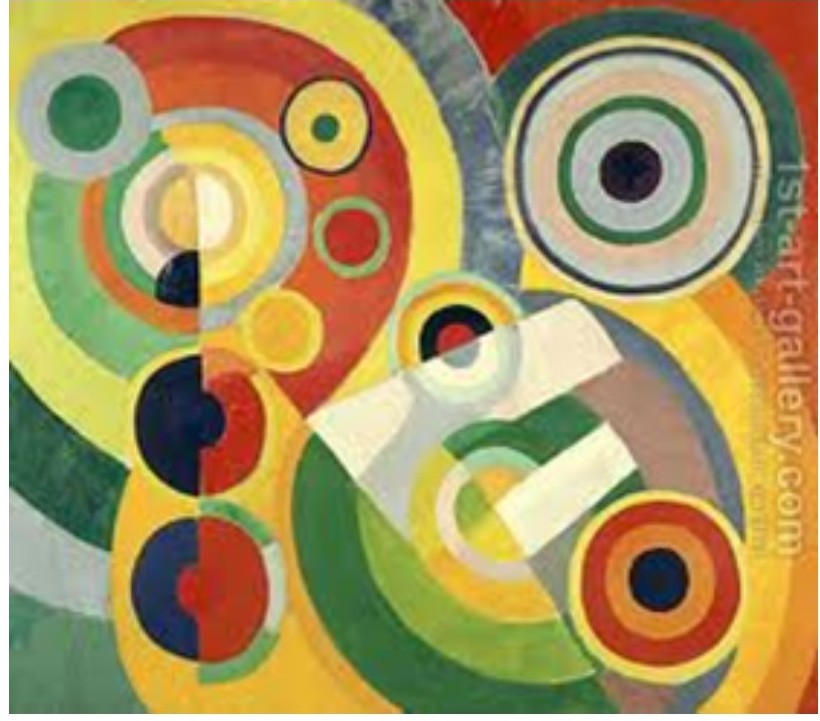
Do you hear a pattern or repeating sound? Or, are you all over the place?
*
*
Hopefully, you chose the image on the left!
Luckily, on the internet there is a site to help us improve our sense of rhythm…LOL
*
How to Improve a Sense of Rhythm (too funny)
http://www.ehow.com/how_2191324_improve-sense-rhythm.html
*
*
If it helps, writers are not the only ones worried about lack of rhythm! In my research I found that many others are desperately worried and trying to find the cure for this problem.
*
Those looking for Rhythm include:
Dancers
Musicians
Marching Band Leaders
Music Therapists helping special needs children find rhythm to calm them
Couples ready to wed worried about their first dance
Elementary Music Teachers
Couples in the bedroom (I kid you not)
Parents worried that their kids don’t have it
Writers/Poets
*
*
It seems the number one suggestion in finding your rhythm…listen to lots and lots and lots of music!
*
Listen to lots of different types of music with various beats…orchestral, big band, pop, country, classical, island, rap, salsa and hip hop. Listen for the most prominent beat and find the pattern of the sound. Listen mostly to the percussion and deep bass sounds. Listen over and over until haring the rhythm becomes second nature to you.
*
Now…Do you have the rhythm Blues? Well let’s find your rhythm with Johnny Cash’s song Get Rhythm!
*
*
If scansion was extremely challenging to you on Tuesday, you may need a few lessons in rhythm. Here are some poetry readings that you can listen to as well…
*
Poetry Outloud
http://www.poetryoutloud.org/poems-and-performance/listen-to-poetry
*
Classic Poetry Aloud
http://classicpoetryaloud.podomatic.com/
*
Poets.org Poetry Readings National Calendar
http://www.poets.org/calendar.php
*
Poetry Slam – Nate Marshall’s winning piece from Louder Than a Bomb 2008 in Chicago titled LOOK (Nate is one of my favorite Poetry Slam artists! So talented!)
*
*
*
The only way you will improve your rhythm is to train your ears and your listening skills!
Practice! Practice! Practice!
*
This might need to be the first step of writing poetry
IF you are rhythmically challenged!
*
*
Listening Prompt: Listen to a variety of music and see if you can clap, snap and dance with the rhythm. Decide for yourself if you have rhythm.
*
*
There has been a dance party in my office tonight as I write this lesson.
I hope this is as much fun to read as it was to write!
*
It’s 2:00 a.m. and my husband just came and shut my office door!
But, the rhythm must go on!

Click the link to see her dance with rhythm!

*

 Angie Karcher
Love this post! One way to check a poem’s rhythm that works for me to see if it fits in a familiar tune. My first poem for the March Madness poetry tournament this year fit to the tune of the old Gilligan’s Island theme. (The words to Amazing Grace fit to that tune, as well!)
I do this, too, Deborah, and it really helps. Unfortunately, it’s too easy for me to throw 3 or 4 words on an eighth note! 😉
Brilliant! Loved both of your advice on rhythm and there was a party in our kitchen this morning as my 8 year old and I sang and danced (and clapped) along to the songs! A fun and helpful lesson!
Hi Angie!
Thanks for today’s fun post! It made me smile, but partly because I’ve always been musical too, and have been blaming this for why my earlier poems, written by ear, aren’t correct when it comes to strict meter rules!
I think Liz Garton’s advice about needing to start kids off with very simple rhythms is the key to my problem, though. I don’t write “Jazz”, but I do like to hear my poems to my own music, and had been expecting adults and kids to work out when I wanted a “double beat”, or other slight variant inserting.
I like to think that I’m starting to learn to conform to simplicity now!
I feeeelllll it, yeah! Oh, sorry. I was dancing inside my head. Thank you Liz and Angie. This was such a fun lesson. Believe me, the housemates hear me reading stuff out loud, ALL THE TIME. The animals, too. My horses have always loved my rhyme, but now they love it even more. Off to do my homework. The rhythm MUST live, Angie. (My hubby does that too.) 🙂
great post 🙂 thank you!
Great lesson. Love the music. I’d not heard of Nate Marshall, but his words are so powerful:
a mic, a stage, a pen, a page
helped end my rage and mend my days
I read ALL THE WORLD and loved it when Marla Frazee was the guest author at my MFA program. I loved this lesson—both yours and Liz’s. Can’t wait to get to the library this afternoon to read more of her books. My visit to our local bookstore—Politics &Prose—with my puppy Huckleberry Finn yesterday was less than successful. I managed to pull one book off the shelf before he began chewing through his leash.
Great music to start my day. Thanks.
Guest post contains such great advice and insight! Lesson chock-full of resources. I’m headed back to library today for more more books! Happy weekend all.
Yep, I feel the rhythm. I grew up dancing to disco music.
Thanks, Angie, for all the musical clips. What a fun way to start the day! (And for you to end your night!) I imagine there’s a genetic component that accounts for some people having more sense of rhythm than others, but I think some basic rhythmic sense is hard-wired in us all. I watch my daughter’s preschool class start each day with a scarf dance or some other song/dance routine, and I see that all of the children can find a rhythm. Like all things in life, we can probably lose it if we don’t practice it. For me, musical training on the piano and clarinet for many years certainly helped, and for some people, playing sports or being involved in the theater can do the same. Rhythm and movement is such an integral part of early education for kids, but then it seems to fade out and become part of electives at school rather than a part of core curriculum.
Liz Garton Scanlon’s advice was great – I loved what she said about making sure your writing focus is on the book, rather than on individual stanzas. Be willing to cut those couplets! Easier said than done, but so essential.
I am too old to know everything, so that’s a good start. Thanks, Liz. ALL THE WORLD is one of my favorite books on my bookshelf. Thanks, Angie, especially for all the song & dance!
“Clap along if you feel like a room without a roof- because I’m happy
Clap along if you feel like happiness is the truth – because I’m happy…”
with apologies to Pharrell Williams. This song is another good test for rhythm. I’m clapping along like a room without a roof this whole month.
Many thanks to Liz and Angie.
If anyone walks in on my dance party I plan to blame it on you, Angie;)
Good advice from Liz- follow the rules in the beginning, and earn the right to challenge them!
The lesson for today will be very helpful for me. ALL THE WORLD is one of my favorite books. Thank you Liz and Angie!
Really enjoyed both parts of that! I’ll be singing all night now!
I love music and poetry. I feel the rhythm and never can sit still (almost literally). I just think what I have is called bad rhythm. I will continue to work to improve. Thanks for the help!
Another benefit of reading poetry aloud is that my dog follows me around, thinking that I am talking to her. That makes sense, since all she usually hears is: Blah blah blah treat blah blah. We’re still dancing.
If reading equals breathing then music is my heart beat.
Liz, thanks for your post…. “opening those neural pathways”…. “WOW” is right. I am sure writing rhyme is good for older brains too. Angie thanks for the “dance-lesson.” The song “DANCING IN THE STREET” popped into my brain… I can see all the RHYPIBOMO participants in the nation and across the ocean blue “dancing in the street.” Keep on dancin’.
Thanks Liz for sharing your lessons learned.
Angie – love the rhythmic girl who’s “dancing like nobody’s watching” 😉
Fortunately, I have a daughter who is a singer/songwriter who often helps me with polishing my work. I’m the person in the room who snaps on the 1 and 3. 8-(
Wow, Angie! Two hundred writers of poetry! The video clips are too fun! I believe I have rhythm. Thank you Liz for many words of wisdom. ~Suzy Leopold
Both great posts! I tried to write a poem to the beat of “Twinkle Twinkle Little Star” yesterday, so I hope I am on the right track.
As a drummer, rhythm comes pretty naturally for me so at least this lesson seems easy. Thanks for the great information!
Excellent lessons! I have trouble “killing my darlings” so I created a word document and put them in there. That way they aren’t dead, just transplanted. Editing is part of the process and I don’t have too much difficulty with it, but when I feel like I just can’t delete a section, but I know in my heart it would be a better story to do it – I move it.
Great lesson. Killing your darlings is important skill with any creative endeavor, thanks for the reminder.
I would argue though, that you can teach rhythm. I have it, but I think I was taught it at an early age from my parents and music classes. Everyone that doesn’t have it just needs to expose themselves
Can’t get the music out of my head!
Congrats on 200!
Nice post today. “Couples in the bedroom (I kid you not)” made me chuckle. 🙂
Congratulations on your 200th sign-up!
Great post! I especially liked Liz’s lesson one – leave the jazz to the horn players. Makes so much sense, but never thought of it like that!
Whoo-hoo Angie!!!!! 200 participants is an awesome accomplishment. Now there are 200 people saying THANK YOU, ANGIE KARCHER! This post, as all of your others, is overflowing with information and inspiration.
Thank you, Liz…for being one of Angie’s Golden Quill posters…I just read ‘Happy Birthday, Bunny’…very sweet…a great lesson to us to see how simple a text needs to be to leave room for the illustrator’s genius. 🙂
Did the 200th person get some sort of prize?
One of my favs for an awesome get-up-and-wanna-dance beat is Springsteen’s Fire.
Fabulous lesson Liz and Angie! Puttin’ my dancin’ shoes on!
Yay on reaching 200, Angie! Liz, loved your post! Your jazz line cracked me up. Angie, my dogs have been looking at me strangely as I clap and dance around the room. Fun post!
Okay when I read what Liz had to offer, I thought that this was the major post so far. She’s funny, insightful, and so real. Love what I got from her. Love it!!n I continued to read and boy howdy, girl. As the kids would say, You…Did…That! This post was ALL THAT and them some. What a teacher you must’ve been! Looking forward to you being headline presenter.
I definitely have rhythm – there are certain songs I absolutely CANNOT sit still for (not allowed to listen to them while I’m driving LOL). Great post – and I loved Liz’s post, and Sudipta’s quote. Thanks so much, Angie!
Pingback: #PPBF: When I Was King – Sibling Rivalry | Picture Books Help Kids Soar
I know I have a sense of rhythm, but I still have trouble getting the rhythm right in my rhyme. I’ll just keep working on it, though, and hope to figure it out someday!!
Wonderful post from Liz– “as we carry on for a bit, we realize we know pretty much nothing at all.” I feel like I’m in such good company now!
Liz, thank you for sharing a post that strikes home. I hope to get better at opening those neural pathways and synapses.
Angie, WAHOO on the 200th signup 🙂 You had my toes floppin’ and tappin’ to the rhythm. I took my own trip to margaritaville-oh yeah! I’m here to say, that I’m going to stay!
How fun! Both great lessons! So much rhyming in my head… is anyone else starting to think in rhyme all the time ? Help even my shopping list LOL
Smiling! I sing and tap to all my rhyming tales. Thanks Liz and Angie for another day of fun lessons.
LOVED Liz Garton Scanlon’s advice! Wonderful blog! And I’m feeling the rhythm, Angie!
This has always been my favorite part of writing. I love to find the right rhythm and now I am off to experiment. Thanks!
I love this post! Thank you so much Liz and Angie.
I surprised myself and chose the pattern on the left so maybe I have more rhythm than I thought. Again, great lesson, great examples, great journey.
I feel the rhythm: “Scooby Doo Wah Wah Wah!”
Very fun! I’m grateful to say I was born with rhythm. Thanks for the music! And a great lesson.
LIz, thanks for the advice to give little readers the building block of simple rhythm.
I took so much away from your breakout session at the MIdwest Regional Conference in May 2013.
Angie, another groovin’ lesson 😀