Can You Hear It? Tuesday

Look at all the amazing guest bloggers

still to come this month!

*

RhyPiBoMo Calendar updated

*

Tomorrow, April 16th, at Midnight, Central Time

is the last day to register for RhyPiBoMo!

If you are not registered…go to the registration tab above and

join the official group now!

*

*


RhyPiBoMo Poetry Contest Scroll

*

*

Someone contacted me yesterday with a great question concerning the Golden Quill Poetry Contest. The question was, “Will I be posting the 3 winning poems here on my blog?” The answer, YES! So…if you have a poem that you want to submit but are considering submitting it to an editor, you may choose to send me a different poem. An editor might not look at your poem as favorably if he/she knows that your poem has already been seen by the public. Please consider this when submitting a poem for any contest!

*

*

I was fortunate enough to not only meet today’s guest blogger at a SCBWI conference, but had her critique a manuscript for me. She liked it! I say that proudly, because if you’ve had many paid critiques done before, it can be very tough!  She is such a talented author and her books are full of lyrical, lovely language! I was very proud to contact her for this event and even more thrilled when she accepted the invitation to be a guest blogger!

*

*

So, without further ado, I’m honored to present today’s

Golden Quill Guest Blogger

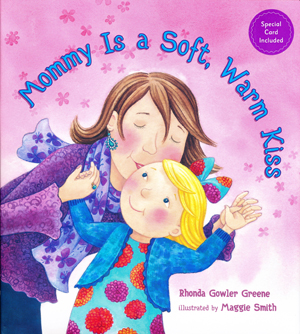
Rhonda Gowler Greene!

*
       Rhypibomo Guest Blogger Badge    Rhonda G Green 1

*

*

*

Over the years, I’ve critiqued many rhyming picture book manuscripts for unpublished writers. The main problem I see? Too many beats in a line. Rhymed stories should be pleasing to the ear, but inconsistency of the rhythm in lines is jarring. This, along with forced rhymes (2nd most common problem I see), is why many editors won’t consider rhyming manuscripts anymore. After wading through so many poorly written rhyming manuscripts, they’ve finally said, “Enough.”

*

…2 lines from my NO PIRATES ALLOWED! SAID LIBRARY LOU (stressed beats in caps)…

*

MAYbe, just MAYbe, the CODE be in RHYME.

He LOVED Mother GOOSE. Dr. SEUSS—how subLIME!
(btw, this is anapest meter- 2 unstressed beats, 1 stressed)

*

Example of too many beats—

He LOVED Mother GOOSE books. Dr. SEUSS books—how subLIME!

*
Adding “books” makes the reader have to rush to get all the words in. There are too many unstressed beats. Lines in rhyming picture books should “ssssing,” not make a reader stumble or have to rush.

*
Even though some editors refuse to look at rhyme, rhyming picture book manuscripts still sell to editors who are willing to look for well-written gems. How can you develop an ear for hearing “off” meter, recognize weak rhymes, and turn your story into a “gem”?

*
I’m a HUGE believer that in order to write rhyme well, you need to study the best rhyming picture books. My house is FULL of them (also of children’s poetry books). Read them like a writer. Pick apart, and think on, the texts. If it helps, count stressed and unstressed beats in lines. Study— Bats at the Beach, The Gingerbread Man Loose in the School, Tadpole Rex, Mrs. Biddlebox, Goodnight Goodnight Construction Site, Cowpoke Clyde and Dirty Dawg to name a few.
I read read read rhyming picture books because that’s a genre I want to excel in. I analyze them, type out the texts, compare my writing to what’s in them. I think—Would I have used that particular rhyme or written a certain line in that same amazing way? I read my writing out loud. I have someone else read it aloud to me. Sometimes I spend weeks on one phrase! Or word! Writing in rhyme, to me, is like putting a very difficult puzzle together. Two tools I couldn’t live without— 1) my rhyming dictionary 2) my big, fat The Synonym Finder.

*
I actually think it’s as important to spend time studying successful books as it is to write. If you do your “homework” and learn from the best, you’ll actually save time since instead of churning out limp lines day after day, you’ll begin to be your own critic—which brings your writing to the next level! You’ll recognize weak lines and rhymes. You’ll come up with original word choices. It doesn’t mean you won’t have to revise, but you’ll be better at it.

*
When I’m writing in rhyme, I don’t really think—“iambic,” “anapest,” “trochee,” “dactyl.” I just kind of “hear” the beat. Knowing about these meters, though, is helpful. To learn about them, read chapter 13 (Rhyme Time) of Ann Whitford Paul’s Writing Picture Books (a great resource!).

*
I’m honored to be a guest blogger among so many distinguished rhymers! Besides the works of the 35 guest authors here on RhyPiBoMo, I recommend books by— Linda Ashman, Karen Beaumont, Sandra Boynton, Julia Donaldson, Douglas Florian, Mary Ann Hoberman, Verla Kay, J. Patrick Lewis, Alice Schertle, Judy Sierra, and Chris Van Dusen.
What are editors looking for? A clever story idea. Fresh writing. Often, humor. Tight writing. And, too, that gem—a perfectly rhymed picture book manuscript. Maybe it’s yours!
Happy Reading! Happy Rhyming! And—Good Luck!!

*

*

Bio:

Rhonda Gowler Greene is the author of over twenty rhyming picture books (with four forthcoming). Her books have received honors such as School Library Journal Best Book, American Booksellers “Pick of the List,” Children’s Book Council Showcase Book, Bank Street College Best Book, IRA Children’s Choice Book, Sydney Taylor Notable Book, Junior Library Guild selection, Michigan Reads One State One Children’s Book Award, and starred reviews.
A former elementary school teacher, Rhonda earned her B.A. in Elementary and Special Education and her Master’s in Educational Media. She minored in music/piano in college. Rhonda lives with her husband, Gary, in West Bloomfield, Michigan. They have four grown children. Visit her on the web at

http://www.rhondagowlergreene.com.

*

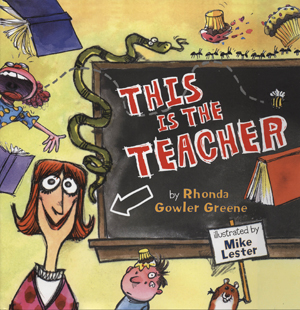
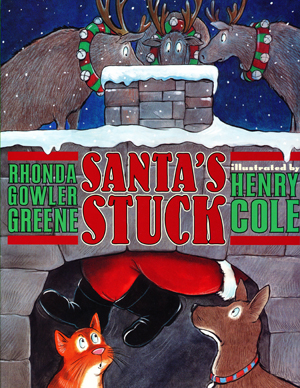
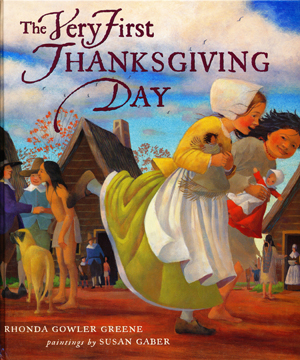
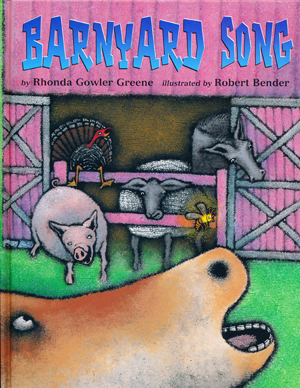
Here are a few of Rhonda’s Books…


 Rhonda G Green 2

*

Rhonda G Green 3          Rhonda G Green 4

*

Rhonda G Green 5                  Rhonda G Green 6

*

Rhonda G Green 7                Rhonda G Green 8

*

Thank you Rhonda Gowler Greene!

~~~~~~~~~~~~~~~~~~~~~~~~~~~~~~~~~~~~~~~~~~~~~~~~~~~~~~~~~~~~~~~~~~~~~~~~~~~~~~~~~~~~~~~

RhyPiBoMo Daily Lesson: Tuesday, April 15th
By Angie Karcher © 2014
Lesson 17

*

*

Do you have an ear for poetry?

*

*
The way we assist young children to develop an ear for poetry is the same way you, as a writer can develop your poetic ear. Yes, we will start with nursery rhymes!

*

Nursery Rhymes

*
Nursery rhymes are essential because they help develop an ear for the sounds and syllables in words. Both rhythm and rhyme also aid with this learning process.

*

Listen to these Nursery Rhymes over and over until you can recite them by memory.

http://www.mothergooseclub.com/

*

*

Here are a few more activities to develop your poetic ear:

*

Word Families

*
Create word families.
In a notebook, start a list of basic one syllable words and list as many words in that word family as you can think of. Then, when your list is complete, look in a rhyming dictionary and add to your list. You will be amazed at how you begin to listen more closely to word patterns and analyze their patterns of sound.

*

For example:
List of Word Families
-ab words (Cab, Dab, Fab, etc.)
-ad words (Bad, Dad, Fad, etc.)
-at words (Cat, Hat, Pat, etc)
-an
-ap
-all
-ash
-en
-et
-ed
-in
-it
-ip
-ill
-op
-ot
-og
-ug
-ut
-up
-ub

*
This will give you a great beginning at listening to basic sounds of words that rhyme. Read these aloud. Have someone else read them aloud to you. If you are really challenged in this area, continue to create more lists with different beginning and ending sounds.

*

*

Fill in the Blank

*
Have someone else read children’s poems aloud and leave off the final rhyming word. I know this sounds very basic but it will help if this is an area you need help with. Remember, we are talking about creating perfect rhyme.

*
Fill in the blank:
Little Boy Blue

*
Little Boy Blue,
Come blow your horn,
The sheep’s in the meadow,
The cow’s in the ____;
Where is that boy
Who looks after the sheep?
Under the haystack
Fast ______.
Will you wake him?
Oh no, not I,
For if I do
He will surely ___.

*

*

Swap Poem

*
Write a swap poem. You write one line of a poem, and someone else writes the next line, matching the rhythm, and rhyming the last word. (Hint: Use words that are easy to rhyme!)

*
I hope the rain will go away.

And stay away so I can play.

The sun must come and save the day.

“I want to go outside,” I say!

This was actually harder than it sounds!

*

*
Resource from:
Nursery Rhymes: Not Just for Babies! By: Reading Rockets
http://www.readingrockets.org/article/14017

*

*
Listen and Recite Poetry Out Loud
Very simply…Listening to poetry and rhyming songs is the best way to improve your ear for poetry!

*

*

I am in no way suggesting that you should BUY any of these resources…I just list the Amazon link so you can see what it looks like and read more information. I’m sure most, if not all of them can be found at the library.

Here are a few suggested titles:

*
Wee Sing Nursery Rhymes cds
http://www.amazon.com/exec/obidos/ASIN/0843127031/ref=nosim/learningabilitie

*

Dr. Seuss’s Beginning Book Set – (Cat in the Hat, One Fish Two Fish, Green Eggs and Ham, Hop on Pop, Fox in Socks)
http://www.amazon.com/exec/obidos/ASIN/0375851569/ref=nosim/learningabilitie

*

Poetry for Young People: Robert Frost
http://www.amazon.com/exec/obidos/ASIN/1402754752/ref=nosim/learningabilitie

*

Resources from: Phonics’ Failures and Fun with Phonology
http://www.gate.net/~labooks/phonemes-pre-reading-books.html
*

 *

A Child’s Introduction to Poetry: Listen While You Learn About the Magic Words That Have Moved Mountains, Won Battles, and Made Us Laugh and Cry
(CDs Included)
http://www.amazon.com/Childs-Introduction-Poetry-Mountains-Battles/dp/1579122825

*

Sound and Sense
http://www.amazon.com/Sound-Sense-An-Introduction-Poetry/dp/0155826107

*

Resource from:The Pioneer Woman Blog
http://thepioneerwoman.com/homeschooling/2013/02/community-question-looking-for-poetry-curriculum/

*

Poetry Out Loud Website
http://www.poetryoutloud.org/poems-and-performance/listen-to-poetry

*
After the Introduction, you will see The Power of Poetry (2:28) By Dana Gioia
Click and listen to his reasons why poetry is important!
I found his detailed reasons very interesting!

*

4 Reasons why poetry is one of the most practical and important things to learn.

*
1)Poetry is a powerful way of mastering language.
2)Poetry is a way of training and developing our emotional intelligence.
3)Poetry helps us realize that language is holistic.
4)Poetry helps to enlarge our humanity and to give us the power to express it!

*

There are also lots of wonderful poems offered and read aloud by various authors and poets. Enjoy!

*

More poems read “Aloud” from Kristine O’Connell George’s website
http://www.kristinegeorge.com/poetry_aloud.html

*

Classic Poetry Aloud, a podcast series for some of the greatest poetry in English.
http://classicpoetryaloud.wordpress.com/

*

*

This certainly isn’t rocket science but by practicing over and over, you will improve and develop your poetic ear. It basically comes down to taking the time to recite out loud and listen to lots and lots of poetry…pretty simple.

*

*

The Listening Challenge: Listen to a few of the poems from the resources above.

*

*

Okay, now do everything else on the pledge for today and don’t forget to comment on today’s blog post!

RhyPiBoMo Pledge

RhyPiBoMo PledgeRhyPiBoMo Pledge
Please comment ONLY ONE TIME below for a chance to win today’s prize!
Prizes will be drawn by Random.com next Sunday for the previous week.
To be eligible for a prize you must be a registered participant and
comment after each days lessons.

Musicality in Writing Monday

Can you believe that Wednesday is the halfway point?

Where did those 2 weeks go?

*

Remember…

This Wednesday, April 16th, is the last day to register for RhyPiBoMo!

Don’t forget… if you have been following along and reading the blogs, this will make you eligible to win a daily prize donated by one of our guest bloggers. Comment each day you participate and your name will go into the drawing.

*

*

I should also mention that you need to clear your schedule on

Friday, April 25th at 6:00 pm PST

for

Mira Reisberg and Sudipta Bardhan-Quallan’s live Webinar

3 Things You Must Know About Writing Rhyming Kids’ Books!

You won’t want to miss this!

And they have a marvelous Poetry class coming up too! How do I know it’s marvelous? Because I’ve taken Mira’s Courses before…enough said! This dynamic duo will knock our rhyming socks off!

http://www.childrensbookacademy.com/

*

Poetry course

*

*

I’ve known today’s guest blogger for many years. We probably met at the very first writing conference I ever attended, back in 2002. She was a Regional Adviser for Indiana SCBWI, before moving to Missouri, where she continues do school visits and author events. I was proud to ask my friend to join this group of wonderful bloggers as she definitely deserves to be included!

*

*

So, without further ado, I’m honored to present today’s

Golden Quill Guest Blogger

Peggy Archer!

     Rhypibomo Guest Blogger Badge   Peggy Archer

Are You Naturally Musical?

I love music. Which is not to say that I’m ‘naturally’ musical. My husband and I line dance. He’s a much better dancer than I am. But if you can count to 4, you can line dance. Listening to the music helps, because you can ‘feel’ the rhythm.

*

As with dancing, I’m sometimes challenged when it comes to rhythm in a poem. Like counting the steps in a line dance, I count syllables. I look at where the stress falls in the lines. But sometimes this backfires. It becomes too structured. It takes the music out of the poem.

*

Try clapping to the ‘music’ of your poem. Let’s try it with ‘Old MacDonald Had a Farm.’

*
Old MacDonald had a farm

*
E-i-e-i-o!

*
And on his farm he had a cow… Uh oh! There’s an extra syllable at the beginning of this line!

*
But like in music, sometimes you can slip in an extra syllable, sort of like a musical grace note.

*

I think songs must be difficult to write. But because you hear it performed, everyone ‘gets’ the rhythm just the way the writer meant it! Not so with a poem. Because a poem is left to the voice of the reader.

*

So how do you know if your reader will ‘get’ the rhythm that you intend? Read your poem out loud. Listen to how it sounds. Do you trip up on any of the words?

*

You’ve read your poem out loud, and it sounds great! But will another person read your poem the same way?

*

Say the word “seal.” Do you say it with one or two syllables?
How about ‘shuffling’ or ‘twinkling.’ Do you pronounce them with two syllables or three?
Do you say address or address?

*

One way to see if your rhythm works for the reader is to ask someone else to read your poem out loud. Do they put the stress in the same places that you do? Do they trip up anywhere? If you need to, you could try rearranging the words, adding or deleting syllables, or using a different word altogether to make it flow.

*

To create ‘music’ in your poetry, listen to the ‘sound’ of your words.

*

Do you want your poem to have a soft or sentimental quality? Use more of the ‘soft’ letters of the alphabet.

*
Over my arm
She softly flows—
cinnamon coat
And whiskery nose… (from “Hampster Hide-and-Seek” by Avis Harley)

*

Or do you want something more concrete? Use more of the ‘hard’ letters in your words.
Down in the dungeon,
dark and deep… (from “Down in the Dungeon” by Rebecca Kai Dotlich)

*

Can you hear the difference? Soft sounding consonants are: R, J, M, N, S, V, W. Hard sounding consonants are K, D, Q, T, B, P. The letters C and G can be either soft or hard.

*

In my picture book, TURKEY SURPRISE, the pilgrim brothers have a song that they sing. It starts out—
We’re two mighty pilgrims
Coming your way…

*

But I wrote a poem, not a song. After the book was published, a friend of mine read it to her daughter’s second grade class, and she sang the pilgrim’s song! “It works perfectly to the Beverly Hillbilly’s theme song!” she said.

*

Maybe I am a bit ‘naturally’ musical! Words dance in my head and I sing from my soul. It’s getting it to sound like that on paper that’s the hard part. Eventually I get it. I just have to remember to listen to the music.

*

poetry selections from A PET FOR ME POEMS, selected by Lee Bennett Hopkins, HarperCollins 200

*

*

BIO
Peggy Archer grew up and spent most of her life in Northwest Indiana. She currently lives in O’Fallon, Missouri with her husband. She writes fiction, poetry and non-fiction for children and her work has been published in several children’s magazines.

*
Peggy enjoys speaking to children and adults about books and writing. Her speaking experience includes elementary school through high school, and guest speaker at conferences and events for children’s writers.
When she is not writing, Peggy enjoys reading, walking and spending time with her grandchildren and her family.

*
Her picture books include:

*

Dogs

Dial Books for Young Readers 2010
ISBN: 978-0-8037-3322
also carried by Scholastic Book Club

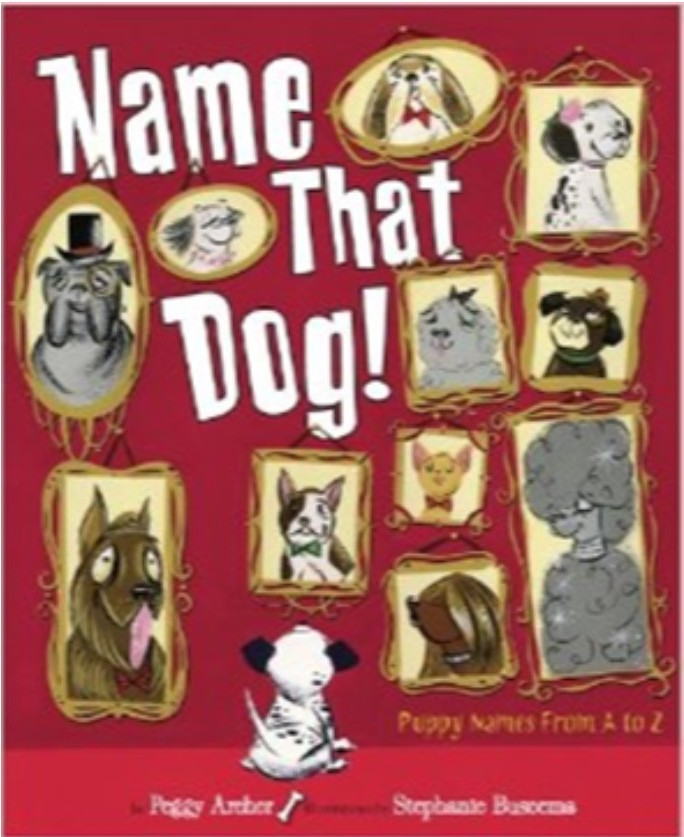
• Name That Dog!, Dial Books for Young Readers, 2010
Name That Dog! was nominated for the 2012 Utah Beehive Award for Poetry, was on Grandparents.com’s Best Collections of Poetry Spring 2010. Name That Dog! is on the accelerated reader list at Renaissance Learning, and is on the Scholastic Book Club list.

*

*

Dawn to dreams

Candlewick Press 2007
ISBN: 978-0-7636-2467-5

• From Dawn to Dreams, Poems for Busy Babies, Candlewick Press 2007
From Dawn to Dreams received a letter of merit from the Society of Children’s Book Writers & Illustrators Work-in-Progress Grant committee in 2002 and was nominated for the 2007 Cybil Award in the category of Children’s Poetry.

*

*

Turkey Surprise

Dial Books for Young Readers
Illustrated by Thor Wickstrom
ISBN: 0-8037-2969-3
Puffin Books paperback edition
ISBN: 978-0-14-240852-0

• Turkey Surprise, Dial Books for Young Readers 2005
Turkey Surprise appeared on the NY Times Bestsellers list for children’s paperback books in November 2007 and was on Baker & Taylor’s Books for Growing Minds list in 2005. It is on the accelerated reader list at Renaissance Learning.


Thank you Peggy Archer!

~~~~~~~~~~~~~~~~~~~~~~~~~~~~~~~~~~~~~~~~~~~~~~~~~~~~~~~~~~~~~~~~~~~~~~~~~~~~~~~~~~~~~~~

RhyPiBoMo Daily Lesson: Monday, April 14th
By Angie Karcher © 2014
Lesson 16

*

Are you Naturally Musical?

*
The gal in this video talks for about 8 minutes about why you should never say that you are NOT musically talented…She’s funny and yet, really sincere and I think everything she is saying about singing can be applied to writing poetry and rhyme. I think everyone can learn to feel the rhythm in music and in your words. It just takes practice, a never-give-up attitude and the desire to learn.


*

*

Weeks ago, before I started writing these lessons, I was stuck, waiting on a train one night and listening to the radio in my van. Jim Brickman’s music/talk show was on and he was talking about his creative process. I attended a concert of his once and he is amazingly talented!

*
I was stunned to learn that he does not typically read or write music. That’s not to say that he hasn’t learned the basics of it but generally, as a rule, he plays from the heart. He said that he hears a tune in his head and then hums or sings the tune into his phone recording ap if he’s away from the piano. Then, when he gets home, he sits down at the piano and the notes just come out. He said he knows it’s good if he remembers it without having to retrieve his phone recording.
He said he can play it over and over without ever writing it down.

*
When asked how he manages to work with musicians, singers and full orchestras in his professional life he says that he pays someone else to write it down and create the scores for the others involved. The score writer listens to him play and puts it down on paper.

*
Jim Brickman is naturally, musically talented.

*

*

Jim Brickman

Jim Brickman

*
Here is just a sampling of information from his official website:

*
“Jim Brickman wouldn’t play by the rules. Literally. He was 8, taking private lessons from a piano teacher down the street from his parents’ Cleveland suburb home, but little Jimmy Brickman wouldn’t conform to the rudimentary regulations of piano playing, even after his piano teacher told his mother he “didn’t have the knack for this.” By the age of 12, Brickman found his mentor in the creative tutelage of a Cleveland Institute of Music graduate. As a child, Brickman had studied music at the prestigious conservatory and was honored in 2011 when the Cleveland Institute of Music established a scholarship in his name.

*

That’s all this Shaker Heights, Ohio native needed to set his career in motion, and more than two decades later, Jim Brickman would become the most commercially successful instrumental pop pianist of the last three decades. Four of his albums have been certified gold by the Recording Industry Association of America – 1995’s By Heart, 1997’s Picture This and The Gift, and 1999’s Destiny – for sales of more than 500,000 copies. Overall, he’s sold more than 7 million albums.
He’s amassed 27 Top 40 singles on the adult contemporary charts, including 14 Top 10 smashes. – And…and…and…”

See more at:

http://www.jimbrickman.com/Home/About.aspx#sthash.Hft2oRD7.dpuf

*

*

I share this with you because this is what being naturally talented is…
That being said, there are hundreds of thousands of successful, talented musicians who learned to read and play music the traditional way and are very successful at their chosen professions.

*

*

His music teacher said that he didn’t have what it takes to play the piano…woops!

*
How many people have told you NOT to write rhyming picture books?

Dr. Seuss got 27 rejections for AND TO THINK THAT I SAW IT ON MULBERRY STREET before he found his publisher.

*

Mulberry Street

*

My challenge for you today: Prove them wrong!

*

This means that if you were not born with the natural talent to hear or feel the rhythm in your writing, it is still a goal worth attempting. You can easily learn how to feel the sound and musicality in words as you can in music…

*
What does it take? Practice! Practice! Practice!

*

And then Practice some more!

*

*

We have learned a lot of the technical stuff about poetry and its involvement in the words we use to write for children. Now, it’s up to you to take what is available here and apply it to your words. You must believe that you can do it!

*
I think what the funny lady in the video above was trying to express is stay positive, don’t bring yourself or others down by saying things like, “I have no rhythm” or “I can’t do this because I wasn’t born with that gene’

*
We all must use our strengths to our advantage and fight even harder to overcome our weaknesses when it’s something worth doing!

*

I share this quote with you by Mr. Dan Romano…

*
“Music is the hardest kind of art. It doesn’t hang up on a wall and wait to be stared at and enjoyed by passersby. It’s communication. It’s hours and hours being put into a work of art that may only last, in reality, for a few moments…but if done well, and truly appreciated, it lasts in our hearts forever. That’s art. Speaking with your heart to the hearts of others.”

*

The very same thing can be said for writing an exceptional rhyming picture book!

*

Writing rhyming picture books, in my opinion, is the hardest genre of books to write…it’s poetry, it’s picture book, it’s oral literature, it’s early reader material, it’s the introduction to language and then some! That’s a lot of responsibility.

*
You have landed here, on my blog for a reason. A spark fell from the sky and touched your soul and you consciously decided to see if you have what it takes.

*
I’m thrilled to have you here with me on this journey and I know that you will figure out what path is best for you.

*
Today’s post was really just a giant pep talk…I was a cheerleader back in 1985 and once a cheerleader, always a cheerleader! So…Go! Go! Go! And write that magical, rhyming picture book jam-packed full of all the alliteration, onomatopoeia and poetic devices possible, until it is bursting at the seams with your heart…your heart speaking to the heart of others!

*
While you are writing today, listen to this album. Pretend that each note is a carefully chosen word in a picture book. The crescendos and the diminuendos are the conflict, the refrain is what keeps the plot moving and the big climax ending of the song is the conflict resolution. Close your eyes and listen.

*

*

Writing Prompt: Now, make your words musical and joyful, like these songs.

*

*
Jim Brickman – By Heart (Full Album)

*

Enjoy!

Don’t Stress Over Word Stress Sunday!

I must start out today by wishing

Mr. Lee Bennett Hopkins a Happy Birthday!

*

Lee's Birthday Cake

*

I can’t think of a better way to celebrate than with

Akiko White’s marvelous antique typewriter cake!

*

Lee is our guest blogger on Saturday. Check back then to learn more about this inspirational writer and what he has done for children’s literature and poetry.

*

~~~~~~~~~~~~~~~~~~~~~~~~~~~~~~~~~~~~~~~~~~~~~~~~~~~~~~~~~~~~~~~~~~~~~~~~~~~~~~~~~~~~~

*

I almost forgot to announce last weeks winners…

Week Two Daily Prize Winners:

*
Sunday – Peggy Archer donated Name That Dog
WINNER Laura Rackham

*

Monday – Dianne De Las Casas donated The House That Santa Built
WINNER Michele Norman

*

Tuesday – Marsha Diane Arnold donated Roar of a Snore
WINNER Janet Smart

*

Wednesday – Lori Degman donated 1 Zany Zoo
WINNER Daryl Gottier

*

Thursday – Lori Degman donated Cockadoodle-Doo Oops  – NEW –  Just out!
WINNER Vivian Kirkfield

*

Friday – Lori Degman donated a Critique
WINNER Zainab Khan

*

Saturday – Susanna L. Hill donated Airplane Flight
WINNER Dawn Young

*

All Winners…Please email me at Angie.karcher@yahoo.com with your mailing address ASAP!

Congratulations!

*

Thanks to the authors for their generous donations and to all of you for reading the blog posts and daily lessons!

*

*

I have not met today’s guest blogger personally but I know, without a doubt, we would get along brilliantly! She is a friend on Facebook and so kind and generous with her comments and in her time to support RhyPiBoMo. She recently critiqued a manuscript of mine and it was the most thorough, most informative critique I have ever received! I have a feeling that’s how she approaches all her projects. I’m please to have her here!

*

*

So, without further ado, I’m honored to present today’s

Golden Quill Guest Blogger

Debbie Diesen!

        Rhypibomo Guest Blogger Badge     Debbie Diesen 2

*

*


Rhyme-Writing Advice
By Deborah Diesen

*

In writing, one is over and over again a beginner. Every new project introduces an idea to an empty page through an endeavor of inspiration and discipline and frustration and joy that varies not only from project to project but from moment to moment, word to word. In my own writing, I am daily humbled by the process and all that I still have to learn — and to relearn, and to relearn again. This leaves me reluctant to do anything so bold as to give advice to other writers.

*

But to the extent that I’ve managed to absorb a few learnings along the way, I’m happy to share those with others who, like you, like me, love to write in rhyme. Because in the world of words, we’re all in this together.

*

So, here goes: four longwinded bits of advice that might (or might not) be useful to you.

*

*

1. Have at least two rhyming dictionaries.

*

Rhyming dictionaries are a fun and practical resource for writing of any kind, but especially so for writing stories in verse. They vary in format and organization and in word inclusion, and it will take you a while to determine which dictionary best serves your purposes. A good way to get to know a rhyming dictionary is to take a few of your favorite rhyming children’s books and to look up all of their rhyming words. Depending on the format of the rhyming dictionary, this can actually be more challenging than it sounds. Regardless, it will take you longer than you think, because you’ll get distracted by the delightful words you unexpectedly encounter, and by the ideas they potentially launch. Don’t be afraid to lose yourself for a while to the pleasure of browsing. Be sure to have paper and pencil handy before you sink in.

*

Ideally, try to test drive a bunch of different rhyming dictionaries at your local library before you buy any. However, not all libraries have a wide range of rhyming dictionaries; and given that they’re generally housed in the reference area, you may have limited luck requesting them through interlibrary loan. But if you know of other rhyme writers in your area, consider having a rhyming dictionary collection amongst you, so that you can each try out all of the available rhyming dictionaries, without having to purchase them all. Eventually you’ll find your favorite (mine is Sue Young’s The New Comprehensive American Rhyming Dictionary), but you’ll also have at least one also-ran. And really, you can never have too many.

*

*

2. Read some books about poetic meter and form (but don’t freak out about the details).

*

The terminology can be somewhat intimidating, but understanding the fundamentals of rhythm and rhyme will strengthen your ability to write rhyming stories. In additional to availing yourselves of all the lessons and blog posts of RhyPiBoMo, check your library for books such as Writing Metrical Poetry (Baer), The Ode Less Travelled (Fry), Poetic Meter and Poetic Form (Fussell), The Prosody Handbook (Beum and Shapiro), Rhyme’s Reason (Hollander), All The Fun’s In How You Say A Thing (Steele), and Poetic Designs (Adams). Don’t feel you have to read them all (unless you want to), but pick at least one to read in its entirety.

*

Absorb the gist, but don’t panic if words like “prosody” and phrases like “iambic pentameter” leave you scanning the room for the closest exit. We’re all there with you. Hang on to your love-of-rhyme life raft, breathe deeply, and you’ll be fine.

*

*

3. Watch for common meter and rhyme issues.

*

a. Stressful situations in your first stanza

*

A series of single syllable words sets up a first-among-equals situation. Each word alone by default has its only syllable as its primary stress, but within the sentence, stressed and unstressed syllables will have to be distributed. Sometimes the words in your single syllable series will easily and universally be read in a consistent stressed/unstressed pattern by all readers. But other collections of single syllable words may be open to rhythmic interpretation, leading to great variation in how different readers read these lines. This can be a disaster, especially if such a line comes early in your text, before the cadence of your story has been established. So give extra attention to these spots in your story, in case they’re meter dealbreakers.

*

b. Unnatural stresses, and rhythms that only you hear

*

Without realizing it, you may be pushing words into roles they’re not comfortable with. Your enthusiasm for the rhythm of your story may blind you to the fact that you’re asking, say, a word with a second syllable stress to stress its first syllable, or requiring a sentence to have a stress pattern that isn’t natural. One way to check for these errors is to go through your manuscript and mark every stressed syllable that you hear in your mind as you read. Then, scissor your pages into strips of one text line each. Mix those lines up and scrutinize them one by one in isolation. Have you marked a stress that doesn’t or shouldn’t exist? Another method is to have a writing partner or friend read your story out loud to you cold. He or she will slow down or even stumble in spots that don’t scan correctly. These spots undermine the integrity of your story. Be a good steward of your story and fix them.

*

c. Rhymes that don’t meet a high enough standard.

*

Rhyme isn’t just an end-syllable matter: a rhyme needs to include the word’s primary stress and everything after. This can be trickier than it sounds. Your rhyming dictionaries, and some study time with your favorite prosody handbook, can illuminate spots where your rhymes aren’t fully functional.

*

In addition, give special attention to any rhymes you’re using that have been used a million times before by other writers. If you want to keep those rhymes in your story, you must bring something fresh to their usage.

*

And, above all, pick rhymes that dance well together. It’s OK for one to be the lead, but you don’t want a diva to be dragging a wallflower across the floor. Or vice versa. It just causes the other words to stare and makes everyone uncomfortable.

*

*

4. Finally, critique your story not just with your mind, but with your full self.

*

When you think your story is done, set aside a chunk of time, get up out of your chair, stand tall, and read your story out loud, in full storytelling manner, at least fifty times in a row. Without a break in between. Don’t think as you do this: just experience your story fully, over and over and over again. Let your words and phrases and sounds play out kinetically. Feel the gallops, the jingles, the trills, the thumps, the vibrations, the warps, the chimes, the resonations.

*

And then, on the last read, tap into the thinking part of your mind, and let it notice and observe. Pay attention to spots where you hesitate — where there might be a word that’s hard to say, or a phrase that’s dull. Even more importantly, notice those places you linger. Where a sentence is so playful you actually smile. Where an alliterative buzz makes your lips tingle. Where the rhythm compels not just your toe but your whole body to tap out the beat. Notice the moments where your breathing quickens. Where it slows. Allow your experience and observations to guide you to a deeper knowledge of your story’s strengths and flaws. If you do this, by the end of the final read, you’ll know exactly what you need to do to make your story the best it can be.

*

And when you are finished with your story, then all the work that you’ve done, and the things that you’ve learned, and the skills that you have gained, will lead you back full circle.

*

To a new idea. And a blank page.

To begin again.

*

*

Bio:
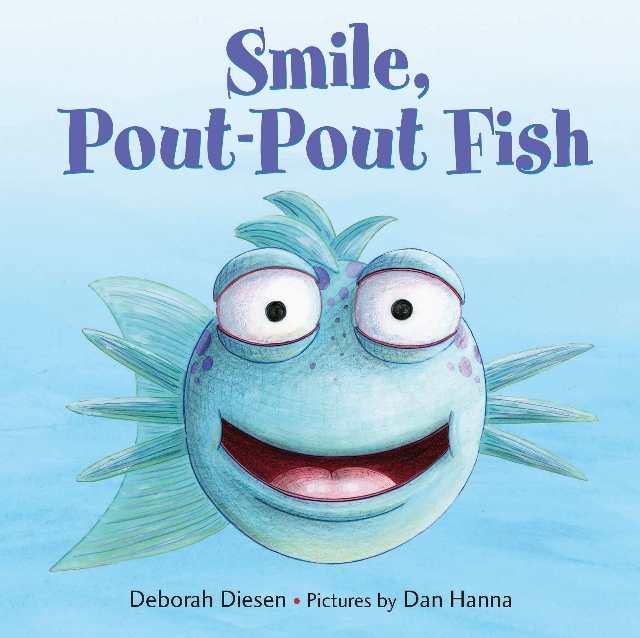
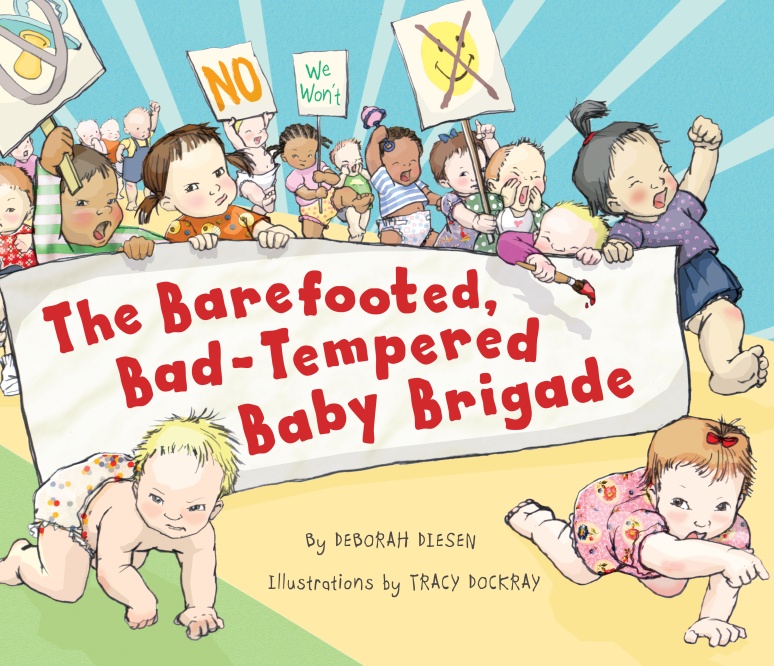
Deborah Diesen’s first book, The Pout-Pout Fish, illustrated by Dan Hanna, was published in 2008 and spent two weeks on the New York Times bestseller list for children’s picture books. The Pout-Pout Fish was followed by a sequel in 2010, The Pout-Pout Fish In The Big-Big Dark. A third adventure for Mr. Fish and his friends, The Pout-Pout Fish Goes To School, will be published summer 2014. Debbie is also the author of a new series of mini-adventures for The Pout-Pout Fish, board books created especially for babies and very young toddlers. The first of these, Smile, Pout-Pout Fish, was released in January, and will be followed by Sweet Dreams, Pout-Pout Fish next year. Her other books are a rhyming story called The Barefooted, Bad-Tempered Baby Brigade (illustrated by Tracy Dockray) and a non-rhyming story called Picture Day Perfection (illustrated by Dan Santat). Previously a bookseller and a reference librarian, she works at a small nonprofit organization as bookkeeper and business manager. She and her family live in Michigan.

http://debbiediesen.com/

http://jumpingthecandlestick.blogspot.com/

Debbie Diesen 3

*

Debbie Diesen 4

*

Debbie Diesen 5

*

Debbie Diesen 6

*

*

Thank you Debbie Diesen!

~~~~~~~~~~~~~~~~~~~~~~~~~~~~~~~~~~~~~~~~~~~~~~~~~~~~~~~~~~~~~~~~~~~~~~~~~~~~~~~~~~~~

RhyPiBoMo Daily Lesson: Sunday, April 13th
By Angie Karcher © 2014
Lesson 15

Understanding word stress is the key to improving your scansion, meter, rhyme and rhythm!

*

Word Stress – the distribution of stresses within a polysyllabic word; the manner in which stresses are distributed on the syllables of a word —called also word accent. (Write this down)

*
All words of more than one syllable have what is called word stress. This means that at least one of the syllables is l o n g e r and louder than the other syllables.

*

Take this quick quiz to see if you understand word stress…

*
*

Word Stress Quiz

*

Choose the part of the highlighted word that is stressed and write it on the line at the end of the sentence.

*

1 Can you pass me a plas-tic knife? _____
2 I want to take a pho-to-gra-phy class. _____
3 Chi-na is the place where I was born. _____
4 Please turn off the tel-e-vi-sion before you go out. _____
5 I can’t de-cide which book to borrow. _____
6 Do you un-der-stand this lesson? _____
7 Sparky is a very hap-py puppy. _____
8 It is crit-i-cal that you finish your essay. _____
9 My Grandfather wears an old-fash-ioned coat. _____
10 There is a lot of traf-fic on the highway today. _____

*
http://www.englishclub.com/pronunciation/word-stress-quiz.htm

*

*

*

Answers to Word Stress Quiz
1)plas
2)to
3)Chi
4)tel
5)cide
6)stand
7)hap
8)cri
9)fash
10)traf

*

*

How did you do?

Stressed image'
Don’t get stressed…eat chocolate cake!

*

*


In many cases, word stress must simply be learned as new vocabulary is acquired. However, there are several rules for word stress which can make it easier to deal with.

*

*

Here are a few specifics to help:
Compound Nouns: (write this down)

*

Listen to the following compound nouns. Can you hear the word stress?
Audio – http://www.soundsofenglish.org/pronunciation/suprasegmentals/ex2.rm

*

bluebird
blackboard
notebook
bookstore
toothbrush
keyboard

*

In each of these examples, the first part of the compound gets the stress.

*

*

Noun+Noun Compounds (2-word compound nouns) (write this down)

Listen to the following noun+noun compounds. Can you hear which part of the compound gets more stress?
Audio – http://www.soundsofenglish.org/pronunciation/suprasegmentals/ex3.rm

*
air conditioner
computer programmer
nail polish
french fry
Geiger counter
doctor’s office

*

Similar to the rule for compound nouns, the first part of the compound–here, the first word–gets the stress. (Note: If the “unstressed” part of the noun+noun compound is more than one syllable, it will have some word stress. However, the first part of the compound will get even more stress.)

*

*

Phrasal Verbs versus Compound Nouns derived from phrasals(write this down)

Phrasal verbs (a.k.a. two-word or two-part verbs) are generally made up of a verb and preposition. For many of these, correct word stress is especially important as they have compound noun counterparts. In the following examples, the words on the left are phrasal verbs. The words on the right are nouns.

*

Listen to these examples.
Audio – http://www.soundsofenglish.org/pronunciation/suprasegmentals/ex4.rm

*

let down letdown
shut out shutout
print out printout
turn off turnoff
take over takeover

*

In phrasal verbs, the preposition gets the word stress. If they have a noun counterpart, however, it gets the stress on the first part.

*

Homographs (write this down)
Homographs are words which are written the same way but which have different pronunciation. In English, there are many words which have the same spelling, but whose part of speech changes with the word stress. If you listen carefully, you will hear that the vowel sounds change depending on whether they are stressed or unstressed.

*

Audio – http://www.soundsofenglish.org/pronunciation/suprasegmentals/ex5.rm

*

*

VERB NOUN
record record
progress progress
present present
permit permit

*

*

This great lesson is from Soundsofenglish.org
http://www.soundsofenglish.org/pronunciation/suprasegmentals/index.html

*

*

This is a really good video that thoroughly explains stressed and unstressed words and how they interact with each other when we speak. It is about 8 minutes long but worth listening to!

*
http://video.search.yahoo.com/video/play;_ylt=A2KLqIIVyEhTWGAACGD7w8QF;_ylu=X3oDMTBzOGgyNGpnBHNlYwNzcgRzbGsDdmlkBHZ0aWQDBGdwb3MDMTU-?p=word+stress&vid=a3b0a1d7d8083f05138f9118bb4e21a2&l=8%3A13&turl=http%3A%2F%2Fts4.mm.bing.net%2Fth%3Fid%3DVN.608049098703439595%26pid%3D15.1&rurl=http%3A%2F%2Fwww.youtube.com%2Fwatch%3Fv%3DtpPCBWsVUp0&tit=Word+Stress+in+Sentences&c=14&sigr=11aefojon&sigt=10o2ekhs5&pstcat=healthcare+and+medicine&age=0&fr=chrf-yff23&tt=b

*

*

Writing Exercise: Write out a number of sentences. Read each of them stressing a different word each time you read them. Notice how the meaning changes depending on which word you stress. Don’t be afraid to exaggerate the stress.

*

*

Okay, now do everything else on the pledge for today and don’t forget to comment on today’s blog post!

RhyPiBoMo Pledge

RhyPiBoMo PledgeRhyPiBoMo Pledge
Please comment ONLY ONE TIME below for a chance to win today’s prize!
Prizes will be drawn by Random.com next Sunday for the previous week.
To be eligible for a prize you must be a registered participant and
comment after each days lessons.

Un-der-stand-ing Syl-la-bles Sat-ur-day

I must alert you…there is a Poetry Notebook

Thief on the loose!

One of our RhyPiBoMo Notebooks has been stolen!

RhyPiBoMo Notebook

Last week I mailed one of our coveted RhyPiBoMo Notebooks to Kristen Spina Foote, a Rhyming Party winner. She sadly informed me today that she received an empty package from the USPS! Empty! Apparently, a Rhyming-Poetry Thief stole the notebook! I knew I should have insured that notebook for more money! So, be warned, if you display anything with the words RhyPiBoMo on it, there is a chance it may be stolen, so…guard it with your life! LOL

*

Kristen, watch for another one coming to you soon! I’ll put it in a box this time!

Package

 *

*

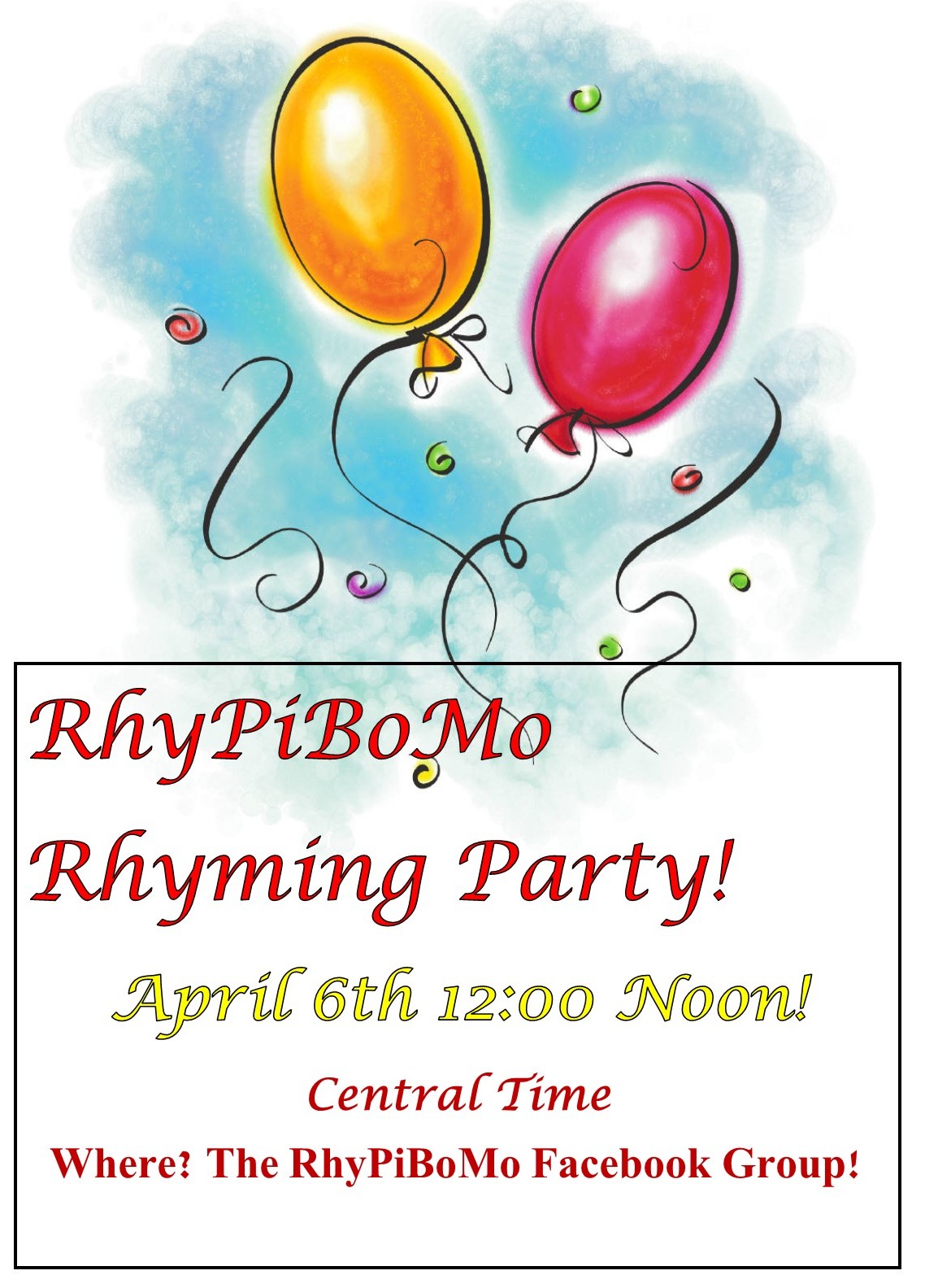
RhyPiBoMo Rhyming Party

Our Next Rhyming Party will be this Sunday at 6:00 p.m. Central Time!

(That’s Chicago Time)

What is a Rhyming party? It’s a one hour rhyming fun challenge in our Facebook Group! First, you must be a registered RhyPiBoMoer, next you must only comment in rhyme during the entire hour and finally, bring your fast fingers because I ask lots of quiz-type questions about the previous week’s blog posts and the fastest one to answer gets their name thrown into a hat for a prize.  As I hadn’t figured out how to fund the prizes for this year, they are very  limited. I will give away another RhyPiBoMo notebook and a manuscript critique by me, this Sunday…

So be there or be square!

*

*

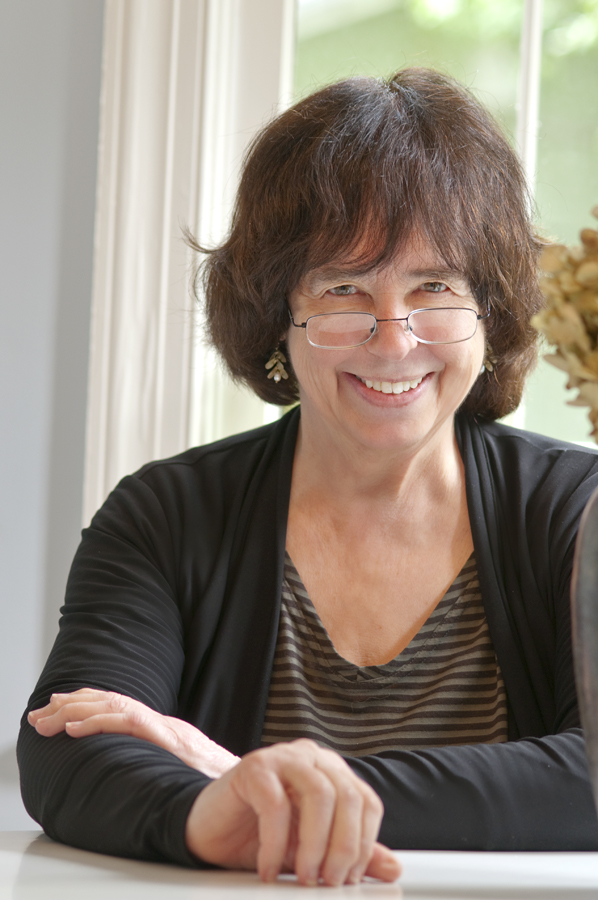
I was fortunate enough to meet today’s guest blogger at a Regional SCBWI Conference last spring in Ft. Wayne, Indiana. I listened her keynote address to hundreds of eager writers, in a beautiful ball room, surrounded by other well-known, yet equally as enthralled authors. The room stood still as Jane took the podium, sharing stories of her past, demanding the absolute best from each and every one of us sitting there and uttering her famous “Butt in Chair” phrase” as the crowd smiled and clapped. She’s a rock star! Yes, I asked her to autograph several of her books for me that day. I was impressed at how genuine and down to earth she was…and how smart! I was honored to meet her!

*


So, without further ado, I’m honored to present today’s

Golden Quill Guest Blogger

Jane Yolen!

*

       Rhypibomo Guest Blogger Badge    Jane Yolen 1

*

*

Poems are coded messages of fact and emotion. Did you know that poems were actually used in World War II as the base for the SOE, Special Ops Executive codes that the Underground used in France and elsewhere. Agents’ ciphers hinged on poems, and one of the most famous was written by Leo Marks for his fiancée who died in a plane crash. When Marks was in SOE, he gave this poem to the beautiful French agent Violette Szabo to use as her cipher before she was dropped into occupied France in 1944

*
The life that I have
Is all that I have
And the life that I have
Is yours.

*

The love that I have
Of the life that I have
Is yours and yours and yours.

*

A sleep I shall have
A rest I shall have
Yet death will be but a pause.

*

For the peace of my years
In the long green grass
Will be yours and your and yours.

*

*

Poets are code masters, and especially when we write poems for children. Our poems—whether funny or serious, short or long, nonsense or full of sense—change the course of a child’s growing as thoroughly as the Leonard Markses of World War II changed the course of history.

*
But just as Marks’ poem is rhymed on the slant (yours and pause and years are not perfect rhymes but remind the reader that I have resonance, kissing cousins as it were.

*

I sometimes worry that we children’s book poets forget that the family of poetry is very wide. Not just the immediate mother/father/sister/brother, those perfectly rhymed and scanned lines. Sometimes we need to break away from the jingle and go into the jungle of terrifying poetry.
Do you know J. Patrick Lewis’ poem that begins:

From Pat Lewis
The Rules of History
*

*
The fatter the king, the thinner the serf.
The longer the reign, the duller the pain.
The stronger the crown, the weaker the law.
The fainter the dream, the slimmer the hope.
*
And after two more wonderful, heart-pounding, forced-march verses ends this way:

*

The weaker the foe, the shriller the cry.
The louder the lie, the further the truth.
The madder the war, the sadder the foes.
The wiser the peace, the wider the peace.

*

Now there are no end rhymes in it, but some internal rhyming both true rhymes, like madder/sadder and slant rhyme reminders wiser/wider of what he is writing about.

*

But if he’d written this in jingle form—and he’s very good at rhymed poems as well—he might have come up with something like this:

*

The weaker the foe, the shriller the cry.
The further the truth, the louder the lie
The madder the war, the sadder the foes.
For that is the way the world often goes.

*

But look what we have lost in this poem: the pounding footsteps of the advancing army, the last line bashing in your head with a homily. This way, the verse could be put on Burma Shave signs, those placards of one line after another of a jingle that was the invention of a shaving cream ad campaign. But the way Lewis writes it, it will be put in the child reader’s heart.

*

I’m not saying do away with rhyme. I am saying make the rhyme fit what the poem is about. Be clever, be deep, be sensual with your word choices. Don’t let the rhyme dictate the poem but the poem dictate the word and line choices.

*
Be coded message, not an ad campaign.

*

–Jane Yolen, author of Emily Sonnets

*

*

Emily Sonnets

*

Word for PB Writers

*


Jane Yolen 5

*

*

Bio:
Jane Yolen, often called “the Hans Christian Andersen of America,” admits to actually being the Hans Jewish Andersen of America. She is the author of 350 books, ranging from picture books and baby board books, through middle grade fiction, poetry collections, nonfiction, novels, graphic novels, and story collections . Her books and stories have won many awards, including two Nebulas, a World Fantasy Award, a Caldecott, the Golden Kite, three Mythopoeic awards, two Christopher Medals, nomination for the National Book Award, and Jewish Book Award. She has two collections of adult poetry and a gadzillion books of children’s poetry. She also won the Kerlan Award and the Catholic Library’s Regina Medal. Six colleges and universities have given her honorary doctorates.

*

 Jane Yolen 2

 *

Thank you Jane Yolen!

~~~~~~~~~~~~~~~~~~~~~~~~~~~~~~~~~~~~~~~~~~~~~~~~~~~~~~~~~~~~~~~~~~~~~~~~~~~~~~~~~~~~~~

RhyPiBoMo Daily Lesson: Saturday, April 12th
By Angie Karcher © 2014
Lesson 14

Consider this a bit of Saturday review…

*

Perhaps we should start by asking how many syllables are in the word poem?
I pronounce it “Po-em” with 2 syllables but some people pronounce it “Poem” with one syllable. The official word based on 3 syllable dictionaries is that poem has 2 syllables. This brings us to such an important lesson about how critical it is to know your words. Choose them wisely and maybe even leave out words that could be controversial in the pronunciation.

*
A Syllable – is a unit of organization for a sequence of speech sounds and is an uninterrupted segment of speech. A syllable is the smallest conceivable expression of sound.(write this down)

*

For example:
Dog has 1 syllable
Kit-ten has 2 syllables
Syl-la-ble has 3 syllables
A-vi-a-tion has 4 syllables
Dis-a-gree-a-ble has 5 syllables

*

*

A syllable is a unit of pronunciation uttered without interruption, loosely, a single sound. All words are made from at least one syllable. (write this down)

*
Vowels – A-E-I-O-U and sometimes Y
Consonants – B-C-D-F- G- H- J- K- L- M- N- P- Q- R- S- T- V- X- Z -W-Y:
Note that the combination of consonants can create a singular sound as well
For example:
TH – SH- CH – GR – DR

*

*

Monosyllables have only one vowel sound (write this down)

*
Polysyllables have more than one. (write this down)

If a syllable ends with a consonant, it is called a closed syllable.
If a syllable ends with a vowel, it is called an open syllable.

*

Thanks to Mandy Yates, a Reading Specialist, for a better explanation of the different types of syllables!

Here are the 6 different types of syllables:(write this down)

1) Closed– CVC or just VC (cat or if) a consonant closes the vowel sound making it a short vowel)

2) Open– CV or just V (there is no consonant closing it off so it’s a long vowel sound and there is just one vowel= to, go, no or just I or a.)

3) Vce- words with the silent e= like, bake, cake, note

4) R-Controlled or Vowel R– words with ar/ur/or/er/ir- these appear to be closed, but in order to be closed the vowel would be short. These make a whole new sound.

5) Vowel Teams or Vowel Pairs– two vowels side by side. Can create a long sound = ai/ea/ay sometimes a short sound like /ea/ in bread or a whole new sound= ou/ow/oi

6)  Final Stable Syllables– these are non-phonetic patterns (meaning you can’t sound them out) that go on the end of a word: tion/tian/cian/ etc…or all of the consonant le patterns (ble/tle/ple.)

*

*

*

There is a tendency in English when a word with a
stressed final syllable is followed by another word without a pause,
the stress moves forward: “kangaROO”, but “KANGaroo court”;
“afterNOON”, but “AFTernoon nap”; “above BOARD”, but “an aBOVEboard
deal”.

*

*

An interesting link to several maps showing regional difference in specific words:

http://www.thejournal.ie/maps-americans-pronounce-different-words-938575-Jun2013/

*

Why must we have a concrete understanding of syllables?

The best way to improve your rhythm and meter is to get used to counting syllables. This is obviously not the only factor nor should it be your main focus, just the place to begin. This should become second nature to you.

*
I was a dedicated syllable counter before researching the daily lessons here but now I have a whole bag of tricks to use when writing poetry…not just counting syllables! That said, it is still important that your lines stay consistent in syllable count. I think there is a tiny bit of wiggle room in rhyming picture books but not much…just an extra syllable here or there…This should be the very limited exception to the rule!

*

*
Review:
The best poems to practice this with would be with Haiku, Tanka and Cinquain. We discussed Haiku and Cinquain the first week so this will be good practice.

*
Haiku – 3 line poem
line one has five syllables
line two has seven syllables
line three has five syllables

*

For example:
Sparrows circle high (5 syllables)
Sunny rays stream through gray skies (7 syllables)
Water drips from leaves (5 syllables)

*

*

Tanka – 5 line poem
line one has five syllables
line two has seven syllables
line three has five syllables
line four has seven syllables
line five has seven syllables

*

For example:
Snow drifts by my glass (5 syllables)
Spiders of ice form a branch (7 syllables)
Dancing on a breeze (5 syllables)
Small white dots move back and forth (7 syllables)
Sway to Mother Nature’s call (7 syllables)

*

*

Cinquain – 5 line poem
line one has two syllables
line two has four syllables
line three has six syllables
line four has eight syllables
line five has two syllables

*

For example:
Puppies (2 syllables)
Ornery fun (4 syllables)
Playing, barking, sleeping (6 syllables)
Favorite little loving friends (8 syllables)
Playful (2 syllables)

*

*

Look what I found…a few syllable dictionaries! These could certainly help with those words that are pronounced differently in different regions.

*
Syllable Dictionary
http://howmanysyllables.com/words/calculator
Syllable and Word Count Calculator
http://www.wordcalc.com/
Syllable Counter
http://www.poetrysoup.com/poetry_resources/syllable_counter.aspx

*

Resource: REALLY GOOD INFORMATION!
Poetry Terms and Forms
http://www.famousliteraryworks.com/poetry-terms.htm

*

*

As Jane Yolen is our guest blogger, I had to share something

I found on her website that will be very helpful.

Five Tips On Writing A Poem
By Jane Yolen

1. Look at the world through metaphor,
seeing one tree in terms of another.

2. Let two words bump up against another
Or seesaw on a single line.

3. Tell the truth inside out
Or on the slant.

4. Remember that grammar can be a good friend
And a mean neighbor.

5. Let the poem rhyme in the heart,
Though not always on the page.
http://janeyolen.com/poetry/

*

*

Writing Prompt: Write a Tanka today, as this is not one we have tried yet.

*

*

Okay, now do everything else on the pledge for today and don’t forget to comment on today’s blog post!
RhyPiBoMo Pledge

RhyPiBoMo PledgeRhyPiBoMo Pledge
Please comment ONLY ONE TIME below for a chance to win today’s prize!
Prizes will be drawn by Random.com next Sunday for the previous week.
To be eligible for a prize you must be a registered participant and
comment after each days lessons.

“Can You Feel the Rhythm in your Feet?” Friday

I registered the 200th person for RhyPiBoMo today!

Whoo Hoo and Confetti throwing!

**””*'”;;;;”;;;'””;;;::;;;’”'”:::;;;”‘”:::’”’**”**


Thank you to everyone who is participating!

Thanks for helping to make this an April to remember! = )

*

*

Today Someone asked a great question in our Facebook Group…

“If I’m getting started late, where do I find all the previous lessons?”

First, it will be helpful to have this daily guest blogger

calendar and lesson schedule…

RhyPiBoMo Calendar updated

This will help you know what you’ve missed and what’s to come!

Each daily lesson is under the guest blogger post for that day.

If you scroll to the bottom of any post, you will find the archives link. You can also find a specific blog post by typing the date of the blog  – comma- guest blogger’s name in the search field, in the upper right corner.

This should bring up any blog post you might be looking for.

~~~~~~~~~~~~~~~~~~~~~~~~~~~~~~~~~~~~~~~~~~~~~~~~~~~~~~~~~~~~~~~~~~~~~~~~

Another good question was concerning the Golden Quill Poetry Contest…

Only RhyPiBoMo participants are able to enter this contest.

I mentioned several dates in yesterdays blog post which may have been confusing…

First, you MUST be registered, which means you must register for RhyPiBoMo by April 16th to qualify as a registered participant.

*

The deadline for poetry contest entries is April 26th at Midnight Central Time. You enter the contest by clicking the tab above and following all the directions. Please add your poem in the body of the email as this saves me so much time when gathering the poems for judging.

*

*

midwest logo

I was fortunate to attend a conference session taught by today’s guest blogger, last spring at the Wild, Wild Mid-West Conference. This was a combination of Indiana, Ohio, Michigan and Illinois SCBWI groups coming together…It was a Wild, Wonderful Weekend! Ironically, Liz was teaching a session called “The Watering Trough: Writing Rhyme Editors Thirst For…I listened intently as she spoke about many of the things we are talking about here!

*

*

So, without further ado, I’m honored to present today’s

Golden Quill Guest Blogger

Liz Garton Scanlon


            Rhypibomo Guest Blogger Badge      Liz Garton Scanlon 1

*

*

*

Writing picture books is like being a grown up. At first, when we get started, we think we know everything. And then, as we carry on for a bit, we realize we know pretty much nothing at all. Which I guess means that I have very little to offer you, now that I have a few books under my belt and have been grown up for quite some time. But, here’s what I do have: Lessons learned, from back when I knew everything.

*

*

Lesson #1. Leave The Jazz to the Horn Players:
So I’d written and sold my first picture book – A Sock is a Pocket for Your Toes – and I was feeling good! I tore open the envelope from my editor because, really, what could it possibly contain besides praise, congratulations and some chocolate? Well. Quite a lot, it turns out. Corrections and opinions and strongly worded suggestions, for example. And no chocolate.

*

Liz book 1

*

First and foremost, I was asked to even out the meter and syllabics of the piece. I was appalled. “The variety,” I told her when we spoke, “is supposed to read like jazz.” (You guys. I seriously said that. Ego much?)
“No, no, no,” said my editor. “No jazz.”

*

No jazz

*

And here’s why. When we are teaching children about music – how to listen to it and appreciate it and eventually play it, we don’t start with jazz. We start with rhythm sticks. And repetition. Clapping. And choruses. That’s how we open up those neural pathways and turn on those synapses and create a brain capable of loving jazz. Wow, right? Since then I’ve left the jazz to the horn players, because opening up neural pathways and turning on synapses is plenty big work enough for me.

*

*

Lesson #2. Practice Detachment:
Y’know that “Kill Your Darlings” lesson you get in writing workshops and craft books? The one about deleting writing that you love if it doesn’t work for the piece as a whole? Well, take a double dose of that today. Because here’s what happens when you’re writing in rhyme: Your brain casts about for words that sound right, without caring if they make sense, or move the story forward, or feel organic, meaningful or true. Your brain just doesn’t care. But I’m here to tell you that your editor will feel differently.

*

I’ll admit that I’ve argued for a few beautifully written but woefully inadequate stanzas in my day, and thank goodness I didn’t win those fights. Because what we really want is not just perfect rhyme, but perfect rhyme doing the job it’s meant to do. Perfect rhyme painting the perfect picture or plucking the perfect heartstring or telling the perfect story. These days I care more about loving the final product – the book – than loving each and every couplet or quatrain I write – and may cut — along the way.

*

Heartstrings

*

Lesson #3: Play the Fool
When you read your rhyme out loud, it gets better. Who cares what your cats, dogs or human housemates think? Read it aloud again and again and listen for places where it stumbles and sinks, and for places where it sings.
And when other people read your rhyme out loud – to you – it gets better. Who cares if it’s not your best work, if it’s not finished, if it’s not perfect? Have someone unfamiliar with the piece read it to you, and listen with honest ears, willing ears and humility.

*

Honesty, willingness and humility aren’t exactly watchwords when you already know everything, but now that I know not much of all, well…. lesson learned.
Good luck, poets. Write on.

*

*

Bio:

Liz Garton Scanlon is the author of the highly-acclaimed, Caldecott-honored picture book All the World, illustrated by Marla Frazee, as well as The Good-Pie Party, illustrated by Kady McDonald Denton; Happy Birthday, Bunny, illustrated by Stephanie Graegin; and several others, most of which are in rhyme. Upcoming books include In the Canyon, a picture book celebrating the wonder of the Grand Canyon, and her first novel for young readers, The Great Good Summer, due in 2015. Ms. Scanlon is also a poet, a teacher and a frequent & popular presenter at schools, libraries and conferences. To learn more, visit her web site at http://www.LizGartonScanlon.com

*
A Sock is a Pocket for your Toes is a “spur to imaginative thinking.” — School Library Journal

All the World
All the World is “an invigorating love song to nature, families and interconnectedness.” — Kirkus, starred review

Noodle and Lou
Noodle & Lou offers “unfaltering rhyme and a gentle humor.” — Publisher’s Weekly

Think Big
Think Big is “turbocharged because of flawless scansion and exuberance.” — Kirkus

Happy Birthday Bunny
Happy Birthday, Bunny is “as memorable and heartfelt as a birthday book gets!” — Publisher’s Weekly, starred review

The Good Pie Party
The Good-Pie Party is “a must for every child who has to move away.” — Kirkus

Thank you Liz Garton Scanlon!

~~~~~~~~~~~~~~~~~~~~~~~~~~~~~~~~~~~~~~~~~~~~~~~~~~~~~~~~~~~~~~~~~~~~~~~~~~~~~~~~~~~~~

RhyPiBoMo Daily Lesson: Friday, April 11th
By Angie Karcher © 2014
Lesson 13

*

I must preface this by saying that this was by far the most fun lesson to write! I hope you enjoy and are dancing in the street when you finish!

Rhythm

*

Rhythm in poetry is made up of the continual tonal rise and fall of speech, by intentionally writing the words in such a way that the inflections will fall at certain points to make a pattern.(write this down)

*
“Rhythm (or “measure”) in writing is like the beat in music. In poetry, rhythm implies that certain words are produced more force- fully than others, and may be held for longer duration. The repetition of a pattern of such emphasis is what produces a “rhythmic effect.” The word rhythm comes from the Greek, meaning “measured motion.”(write this down)

http://www.angelfire.com/ct2/evenski/poetry/rhythm.html

Inflection – is when one syllable in a word is given emphasis when read out loud. Inflection is the key to finding your rhythm when reading orally.(write this down)

*

Is this you?

*

*

*


As I start off today’s lesson, I am drawn back to a quote I found and saved weeks ago by Sudipta Bardhan-Quallan. It was from a post on the Writer’s Rhumpus Blog from September 13, 2012.

*

“One thing I will say about writing in rhyme is that you either hear the rhyme and the rhythm, or you don’t. When I do workshops on writing picture books in rhyme that is the very first thing I tell people. I can teach someone all the basics of rhyme, I can teach them how to read meter, I can teach them what iambic pentameter is, and so on. I can teach them all of those fundamentals but what I cannot teach is that innate ability to feel the rhythm and rhyme when it works. But just because you don’t hear the rhythm of the words doesn’t mean you can’t write picture books — so many wonderful picture books are written in prose. No one should feel like rhyme is essential for telling a picture book story — it’s just one way to do it. Each author needs to find his/her own story and his/her her own path.”

*
http://writersrumpus.com/2013/09/13/interview-with-sudipta-bardhan-quallen-picture-book-author-and-presenter/

*

*


Rhythm is one of those things you are either born with or you aren’t.

Do you feel the rhythm in this song even if you don’t speak the language?

*


*
I can’t sit still when I listen to that song! Honestly! I want to grab a Solo Cup and join in!

*

I have a musical background which I know helps me find the beat, the locomotion of the sound, as it break dances across the page. I can’t sit still when I hear music with a deep base sound reverberating from the speakers. Here is a test…If you listen to this song and can’t sit still, then you have it too.  Rhythm, I mean!

*

Michael Jackson – The Way You Make Me Feel


*

How did it make you feel? If you are dancing in your seat, snapping your fingers, and reliving the 80’s right now…then you may have it! Rhythm, I mean!

*

*

Now for an Island sound…

Jimmy Buffet’s Margaritaville has a constant beat…1-2-3-4-1-2-3-4-1-2-3-4-1-2-3-4


*

Snap your fingers on beats 2 and 4 and you will find the rhythm.

*

*

*
Rhythm is internal, it’s in your genes as is your ability to sing, dance, paint, draw and write.

*

So what if you weren’t moved by Michael Jackson’s or Jimmy Buffet’s songs?

Is there still hope?

*
I think so but it’s going to take a lot of work. You must find your inner beat box, the part of your brain where your ears take over your entire body and you can’t, NOT move with the sound or rhythm. I don’t use a double negative lightly so this is the thing…it really is something that is involuntary! You have to snap, clap, move, sway, tap your foot, or stomp your feet!

*

*

Do you need to have rhythm to write poetry/rhyming picture books?

*
Yes.

 *

*

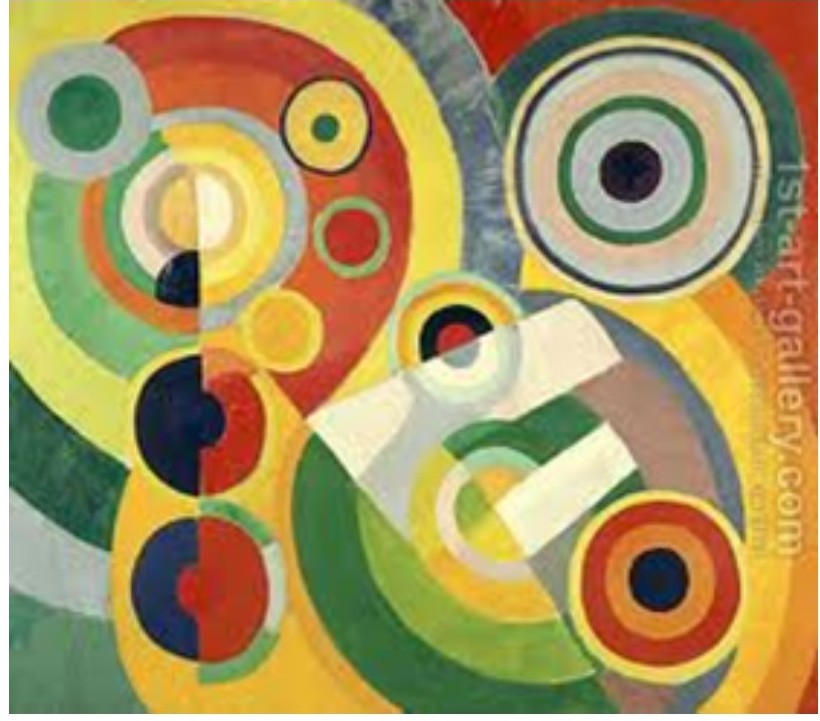
Which image best describes your sense of rhythm?

*

Rhythm image 1          OR       Rhythm image 2

Do you hear a pattern or repeating sound? Or, are you all over the place?

*

*

Hopefully, you chose the image on the left!

Luckily, on the internet there is a site to help us improve our sense of rhythm…LOL

*

How to Improve a Sense of Rhythm (too funny)
http://www.ehow.com/how_2191324_improve-sense-rhythm.html

*

*

If it helps, writers are not the only ones worried about lack of rhythm! In my research I found that many others are desperately worried and trying to find the cure for this problem.

*
Those looking for Rhythm include:
Dancers

Musicians

Marching Band Leaders

Music Therapists helping special needs children find rhythm to calm them

Couples ready to wed worried about their first dance

Elementary Music Teachers

Couples in the bedroom (I kid you not)

Parents worried that their kids don’t have it

Writers/Poets

*

*

It seems the number one suggestion in finding your rhythm…listen to lots and lots and lots of music!

*

Listen to lots of different types of music with various beats…orchestral, big band, pop, country, classical, island, rap, salsa and hip hop. Listen for the most prominent beat and find the pattern of the sound. Listen mostly to the percussion and deep bass sounds. Listen over and over until haring the rhythm becomes second nature to you.

*
Now…Do you have the rhythm Blues? Well let’s find your rhythm with Johnny Cash’s song Get Rhythm!


*

*


If scansion was extremely challenging to you on Tuesday, you may need a few lessons in rhythm. Here are some poetry readings that you can listen to as well…

*

Poetry Outloud
http://www.poetryoutloud.org/poems-and-performance/listen-to-poetry

*
Classic Poetry Aloud
http://classicpoetryaloud.podomatic.com/

*
Poets.org Poetry Readings National Calendar
http://www.poets.org/calendar.php

*
Poetry Slam – Nate Marshall’s winning piece from Louder Than a Bomb 2008 in Chicago titled LOOK (Nate is one of my favorite Poetry Slam artists! So talented!)

*


*

*

The only way you will improve your rhythm is to train your ears and your listening skills!
Practice! Practice! Practice!

*

This might need to be the first step of writing poetry
IF you are rhythmically challenged!

*

*

Listening Prompt: Listen to a variety of music and see if you can clap, snap and dance with the rhythm. Decide for yourself if you have rhythm.

*

*

There has been a dance party in my office tonight as I write this lesson.

I hope this is as much fun to read as it was to write!

*

It’s 2:00 a.m. and my husband just came and shut my office door!

But, the rhythm must go on!

Click the link to see her dance with rhythm!

Dancing girl in purple

*

Okay, now do everything else on the pledge for today and don’t forget to comment on today’s blog post!
RhyPiBoMo Pledge
RhyPiBoMo PledgeRhyPiBoMo Pledge
Please comment ONLY ONE TIME below for a chance to win today’s prize!
Prizes will be drawn by Random.com next Sunday for the previous week.
To be eligible for a prize you must be a registered participant and
comment after each days lessons.

Zip, Ziggety, Whirl, Pop, Screech, Sizzle Thursday!

RhyPiBoMo Poetry Contest Scroll

The RhyPiBoMo Golden Quill Poetry Contest is accepting entries! The guidelines are under the tab above. The deadline for submissions is April 26th at Midnight. As all of you are busy writing poems every day, you should have a hard time deciding which poem to submit! = ) There are three awesome prizes for this contest…

*

First Place
Scholarship for The Craft and Pleasures of Writing Poetry for Kids
Donated by Mira Reisberg and Sudipta Bardhan Quallan

*

Second Place
Scholarship for The Lyrical Language Lab: Punching up Prose with Poetry
Donated by Renee La Tulippe

*

Third Place
Scholarship for a spot in Picture Book Magic Course
Donated by Susanna Leonard Hill

*

You may only submit one poem for this contest. Please paste your poem in the body of your email and submit it by using the comment form for the contest entry. You must follow all the requirements for the contest or it will be disqualified. I must have your first and last name.  I have received several poems already and am looking forward to reading more.  Thanks to our esteemed judges Renee La Tulippe, Jill Esbaum, Tiffany Strelitz Haber!

*

Fuse 8http://blogs.slj.com/afuse8production/

*

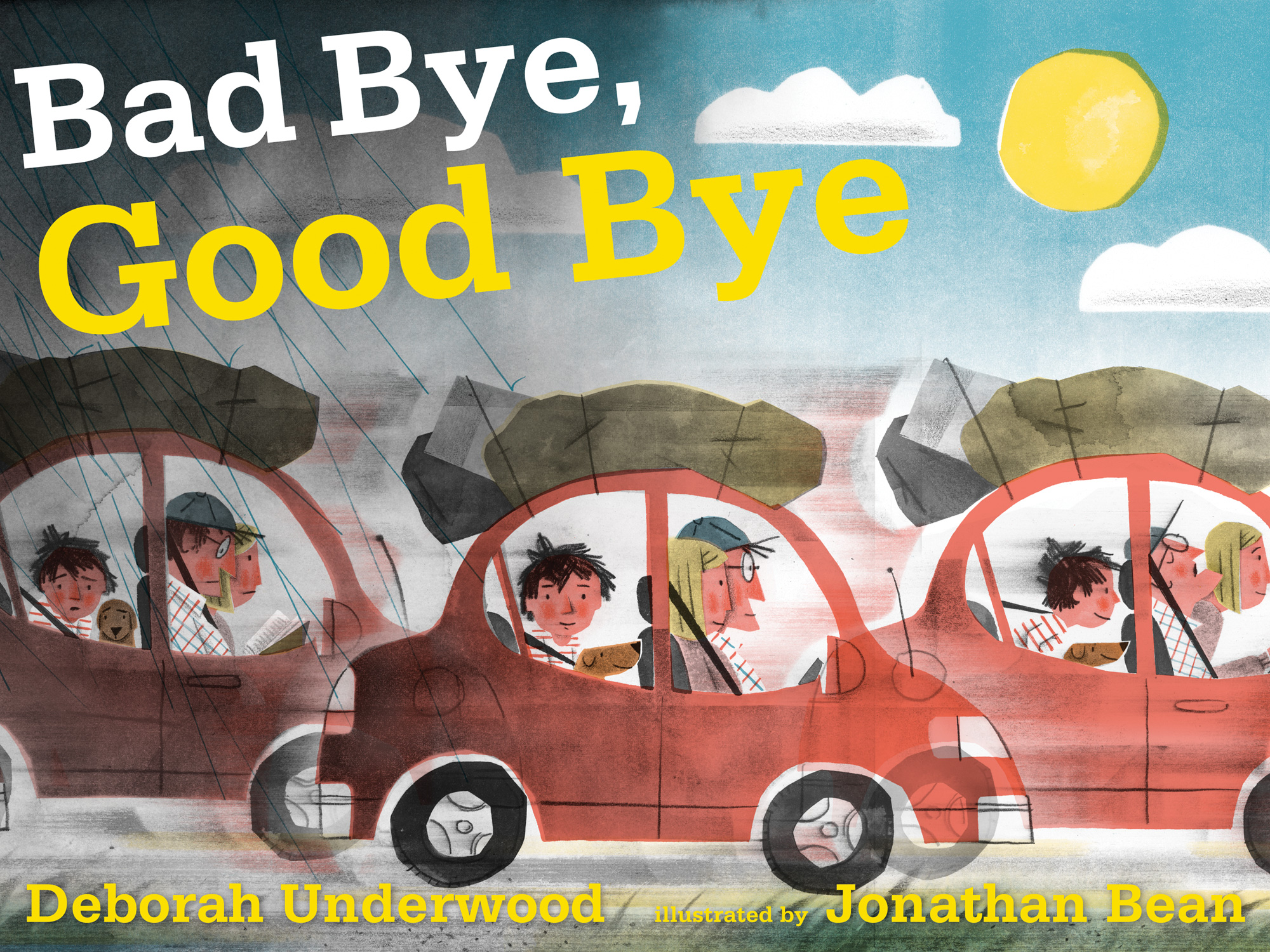
I was fortunate enough to meet today’s guest blogger at a SCBWI luncheon for Indiana authors last fall. I had just begun my search for RhyPiBoMo guest bloggers and she graciously agreed to join the list. She has access to the latest and greatest of children’s books and I’m honored that she is sharing an interview she did with Deborah Underwood, another RhyPiBoMo guest blogger, about her new book BAD BYE, GOOD BYE. It was completely coincidental that Deborah and Betsy were scheduled to blog the same week so we will get to hear more about this wonderful book and about Deborah’s creative process.

*

*

*


So, without further ado, I’m honored to present today’s

Golden Quill Guest Blogger

Betsy Bird!

     Rhypibomo Guest Blogger Badge   Betsy Bird 1

*

*

*

What is the best possible time to rhyme in a picture book? Anytime at all? Only for specific reasons and specific moments? In my search to come up with the best possible interview for RhyPiBoMo I scanned through every possible picture book I knew of coming out in 2014. As a Youth Materials Specialist with NYPL, I get to see a lot of books early. After much head scratching and wonder, I finally hit on my favorite rhyming picture book of the year. Bad Bye, Good Bye, by Deobrah Underwood, illustrated by Jonathan Bean is the touching story of a boy coming to terms with a big move, almost in spite of himself. Told with spare words and gorgeous imagery, Underwood (best known for cranking out such contemporary classics as The Quiet Book) manages to tell a complete story with a gentle, simple rhyme. With a release date of April 1st, Ms. Underwood was kind enough to answer some of my questions about her proces

          Deborah Underwood 2        Deborah Underwood 1

*

Betsy Bird: First off, I absolutely adore Bad Bye, Good Bye. One of my favorite books of the year thus far. My question to you is what the impetus was to write it in the first place?

 *

Deborah Underwood: Oh, thank you so much! I don’t remember the precise moment the story idea formed. I think I was just playing around with words, as I often do, and I liked the sound of “bad bye.” The idea of a moving story evolved organically from that. I scribbled down eight words and a few other snippets, including the ending. Then I stuck it in my idea folder, where it languished for a long time. Often I sift through the folder in desperation when I have a critique group meeting coming up and nothing to bring, and I’m pretty sure that’s what happened here.

*

Bad Bye NotesDeborah’s notes

*

BB: Were you familiar with the work of illustrator Jonathan Bean before he was paired with this project or was it just an entirely lovely surprise?

*

DU: He was new to me back then, but given that my genius editor Kate O’Sullivan chose him, I knew he’d be amazing. Of course I immediately looked him up and fell in love with his work, especially One Starry Night. And seeing his initial sketches for Bad Bye was another lovely surprise, because the style he used for this book was so different. He perfectly captures what it feels like to move: all those moments in time frozen and sometimes overlapping. The illustrations are just stunning. And I was profoundly impressed by his decision to go in this direction. Breaking away from what people might expect requires courage, and I love it when I see other creative people forging new territory; it really inspires me.

*

*

BB: Rhyming picture books that aren’t awful are hard, to say the least. At their worst that sound like poor Dr. Seuss imitations. At their best they’re sublime. Your book falls into the latter category. Why did you want to make it rhyme at all?

*

DU: It just started coming to me in rhyme. And truly, whenever a book starts coming to me in rhyme, there is a part of me that shrieks, “No no no no no no no!” and mentally reaches for an icepack and some Tylenol and a whole lot of chocolate and possibly whiskey. Because writing rhyme is so hard, and I know I’m in for weeks of pacing around my apartment muttering to myself and lunging for my Oxford Rhyming Dictionary.

*

There is nothing like the misery of seeing a page with a few decent lines of rhyme at the top and the bottom and a whole lot of empty space in the middle where the rest of the story somehow has to materialize. But there’s also nothing like the satisfaction of having completed a rhyming manuscript that works. It’s like a combination of writing and doing a really difficult crossword puzzle.

*

*

BB: Was there ever a temptation to make this a long and wordy book or was it always as incredibly simple as it stands right now?

*

DU: Nope; the staccato rhythm and spare text was a fundamental part of the story to me. And I liked the challenge of telling a satisfying story in 80 words. When I started writing picture books in 2001, the conventional wisdom was that you needed to keep them under 1,000 words; times have changed!
*

*

Bad Bye Notes 2

Deborah’s notes

*

*
BB: Are you new to rhyming picture books or is this old hat for you?

*

DU: I’ve written a number over the years, but this was the first one to sell. I’m happy to say that two others are under contract: Interstellar Cinderella (Chronicle, 2015) and Goodnight, Baddies (Beach Lane, 2016).

*

*

BB: What was the editorial process like? Did you sit down with your editor and scrupulously consider and reconsider every sparse word, or is this pretty much what you handed in at the start?

*

DU: Astonishingly, I think what was published is what I initially turned in! I did plenty of revising beforehand, of course. And there were several things that Kate and I revisited in the editing process. But after playing with alternatives and bouncing ideas back and forth, we went back to the original.

*

I remember struggling because I liked the idea of “pancakes” as one of the lines. I loved the possibility of having a scene in a diner, because when I was a kid, eating breakfast out was so novel and great–I mean, pitchers of syrup! different flavors!! But having a two-syllable word would have broken the pattern of two one-syllable words per line, so we ultimately left it alone.

*

*

BB: So, what are you working on next?

*

DU: I’m working on the third Cat book–Here Comes Santa Cat! publishes this fall and is all wrapped up, but book three will be out next year. I’m flirting with the idea of getting back to my middle-grade novel. I’m doing work for a few educational publishers. And I need to dig through my idea folder and start something new!

*

*

*
Bio:
Betsy Bird is currently New York Public Library’s Youth Materials Collections Specialist. She has served on Newbery, written for Horn Book, and has done other lovely little things that she’d love to tell you about but that she’s sure you’d find more interesting to hear of in person. Betsy is the creator of the School Library Journal blog A Fuse #8 Production. She is also the author of the (not rhyming) picture book Giant Dance Party and co-author with fellow bloggers Jules Danielson and Peter Sieruta of the upcoming Wild Things: Acts of Mischief in Children’s Literature, coming out with Candlewick in August 2014. Follow her on Twitter: @fuseeight.

*

Youth Materials Specialist
New York Public Library
Branch Collection Department
31-11 Thomson Avenue
Long Island City, NY 11101
http://blog.schoollibraryjournal.com/afuse8production

*

Check out Betsy’s debut picture book Giant Dance Party!

Giant dance party
Giant Dance Party by Betsy Bird (Spring 2013)


Thank you Betsy Bird!


~~~~~~~~~~~~~~~~~~~~~~~~~~~~~~~~~~~~~~~~~~~~~~~~~~~~~~~~~~~~~~~~~~~~~~~~~~~~~~~~~~~~~~~~~~~~~~~~~~~~~~~~~~~~~~

RhyPiBoMo Daily Lesson: Thursday, April 10th
By Angie Karcher © 2014
Lesson 12

*

*

Consonance

*

*

Consonance is often confused with assonance and alliteration. These three poetic devices are the building blocks of verse. The differences are slight but the effects are similar in their powerful ability to grab a reader.

*

Consonance – is a poetic device where the repetition of a consonant sound; more specifically, the repetition of the final consonant sounds of accented syllables or important words. (write this down)

For Example:
First and Last
Odds and Ends
Short and Sweet
Stroke of Luck

*

*

Consonance is one of the most common techniques used by writers. It adds a cadence to most sentences and can also be used to emphasize the importance of certain words in a poem.

For Example:
Pitter-patter,pitter-patter
In this line, the repetitive use of ‘p’, ‘tt’ and ‘r’ gives a unique rhythm to it, thereby enhancing its rhythmic appeal.

*

One genre of contemporary poetry that has many examples of consonance is hip-hop music. In this example, there is a repetition of the sound ile, and ays.

For Example:
Zealots by Fugees
Rap rejects my tape deck, ejects projectile
Whether Jew or Gentile, I rank top percentile,
Many styles, More powerful than gamma rays
My grammar pays, like Carlos Santana plays
(This is also internal rhyme)

*

Sometimes the initial and final consonant sounds are repeated.
For example:
Blade and Blood
Flash and Flesh
Wide and World
Lash and Leash

*

This is an adorable poem by Kenn Nesbitt titled That Explains It! and it’s an awesome example of how consonance can really embellish a poem!

That Explains It!
I went to the doctor. He x-rayed my head.
He stared for a moment and here’s what he said.
“It looks like you’ve got a banana in there,
an apple, an orange, a peach, and a pear.
I also see something that looks like a shoe,
a plate of spaghetti, some fake doggy doo,
an airplane, an arrow, a barrel, a chair,
a salmon, a camera, some old underwear,
a penny, a pickle, a pencil, a pen,
a hairy canary, a hammer, a hen,
a whistle, a thistle, a missile, a duck,
an icicle, bicycle, tricycle, truck.
With all of the junk that you have in your head
it’s kind of amazing you got out of bed.
The good news, at least, is you shouldn’t feel pain.
From what I can see here you don’t have a brain.”
http://www.consonanceexamples.com/

*

*

*

Assonance

*

Assonance – (also called vowel rhyme) is the repetition of vowel sounds to create internal rhyme within a phrase or sentence. It is used to reinforce the meanings of words or to set the mood. (write this down)

*

For Example:
Penitent and Reticence.
“on a proud round cloud in white high night”
The squeaky wheel gets the grease.
The early bird catches the worm.
“Hear the mellow wedding bells” by Edgar Allen Poe
“I lie down by the side of my bride”/”Fleet feet sweep by sleeping geese”/”Hear the lark and harden to the barking of the dark fox gone to ground” by Pink Floyd
“It’s hot and it’s monotonous.” by Sondheim

*

*

Onomatopoeia 2

*

*

Onomatopoeia

Onomatopoeia – is the formation of a word from a sound associated with what is named. It is the use of imitative and naturally suggestive words for rhetorical, dramatic, or poetic effect. Onomatopoeic words produce strong images that can both delight and amuse kids when listening to their parents read poetry. (write this down)

*

For example:
Hiccup
Zoom
Bang
Beep
Moo
Splashbang
beep
burp
chirp
clash
crunch
drip
grunt
hiccup
hoot
knock
plop
quack
rattle
sizzle
stomp
thud
toot
varoom
whack
whir
zap
zoom

*

*
Onomatopoeia used in poetry:

*

“The burning wood hissed and crackled.”

*

I chatter over stony ways,
In little sharps and trebles,
I bubble into eddying bays,
I babble on the pebbles. (from “The Brook” by Alfred, Lord Tennyson)

*

*

“How they tinkle, tinkle, tinkle,
in the icy air of night!
How they clang, and clash, and roar!
What a horror they outpour. ” (from The Bells by Edgar Allan Poe)

*

*

Onomatopoeia is also used in jokes:
Knock-knock ,Who’s there?
Boo
Boo who?
Don’t cry, I was only joking!

*

*

Onomatopoeia used in Nursery Rhymes:
Baa Baa Black Sheep

Old McDonald had a Farm

http://ri.search.yahoo.com/_ylt=A2KLqICRCUVTYnYA18b8w8QF;_ylu=X3oDMTBzcTlnazAzBHNlYwNjZC1hdHRyBHNsawNzb3VyY2UEdnRpZAM-/RV=2/RE=1397062162/RO=10/RU=http%3a%2f%2fwww.youtube.com%2fwatch%3fv%3d5oYKonYBujg/RK=0/RS=kmpATyEu6KpDVfewX1.00JHJYII-


*

*

Onomatopoeia used in music for a dramatic effect:
Poetry by Langston Hughes – The Weary Blues

Mississippi John Hurt Richland Woman Blues

Resources:
http://examples-of-onomatopoeia.com/
http://examples.yourdictionary.com/5-examples-of-onomatopoeia.html

*

*

*

Writing Prompt: Write a poem using all three poetic devices; Consonance, Assonance and Onomatopoeia.

*

*

Okay, now do everything else on the pledge for today and don’t forget to comment on today’s blog post!
RhyPiBoMo Pledge
RhyPiBoMo PledgeRhyPiBoMo Pledge
Please comment ONLY ONE TIME below for a chance to win today’s prize!
Prizes will be drawn by Random.com next Sunday for the previous week.
To be eligible for a prize you must be a registered participant and
comment after each days lessons.

Wild, Wild Wednesday Where Repetition and Alliteration Win!

RhyPiBoMoers Mix and Mingle

over coffee and books!

*

It seems that RhyPiBoMoers are starting to connect in person! I am so happy to share a photo of a group of lovely ladies who met at a local Barnes and Noble yesterday. These are online friends who came together face-to-face to chat about writing. All four of them are RhyPiBoMoers! They are all proudly holding a copy of Corey Rosen Schwartz’s Goldi Rocks and the Three Bears. Cori was one of our Golden Quill Guest Bloggers last week. I wish I were there to sip a chai latte and chat about Corey’s book with you! If any other RhyPiBoMoers meet, please send me a picture so I can post it here. May writing and rhyme continue to bring more writers together! Thanks for sharing this photo!

*

*

Ladies Meet*

*

Today’s guest blogger is an author I met many years ago at a SCBWI conference. I purchased several of her books then and they have graced my bookshelves for years as examples of wonderful rhyme! 

Piggies in a Polka

My favorite of her books is titled PIGGIES IN A POLKA and is delightfully full of “Piggy” descriptions.

My favorite verse is…

*

“The fiddle player saws a note.

He sets their boots a-scootin’.

Fiddle-dee-dee and yessiree,

those pigs are rootin’ tootin’.

*

That playful, dancing, clever rhyme is what I aspire to write in a rhyming picture book myself!

She is generous with her time and I am so proud to have her with us today!

*

*

So, without further ado, I’m honored to present today’s

Golden Quill Guest Blogger

Kathi Appelt

*

     Rhypibomo Guest Blogger Badge     Kathi Appelt 1        

                                                                    Kathi and her cat Mingus

                                                                     Photographer Igor Kraguljak
                                                                                            

*

*

Greetings Rhymsters!

*

*
Have you ever heard of a phenomenon called the Keats heuristic? It has to do with aphorisms and the way we perceive them based upon their forms. A scholar named Matthew McGlone, now at the University of Texas spent several years looking into it. What he found was that if something was stated in rhyme, the people he quizzed were more likely to believe it. Rhyme, it seems, added merit.

*
Examples would be such old chestnuts as “haste makes waste,” “red skies in morning, sailors take warning,” or “an apple a day keeps the doctor away.” Is there any definitive truth to those? There may be small kernels, but I think it’s safe to say that to rely upon any of them might be at least a little foolish. They may be “truthy” in other words, but you couldn’t actually prove them.

*
Nevertheless, it turns out that there is something innately reassuring about rhyme, something that lets us feel as if we’ve got a bead on what we need. You could say that a rhyme in time makes you feel fine.

*
Rhyming picture books certainly aren’t all true in the literal sense of the word. But I think that even the most rambunctious and rowdy of them, even those that are filled with nonsense words, speak to that same human yearning for comfort that we find in familiar aphorisms.
Our brains are wired for rhyme. Rhyming helps us remember, it helps us learn, and so too it seems, it reassures us.

*

Kathi Appelt 3

*

I remember years ago, when I was working on a book called Bubbles, Bubbles. One morning, I woke up early, and in the rosy light that streamed through my bedroom window, the word “bubbles” seemed to hover there just above my blankets. Before I even got out of bed, I started thinking about words that rhymed with it—tubbles, scrubbles, chubbles—none of those words even existed, but they made me smile.
The very next thought that came to me was one of overwhelming gratitude. “How great is this?” I thought. “Here I get to wake up with funny rhymes in my head, and I get paid for it too.” And in that moment, I felt like the luckiest person alive. The soft light, the bubbly, scrubbly, chubbly wonder of it all, reminded me that life hardly got better.

*

Kathi Appelt 2

*

And I believe this is what happens when we read rhyme to someone we love, whether it’s to a baby, a toddler, a teenager, our sweetheart, our friends, our grandparents. Regardless of whether we’re sharing a rhyme with someone brand new or someone who is passing on, there is an undercurrent of trust and comfort in those sing-songy lines that brings us together.
People say that rhyme is hard, and I won’t deny that. But I also know that it’s important in a fundamentally human way. It’s why I can’t give it up. It’s why I love it. It’s why I eat an apple almost every day.

*

Kathi Appelt,

*

*
Kathi Appelt 4

*

*

Bio:
Kathi Appelt is the award-winning author of many children’s books, including Bat Jamboree, illustrated by Melissa Sweet, and Incredible Me!, illustrated by G. Brian Karas. Ms. Appelt teaches creative writing to both children and adults and lives in College Station, Texas.
*

*

http://www.kathiappelt.com

*

*

Thank you Kathi Appelt!

~~~~~~~~~~~~~~~~~~~~~~~~~~~~~~~~~~~~~~~~~~~~~~~~~~~~~~~~~~~~~~~~~~~~~~~~~~~~~~~~~~~~~~~~~~~~~~~~~~~~~~~~~~~~~~

RhyPiBoMo Daily Lesson: Wednesday, April 9th
By Angie Karcher © 2014
Lesson 11

*

*

Alliteration

*

*

Alliteration is when a series of words in a row (or close to a row) have the same first consonant sound. (write this down)

Beginning Alliteration – is when the repeating words have the same first consonant at the beginning of the word. (write this down)
For example:
She sells seashells by the sea shore.

*

*

Hidden/Internal Alliteration – is when the repeating consonants are hidden within words. (write this down)
For example:
Great are her woes. The r sound is repeated.
Wiggle, Piggle, Giggle The g sound is repeated.

*

*

Why do we use Alliteration?

*
Alliteration is something we hear with our ears more than what we see with our eyes. It is about listening for the similar sounds. Often, alliteration is used in a humorous way, but not always. The repeating sounds catch our ear. They stand out and bring attention to the language in that particular line. Any technique that helps a reader focus on the language or words chosen is a positive step in the right direction for that poem.

*

*

Here are some examples of alliteration used in daily life:
Popular businesses with alliteration in their names to assure customers remember it:
Dunkin’ Donuts
PayPal
Best Buy
Coca-Cola
LifeLock
Park Place
American Apparel
American Airlines
Chuckee Cheese’s
Bed Bath & Beyond
Krispy Kreme
The Scotch and Sirloin

*

*

Famous people with alliteration in their names:
Many of these are stage names that were chosen with alliteration in mind.
Ronald Reagan
Sammy Sosa
Jesse Jackson
Michael Moore
William Wordsworth
Mickey Mouse
Porky Pig
Lois Lane
Marilyn Monroe
Fred Flintstone
Donald Duck
Spongebob Squarepants
Seattle Seahawks
Katie Courec (Remember, alliterative words don’t even necessarily have to start with the same letter, they simply have to have the same first sound).

*

*

Common phrases that have alliteration:
Busy as a bee
Dead as a doornail
Get your goat
Good as gold
Home sweet home
Last laugh
Make a mountain out of a molehill
Method to the madness
Neck and neck
Out of order

*

*

*

Repetition

*

Repetition is when a word or phrase is used several times within a line or stanza. Often a word that is repeated is the key to the message of the poem. It is exaggerated on purpose. A word is repeated to help us remember it. Repetition was often used in ballads where no one wrote it down so they used repetition to help others remember the song. (write this down)
For example:
In songs, lines that are repeated are called refrains. This is a common technique used in music.

*

*

Anaphora is the repetition of a word or phrase at the beginning of every clause. (write this down)

*
Diaphora is the repetition of a name, first to signify the person or persons it describes, then to signify its meaning. (write this down)

*
Polyptoton is where the author repeats words derived from the same root but with different endings. (write this down)

*

*
As we are learning how alliteration and repetition are useful, especially in orally read text, it is important it is to listen how powerful the language and word choices can be in our writing, I’ve added a few famous, powerful speeches with brilliant speakers and even more brilliant speech writers! Listen for the various forms of repetition and alliteration in their well-chosen words. They are very good at sneaking these techniques in…

*

*
Martin Luther King – I Have a Dream Speech on August 28, 1963

(this is long but well worth the listen)

http://video.search.yahoo.com/video/play;_ylt=A2KLqIMgqENTUhkAaoX7w8QF;_ylu=X3oDMTB2YzBqM3E1BHNlYwNzcgRzbGsDdmlkBHZ0aWQDVjE0NgRncG9zAzU-?p=Youtube%2C+I+have+a+dream+speech&vid=249a5b8a850770e97392cbb9b7d91c88&l=16%3A44&turl=http%3A%2F%2Fts1.mm.bing.net%2Fth%3Fid%3DVN.607999045158109248%26pid%3D15.1&rurl=http%3A%2F%2Fwww.youtube.com%2Fwatch%3Fv%3DHRIF4_WzU1w&tit=Martin+Luther+King+-+I+Have+a+Dream+on+August+28%2C+1963+%5BSous-titres+%26+Subtitles%5D+%5BFULL+SPEECH%5D&c=4&sigr=11ai0g27u&sigt=12u07onq5&pstcat=arts+culture+and+entertainment&age=0&&tt=b

*

*

Ronald Reagan – A Time for Choosing Speech

http://video.search.yahoo.com/video/play;_ylt=A2KLqIC9qUNTRXEANW37w8QF;_ylu=X3oDMTB2dW04cGsyBHNlYwNzcgRzbGsDdmlkBHZ0aWQDVjE0NgRncG9zAzg-?p=Youtube%2C+famous+speeches&vid=fb9709e8c85b17c2e01bf3d9cb3ce827&l=4%3A16&turl=http%3A%2F%2Fts4.mm.bing.net%2Fth%3Fid%3DVN.608010422522219279%26pid%3D15.1&rurl=http%3A%2F%2Fwww.youtube.com%2Fwatch%3Fv%3Dlvg7lRsCVJ8&tit=Reagan+-+A+Time+For+Choosing&c=7&sigr=11ag3bpcq&sigt=10sl7u7f7&pstcat=science+and+technology&age=0&&tt=b

*

*

President John F. Kennedy – Apollo Speech

http://www.youtube.com/watch?v=2_JlSdRCg7g&index=14&list=PL4A1446D924B9C895

*

*

Why do we use repetition?

*
1) Repetition is useful to provide sound patterns when there is no end word rhyme.
2) Repetition gives emphasis to the main focus of your poem.
3) Repetition can bring joy to the oral reading of a poem when done well.
4) Repetition is used to provide clarity, amplification, or emotional effect

*

*

*

Several suggestions of how to use repetition:
Use a repeated line at the beginning and the end of a poem.
Use a repeated line as the first line of each stanza.
Use a repetitive phrase 2 or 3 times within one poem.

*

*

Writing Prompt: Choose one of the three methods above and use repetition in a poem.

*

*

*

Okay, now do everything else on the pledge for today and don’t forget to comment on today’s blog post!

RhyPiBoMo PledgeRhyPiBoMo Pledge

Please comment ONLY ONE TIME below for a chance to win today’s prize!
Prizes will be drawn by Random.com next Sunday for the previous week.
To be eligible for a prize you must be a registered participant and
comment after each days lessons.

Rhythmic Tuesday

 I’m pleased to see that some of you are beginning to share you poetry on my website! I have really enjoyed reading the poems and look forward to seeing what you will share in the future!

 If you are interested in sharing your poetry here, click the Pearls of Poetry tab above and share away!

*

*SCBWI

Are you a member of SCBWI?

SCBWI is an organization that is essential for you to belong to as a children’s writer. It stands for the Society of Children’s Book Writers and Illustrators.  Here is the link to the website: http://www.scbwi.org/

You will find everything you need to know about writing and illustrating for children here. There are local and national conferences, awards, grants, a resource, library, a place to sell your books, and much much more. Please check it out if you are not a member. There is an annual fee of $90.00 and it will be the best investment in your future that you will ever make.  I’m told many editors view your membership in SCBWI as the sign of a professional writer so make sure to add that into a cover letter when you submit a manuscript.

*

*

When I began this journey to create RhyPiBoMo back in November of 2013, I started asking other writers who they suggested I ask to guest blog…Shutta Crum’s name kept coming back to me as quickly as I would ask the question!  She has been a delight to meet and I am thrilled that she is here to share her insight into scansion, meter and rhythm!

*

*

So, without further ado, I’m honored to present today’s

Golden Quill Guest Blogger

Shutta Crum

*

        Rhypibomo Guest Blogger Badge        Shutta Crum 1

*

*

*

Tuning Your Ear to the Sound of Poetry

*

Studies confirm that we hear sounds before we are born—our mother’s heartbeats, intestinal sounds, music, and the rise and fall of spoken language. Further, researchers have found that fetuses who are spoken to in a variety of pitches have an increased interest in sounds, and the inflections in sound, after birth. This is reflected in their heartbeats and brain activity.

* Now, isn’t that what happens to us as poetry lovers when we hear a poem that just “feels right?” Our hearts quicken, our brain activity trips over itself thinking about the poem. This makes sense, for poems are all about sound.

*

To really savor a poem, I believe we need to hear it read aloud. Oh yes, the letters on the page and the physical body of a poem is important, too. It’s good to be able to see that, and even to trace our fingers over the printed page—touching the text and the spaces around it. But to really take a poem into ourselves the music of its language must be taken in through the ears. (If only we could eat them, and smell them, too!)

*

One way writers catch clunkiness in poems, or prose, is to hear their work read aloud, either by the writer, or others. The ear is more precise in rooting out awkward phrases, discordant sounds, and clumsy rhythms than the eye. Some authors record themselves reading their work and then play that back, noting places where the work could be smoother.

*

Some writers, like myself, also must strive to overcome regional dialects. My family is from the Appalachian region of Kentucky and West Virginia. Sometimes I hear words differently than others do. I’m aware of this, and will often have another read my work aloud for me. (Spouses are good for this!) And occasionally, I will listen to the pronunciations of some words using an online audio dictionary. This is just to make sure I’ve put the stresses in the right places—especially if I am working on a metrical piece.

*

One of the most inspiring and helpful activities a poet can partake in is to attend poetry readings. Listen to others, their cadences, pitch, word choices, and yes . . . accents. Let yourself drift away on the melodies of the spoken word. Sure, you may not like the voices of some readers. And you may not agree with the message, or perspective, of some poems. But don’t worry about that too much. You’re there to listen to the rise and fall of our quirky language—the quick prick of impish “i” sounds, and lull of “u,” and those good, deep double “oo” sounds, too. And there’re all those soothing, or explosive, consonants, as well.

*

These are the tools of our trade. We need to hear them in use—not just read them—before we can master our tools. And if you’re brave enough, go to a reading on an open mic night and let others hear you read. You may also come away with some valuable feedback. Finally, if you hear a poem and it just “feels right,” try to get a copy. Read it aloud, over and over. Try to figure out why it works for you. As a writer it isn’t enough to just know it works; you want to know why/how it works and how you can do that, too. Sometimes we simply love something because it is familiar—and that’s fine. A poem you love may use a measure that has become a cultural standard such as the ballad measure, or common measure. (Alternating four beat and three beat iambic lines rhyming aBaB, or aBcB, such as in America the Beautiful, Emily Dickinson’s poems, or hymns like Amazing Grace.)

*

If a poem you love is in a standard metrical pattern such as those listed above, ask yourself: How can I work with this, change it, and still love it? And let me say that I believe all poems are lyrical—though some are a bit less so than others. This is due to a poem’s condensed nature. Generally, a poem has a great deal to accomplish in a small amount of time and space. (Note, there are always exceptions. Epic poetry can fill volumes!) There are insights, sensual details, probing questions, humor, pathos and epiphanies magically conjured. Lyricism facilitates all that, and more. With the right sounds we are lulled into a place where our defenses are down and we, as listeners and lovers of poetry, say “Here! I’ve opened my heart. Now, come in!”

*

Isn’t that the point of it all?

*

*

*

Bio: Shutta Crum is the author of numerous picture books and two novels. Most of her books have made “best book” and state reading lists around the country. THUNDER-BOOMER! was named an SLJ, ALA and Smithsonian Mag. “Notable Book” of the year. Of Shutta’s book MINE! the NY Times says: “. . . a delightful example of the drama and emotion that a nearly wordless book can convey.” DOZENS OF COUSINS, illustrated by the award-wining David Catrow, is her latest book. In 2005, Shutta was asked to read at the White House. In 2010 she was invited to tour American military base schools across Japan. For more: http://www.shutta.com .

* DOZENS OF COUSINS (Illustrated by the award-winning David Catrow). It’s written in free verse and started off as a poem I’d written for my parents as a kind of apology–years ago.

*

*

Here are a few of Shutta’s books that you will want to read!

*

*

Shutta Crum 4

 Dozens of Cousins. Clarion, 2013.

*

*

 Shutta Crum 2

 Thunder Boomer! Clarion Books 2009

*

*


Shutta Crum 3

Mine! Alfred A. Knopf, 2011.

*

*

Thank you Shutta Crum!

~~~~~~~~~~~~~~~~~~~~~~~~~~~~~~~~~~~~~~~~~~~~~~~~~~~~~~~~~~~~~~~~~~~~~~~~~~~~~~~~~~~~~~~~~~~~~~~~~~~~~~~~~~~

RhyPiBoMo Daily Lesson: Tuesday, April 8th

By Angie Karcher © 2014 Lesson 10

*

*

Scansion, Meter vs. Rhythm

*

Scansion is: when a writer uses a system of marking accented and unaccented syllables to analyze the meter in the poem.

Accented syllables are pronounced slightly louder and with more emphasis than unaccented syllables.

Poetry is arranged in lines and in patterns of accented and unaccented syllables called metrical feet.

*

Once you can recognize and mark the accented/unaccented syllables in a line, you will become better at expressing the rhythmic flow you desire.

*

Here is a great article on how to practice scansion:

http://www.ehow.com/how_10066149_mark-accented-syllables-poetry.html

Typically unstressed lines are marked with an upward curved symbol that looks like a smile.  It looks like this  ˘

There are many, many symbols that can describe the stress and unstressed parts of words depending on the teachings of various linguists.

*

*

When researching scansion, meter and rhythm, I found this page online that perfectly and simply describes everything we need to know about rhythm, meter and scansion…as I am having a terrible time getting the website to accept all the symbols involved with scansion and the spacing is a complete nightmare, I am sharing this information from a teacher’s webpage he posted for his class. I take no credit in this information at all. It is fully Mr. Black’s words and research. I am simply sharing it for the sake of education and because it is so well said in it’s simplicity and content!  Plus, there is no need to reinvent the wheel here! I will not be this fortunate to find such a great lesson over our other topics…LOL

*

Please refer to this link for today’s lesson:

The link: http://server.riverdale.k12.or.us/~bblack/meter.html


*

*

Just so you know, Mr. Black is a 5th grade English teacher Are you smarter than a 5th grader?

*

*

Writing Exercise: Try to scan these poem excerpts below?

*

*

The morns are meeker than they were,

The nuts are getting brown;

The berry’s cheek is plumper,

The rose is out of town. –Emily Dickinson

*

*

Bats have webby wings that fold up;

Bats from ceilings hang down rolled up;

Bats when flying undismayed are;

Bats are careful; bats use radar; –Frank Jacobs, “The Bat”


Resources:

http://www.ehow.com/how_10066149_mark-accented-syllables-poetry.html

*

*

Mr. Black, You are my Hero!

I’ve tried to come up with something to add to his information but without sounding redundant, that’s it in a nut shell! I feel odd not having typed all that out tonight, searching for better examples and then sharing them but it would have taken hours and then once transferred to my blog would have taken more hours to get the spacing right…so I am letting this one be. When it’s good, it’s good! This gives me more time to work on the next lesson. Ok…Guilt trip over! LOL

*

*

Okay, now do everything else on the pledge for today and don’t forget to comment on today’s blog post!

RhyPiBoMo Pledge RhyPiBoMo Pledge Please comment ONLY ONE TIME below for a chance to win today’s prize! Prizes will be drawn by Random.com next Sunday for the previous week. To be eligible for a prize you must be a registered participant and comment after each days lessons!

It’s Monday, Rhyming Fun Day!

It’s Monday, Rhyming Fun Day!

Here we are…ready for the second week! I know last week was a lot of information but now you have it to look back on. I am already much more comfortable with the many terms that we covered last week. Do I remember everything? Nope, but when I am researching for the lessons and come across some of the terminology, it is becoming more familiar. It takes time to learn new concepts. 

*

Thank you for all the kind and complementary comments! It is what keeps me going as my butt has been in this chair for many hours over the past few weeks. It is exactly what I needed to get myself focused. Jane Yolen would be proud of us all! She was pleased with the number of you who signed up to receive her daily poems. If you are interested, send her an email at Janeyolen@aol.com and mention that you will promise to either buy one of her books or borrow one from the library each month. Please also mention that you are participating in RhyPiBoMo as Jane is our guest blogger this Saturday. I think it is too late to receive poems for this month as she only admits people at the beginning of each month. Tell Jane I said “Hi!”


Rhyming Party

We had our 2nd Rhyming Party today on the RhyPiBoMo Facebook Group page…It was rhyming hilarity at it’s best! During the party, we played a few rhyming games and I ask trivia type questions about the blog and things that have been mentioned here. Everyone playing is obligated to comment with their answers in rhyme. It’s fun to see them rushing to answer and keep their brains in rhyming form. Here are a few of my favorite quotes from the party…

*

Laura Rackham This was in reference to a question asking what my husband’s name is… (Stan) ”A man so fine to inspire such rhyme” LOL

Lori Mozdzierz “Verse sense makes us less dense!”

Lori Mozdzierz “Laughing out loud! We are a smart crowd!”

Pamela Courtney “They’re both winners of….two plate chicken dinners. From Popeyes (how ’bout that?)”

Pamela Courtney “To the seasoned and beginners, we’re all true winners. Righteous! Brighteous! and Outta Sighteous!”

Helen Kemp Zax “What a wonderful time, spent wholly in rhyme!”

Suzy Leopold “See you soon raccoons!”

*

I hope you can join us for the next rhyming party. Request to join the Facebook Group and make sure you are registered for the event to participate. If you are not sure if you are registered, there is a tab above that says RhyPiBoMo Registration List…Check and see if your name is on it. If not, Click the tab to Register asap! Registration ends April 16th  You must be registered to win any prizes. There were several people who would have won a prize for last week but they were not registered for the event.

*

*

Pearls of Poetry

Pearls of Poetry 1

https://angiekarcher.wordpress.com/pearls-of-poetry-wisdom/

*

Several people have asked if there is a place they can share their poetry with the group.  There is! Look at the tab above that says Pearls of Poetry…That is a place for any writer to share kid-friendly poetry. It is completely optional and not part of this challenge. I wanted to wait a week before I mentioned it so you don’t feel obligated. It is a place for sharing and perusing at your leisure. I will try to stop by to read the poetry there as I can but please feel free to share any poetry that is again, kid and family friendly.

*

Pearls of Poetry 2

*

*

*

We are fortunate to have today’s guest blogger as she is a busy editor at Putnam. I’m thrilled to have her here to help us understand the editor’s point of view when it comes to rhyming picture books and poetry.  

*

*


So, without further ado, I’m honored to present today’s

Golden Quill Guest Blogger

Susan Kochan

*

       Rhypibomo Guest Blogger Badge       Susan Kochan 1

*

*

With Susan’s busy schedule we decided it best to do a Question and Answer session. I have thought of a dozen other questions for her now that the event is here but thankfully, she was happy to answer the questions I came up with back in January…

*

*

What did you want to be when you grew up?

*
–I went through a phase of wanting to be an architect, fully inspired by Lincoln Logs and Legos, but quickly got over that when I learned how much math and physics was involved. I was a huge bookworm as well but never knew or thought about working with books as an option for a career.

*

*

Please tell us about your professional journey through children’s books…

*

–I was an elementary education major in college and loved my children’s literature classes best. Whole Language was popular while I was in school and using trade books in all subjects seemed natural and fun to me. After four years of teaching, I realized that was not the profession for me but didn’t know what I could do next. I had spent one year as a substitute teacher and while my students were at specials, I’d scour the library for new books (no planning for subs – yay!). That felt a lot like my time in my elementary school library and led me to wonder if there were something I could do with books. I knew authors and illustrators from using trade books in all of my classrooms, but I didn’t know anything about publishing at all. I was lucky enough to get an interview with Margaret Frith at Putnam and landed in editorial. In the beginning I was equally amazed by being surrounded by books and the wonderful people who created them and the fact that I could go to the restroom whenever I wanted. I’m in my twentieth year at Putnam (!) and sometimes still can’t believe I get to help make books for a living.

*

*

Why did you decide to be an editor?

*
–I would have taken any job in publishing and honestly didn’t know much about any of the departments. My breadth of knowledge about recent books, authors, and illustrators made me a good fit for editorial and then I was able to find some great manuscripts in the slush pile so they kept me around.

*

*
How do you feel about rhyming books in today’s market?

*
–Rhyming books will always be popular if they’re done well because children enjoy rhythm. Great verse is like a song to the ear (though harder to write–songs are more forgiving). Very young children respond to the patterns in rhymes and the pace of lively verses while kids who are learning to read get cues from the rhythms and rhymes. It will always be fun to read a rhyming book aloud when kids can guess the next word and recite it with you.

*

*

Do you publish much poetry?

*
–I have only acquired one poetry collection–La Madre Goose by Susan Middleton Elya, to be illustrated by Juana Martinez-Neal. I am more drawn to stories than collections.

*

*

What should authors always do when submitting rhyme and poetry?

*
–For a picture book that is meant to be read as a narrative, use a consistent rhyme scheme throughout. The meter should add fun to the telling without spots that pull the reader out of the flow of the rhythm.

*
–Make sure the manuscript has a strong story as well as carefully examined meter and rhythm. Fun language is great, but in order to stand up to repeat readings and become a child’s favorite, a book also needs distinct characters and an interesting plot.

*

–Find many people who will read your work aloud in front of you before you think it’s ready to submit. You can learn a lot about trouble spots by listening to fresh readers. Mark every word they trip on.

*

*

What should authors never do when submitting rhyme and poetry?

*

Some problems I see include:

*

–Don’t force rhymes.

*

— awkward phrasing to make lines end with the rhyming word

*
— sentences or phrases that are part of a single topic or idea that jump from one stanza to another in order to make a rhyming word work (sometimes this can work but it is very rare).

*
–one or two difficult or sophisticated words in the mix purely for the rhyme

*

–Don’t mix stanzas with different meters or styles of poems within one story (for example – some stanzas have three lines while others have two; one stanza ends with words that all rhyme while the next has rhyming words for every other line)

*

–Don’t think you can get away with lazy rhymes or uneven rhythm because you see it in other books.
*
*

On a scale of 1-10 how much bad rhyme do you get?

1= not much…to…10 = I’m out of rejection letters!

*
–I’d say 9.

*

*

Describe the excitement when you read brilliant rhyme.

*
–It makes me smile and laugh out loud or stop and reread a few times. It makes me marvel at how much fun language can be. I instantly think about how a child will respond.

*

*

What do you predict the future is for rhyme and poetry?

*
–There will always be a market for well-done verse. It will forever be fun to read aloud. Talented readers will never stop loving how they can amp up the word play and less artistic readers will always appreciate how the words are magic even without much work. Kids are born loving rhythm and will respond to hearing it from books for as long as they’ll respond to it in music.

*

*

Bio:

Susan Kochan has been with Putnam for almost twenty years after a short-lived career as an elementary teacher. She acquires fiction and nonfiction from young picture books through middle-grade novels. She is the editor of many rhyming picture books including Falling for Rapunzel and Waking Beauty by Leah Wilcox, illustrated by Lydia Monks; Hornbooks and Inkwells and Civil War Drummer Boy by Verla Kay, illustrated by S. D. Schindler and Larry Day (respectively); Oh No, Gotta Go by Susan Middleton Elya, illustrated by G. Brian Karas; Cool Daddy Rat by Kristyn Crow, illustrated by Mike Lester; The Three Ninja Pigs and Ninja Red Riding Hood by Corey Rosen Schwartz, illustrated by Dan Santat; and The Gingerbread Man Loose in the School and The Gingerbread Man Loose on the Fire Truck by Laura Murray, illustrated by Mike Lowery.

*

*

Here are Putnam’s guidelines (the short version):
Putnam Children’s accepts unsolicited manuscripts, but we can’t respond to the huge volume we receive. Please send just manuscripts (no SASE) to: Putnam Children’s Editorial, 345 Hudson Street, NY, NY 10014 and we will respond within four months if we are interested.

*

*

Thank you Susan Kochan!


~~~~~~~~~~~~~~~~~~~~~~~~~~~~~~~~~~~~~~~~~~~~~~~~~~~~~~~~~~~~~~~~~~~~~~~~~~~~~~~~~~~~~~~~~~~~~~~~~~~~~~~~~~~

RhyPiBoMo Daily Lesson: Monday, April 7th
By Angie Karcher © 2014
Lesson 9

*

*

Reasons to Rhyme…

*

Definition of Rhyme:
– identity in sound of some part, especially the end, of words or lines of verse. http://dictionary.reference.com/browse/rhyme

*

– correspondence in the sounds of two or more lines (especially final sounds), to be similar in sound, especially with respect to the last syllable
http://rhymezone.com/r/rhyme.cgi?Word=rhyme&typeofrhyme=def&org1=syl&org2=l&org3=y

*

– a repetition of similar sounds in two or more words, most often at the end of lines in poems and songs. http://en.wikipedia.org/wiki/Rhyme

*

Rhyme is a technique of writing that works best when it is not obvious! As a writer, I want someone to read my poem and think about my word choices for their meanings and not my rhyme scheme. (write this down)

*

*

*

First I think we have to distinguish the difference between good rhyme and bad rhyme. Good rhyme occurs when the two or more words that rhyme complement each other in respect to meaning, sound and/or thought. In other words, the rhyming words add to the joy of reading that particular text.

*
Bad rhyme occurs when the writer is using language as a scapegoat. The rhyming words are chosen almost exclusively because of the ending sounds involved…not taking into consideration the meanings of the words. Bad rhyme does NOT add to the joy of reading the text. It confuses the reader and often makes the text silly or nonsensical. Bad rhyme keeps the writer from saying what he/she truly wants to say.

*

From here on out I will be making reference to rhyme…aka: Good rhyme.

*

Why do we write in rhyme? (write this down or add to your list from last week)

*
Let’s first think about why rhyme is a positive influence …

*
  1) Rhyme is an echo that gives a feeling of closure. You call out, then you get an answer.

*
2) Rhyme helps the reader remember the poem or the rhyming picture book text.

*
3) Rhyme gives a logical order to our thoughts when reading.

*
4) Rhyme is pleasant to read silently and extremely satisfying to hear or read orally.

*
5) Rhyme is an awesome tool to help new readers understand language and to become confident readers.

*

6) Rhyme enables the new reader to use context clues in the sentence to make an educated guess as to the ending word, or rhyme word.

*
7) Rhyme brings joy to reading. It encourages the listener and reader to be playful, find fun in language and makes reading a positive experience.

*

*

Rhyming word collage

*

End Rhyme/ Perfect Rhyme/Complete Rhyme/Full Rhyme/True Rhyme/Exact Rhyme…Lots of names for the same thing! (write this down)

*
Definition – end rhyme, in poetry, a rhyme that occurs in the last syllables of a line or verse. Words with ending rhyme have the same final vowel sound and following consonant sound(s).

End rhymes in one syllable words:

*
For example: The word cat rhymes with words with the short a/ consonant T sound –at sound (rhymes with flat, mat, brat, hat)
The word great rhymes with the words with the long a/ consonant T sound –ate sound (rhymes with plate, eight, straight, bait)

*

End rhymes in multiple syllable words: (write this down)

*
The beginning syllables of these words are disregarded.

*
Words with last syllable rhyme have the same sounds following the last syllable, usually with a consonant, a vowel, and another consonant (CVC pattern).

*

The word un-told rhymes with words with a consonant/the long o/ consonant D sound -old sound (rhymes with fold, *rolled, marigold, buttonholed)

The word swea-ter rhymes with words with the consonant sound/short e/ consonant r -er sound (rhymes with doctor, waiter, sister, water, were)

*

The word ab-stain with the last syllable having a consonant sound/long a/consonant sound -ain sound (rhymes with restrain, champagne, grain, brain)

*

*

Masculine Rhyme
Definition – Rhymes with a stressed final syllable – 2 syllables (write this down)
For example: re-flect/ob-ject/re-ject/pro-tect

*

Femenine Rhyme
Definition – Rhyme with an unstressed final syllable – 2 syllables (write this down)
For example: scram-ble/ ram-ble/ gam-ble/sham-ble

 *

*

Double Rhymes
Definition – 2 syllable words that have the same vowel sound in the second-to-last syllable and all following sounds. (write this down)

*
For example: The word boring rhymes with words that end in –oring. So, to be a double rhyme here, these words must have a vowel O/consonant R/ and an –ing ending. (adoring, pouring, restoring, scoring)

*
Other examples of double rhyme include:
talking/walking
swimming/brimming
conviction/prediction

*

*

Beginning Rhymes/First Syllable Rhyme/Reverse Rhyme
Definition – Words with beginning rhyme have the same initial consonant sound(s) and the same first vowel sound. (write this down)

*
This option lets you find words with initial alliteration (the repetition of initial consonant sounds), initial assonance (the repetition of initial vowel sounds), and front rhyme (the succession of beginning sounds of words).(write this down)

*
For example:
cat/kangaroo/candy
reminder/relieve/redo
phrase/frame/frail

*

*

Consonant Alliteration at the beginning of words: The repetition of consonant sounds at the beginning of words; alliteration, as in The fair breeze blew, the white foam flew. Also called head rhyme, initial rhyme. (write this down)

*
Forced Rhyme
Definition – A rhyme that is produced by changing the normal spelling of a word, or by changing the normal structure of a phrase. (write this down)

*
In my research it was clear that forced rhyme is a clear sign of an amateur writer. Forced rhyme is viewed as unprofessional, where the writer has convoluted the entire structure of the poem to make the rhyme fit. It is looked at as desperate or lazy by editors. Forced rhyme is considered one of the main reasons rhyming manuscripts are rejected by editors. It is suggested that reading good formal poetry, sending a manuscript to a critique group and utilizing a rhyming dictionary are all good solutions to forced rhyme. You can be sure that forced rhyme is definitely a rhyming crime! Don’t do it!

*

*

Inversion/Inverted Rhyme
Definition – Awkward rhyme where a word is purposely switched from its natural position in order to make a rhyme pattern fit; changing the normal word order of a sentence. (write this down)

*
For example: the last line is inverted
On a cool fall day
In the elm tree’s shade
I passed the time away
For you, I stayed. The natural flow of this line would be I stayed for you.

*

*

As author/poet Mary Oliver states in her book, A POETRY HANDBOOK “Good inversion is wonderful. Good inversion is difficult to achieve. Bad inversion is never wonderful and rarely difficult to achieve.”

*

*

*
Slant Rhymes/Half Rhymes/Off Rhyme
Definition – Words with sounds that are closely related but not identical. (write this down)

*
For example:
lace/less
seer/share
hear/ware
blonde/stand
here/chair

*

*


Internal Rhyme
Definition: a rhyme created by two or more words in the same line of verse. This is actually a common rhyme form, typically used in nursery rhymes. (write this down)

*
For example:
Jack Spratt could eat no fat
The cat sat on the mat
Old Mother Hubbard went to the cupboard
Simple Simon met a pieman
The crazy moose is loose in the caboose
I am the daughter of Earth and water

*

One big problem with rhyme is that different people pronounce the same word differently, based upon where they live.

*

*
Dialect – The way a language is spoken in a particular place or among a particular group of people.
There is plenty of room for discussion on this subject but not today as this lesson was much more involved than I thought it would be. You need to be aware of the words you choose and how they may be pronounced in other parts of the country or world.

*

Dialect map
For example, in the United States, there are more than a dozen different dialects of the English language spoken.

*

*


Resources:
http://www.rhymer.com/
A Poetry Community – I came across this online group…I don’t belong but it looks like it might be worthwhile.
http://www.poems-and-quotes.com/register.html
A POETRY HANDBOOK
http://www.amazon.com/A-Poetry-Handbook-Mary-Oliver/dp/0156724006

*

*

Writing Prompt: Make lists of rhyming words for each category above.

*

*

*

Okay, now do everything else on the pledge for today and don’t forget to comment on today’s blog post!
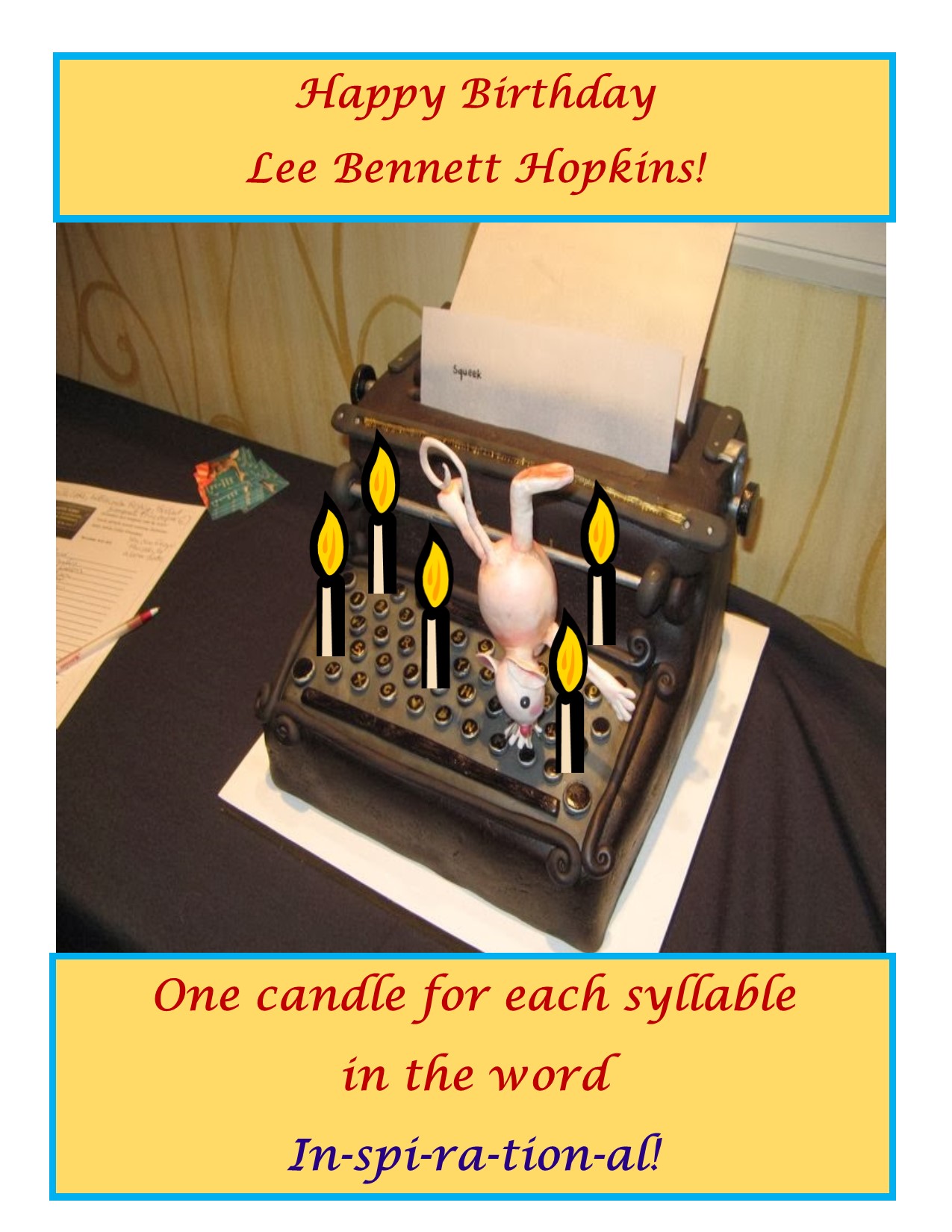
*

RhyPiBoMo Pledge

*
RhyPiBoMo Pledge
Please comment ONLY ONE TIME below for a chance to win today’s prize!
Prizes will be drawn by Random.com next Sunday for the previous week.
To be eligible for a prize you must be a registered participant and
comment after each days lessons.


No Rest for the RhyPiBoMoers!

It’s Sunday, the day for our

Rhyming Party today at Noon, Central Time!

Go to the

RhyPiBoMo Facebook Group

to join the fun!

RhyPiBoMo Rhyming Party

*

*

Announcing this weeks daily prize winners!

Don’t forget to comment EACH  day that you participate in order to be eligible for the week’s prizes. You have until Midnight on Saturday each week to get caught up for the week.  There were several people who would have won a prize that commented but are not registered for the event. You must be registered to qualify for a prize! Click the registration tab above or go to https://angiekarcher.wordpress.com/rhypibomo-registration/and register now!

*

*


This week’s Daily Prize winners are:                              

Sunday              Kevan Atteberry Art quality signed print of his rhyme cartoon       Penny Parker Klostermann

Monday             Bear Feels Scared by Karma Wilson                                                            Charlotte Dixon

Tuesday            Who Goes There? by Karma Wilson                                                              Cecilia Clark

Wednesday       Choice of Noodle & Lou, Think Big or Happy Birthday

                            Bunny by Liz Garton Scanlon                                                                         Lori Mozdzierz

Thursday          Beetle Bop  by Denise Fleming                                                                        Helen Dening

Friday                2 Hour Manuscript Edit by Jackie Hosking                                               Jennifer B. Young

Saturday           underGROUND BY Denise Fleming                                                              Jill Proctor


WINNERS: EMAIL me at 

Angie.karcher@yahoo.com

with your mailing addresses to receive your prize!

~~~~~~~~~~~~~~~~~~~~~~~~~~~~~~~~~~~~~~~~~~~~~~~~~~~~~~~~~~~~~~~~~~~~~~~~~~~~~~~~~~~~~~~~~~~~~~~~~~~~~~~~~~~

As our Daily Lesson is on stanzas today, I thought I’d share a Stanza Riddle!

*

Who is tall, dark and handsome and puts up with a children’s author who…

*

Writes all night and sleeps all day,

forgets to make dinner but write this buffet?

He doesn’t complain or ever ask why,

my husband Stan-za really great guy!

*

Mardi Gras 2013

Mardi Gras 2013

Thank you Stan Karcher for putting up with my shenanigans! I love you!

Happy Birthday on April 23rd! I’m telling you early in case I forget in all my RhyPiBoMo mania! = )

*

*

Fortunately, you can’t see how messy my office has become in one short week, strewn with picture books, rhyming dictionaries, and empty coffee mugs, but look what came in the mail Yesterday! I finally got my copy of GOOD BYE, BAD BYE. It is a delight! This newly released rhyming picture book is a gem, combining Deborah’s thrifty yet brilliant text and Jonathan Bean’s amazing illustrations.

photo (1)

“Bad truck, bad guy; bad wave, bad bye . . .” A boy and his family are packing up their old home, and the morning feels scary and sad. But when he arrives at his new home, an evening of good byes awaits: bye to new friends, bye to glowing fireflies, bye to climbing trees. Happy Book Birthday month to BAD BYE, GOOD BYE!

*

*

So, without further ado, I’m honored to present today’s

Golden Quill Guest Blogger

Deborah Underwood

*

*


        Rhypibomo Guest Blogger Badge         Deborah Underwood 1

*

*

*


How’s Your Verse Sense?

You may know people whose poetic efforts are impeccable. Their rhymes are natural, not forced; they don’t use convoluted syntax (like “the box unopened underneath her bed she put”); their words skip along, effortlessly conforming to the metrical structure they’ve set up.

*

You may also know otherwise-excellent writers who repeatedly bring subpar rhyming manuscripts to critique meetings. The rhymes are forced. Some lines are missing a foot (or two or three). The metrical pattern changes randomly from stanza to stanza.

*

What do the former folks have that the latter folks lack? I call it verse sense: the ability to tell good verse from bad.

*

Like any writing skill or asset, verse sense comes naturally to some. I feel fortunate in that it’s pretty easy for me to hear when rhyme doesn’t work. Writing descriptive passages, though? I am terrible at that. Terrible!

*

Does this mean that if I yearn to write a description-filled novel, I shouldn’t try it? Of course not. But I’ll have an extra hurdle, because my natural description ability is nonexistent. I’ll need to work my tail off to compensate.

*

You can probably see where I’m going with this.

*

You’ve heard a million times how biased editors are against rhyming manuscripts. That’s because they’ve seen so many bad ones. And does any writer think she’s submitting a bad rhyming manuscript? Of course not!

*

Thus, the bad manuscripts are submitted by people who 1) don’t have natural verse sense and 2) don’t know that they lack it.

*

That last bit is important. Because if you know you don’t have verse sense, you can acquire it through study and practice. You can:

*

*

– Learn about poetic forms in more detail. (Participating in RhyPiBoMo is a great place to start!)
– Analyze your rhyme beat by beat, marking stressed and unstressed syllables and counting feet in each line.
– Rely on writing friends who do have an ear for rhyme.
– Comb through your work to eliminate syntactical contortions.
– Read all the fabulous rhyming picture books you can get your hands on. (Read some bad ones too and figure out why they don’t work!)
– Surround yourself with good rhyme of all kinds. One of my favorite non-kidlit sources: the works of Gilbert & Sullivan. I was a huge fan of The Mikado when I was in grade school, and I attribute some of my rhyme affinity to my early fascination with and delight in that operetta’s clever libretto.

*

Basically, you must do whatever you need to do to make your rhyming manuscripts very, very good. Because that is what they need to be–for your own sake, so you can get them published, and for the sake of the kids who will read them.

*

So where are you on the verse sense spectrum? Are you certain you’re rhyme-savvy, because many friends you trust have told you that? Are you so-so? Do you suspect that you don’t have a natural affinity for rhyme?

*

An honest assessment, with the help of trusted critique pals, will help you plan your next steps. Then onward to rhyming glory!

*

*

Two of Deborah’s Latest books:

*

*

Deborah Underwood 2

*

*

   Deborah Underwood 3

*

Deborah is the author of the following children’s books:
The Loud Book (Houghton Mifflin, 2011)
The Quiet Book (Houghton Mifflin, 2010)
A Balloon for Isabel (Greenwillow Books, 2010)
Granny Gomez & Jigsaw (Disney*Hyperion, 2010)
Pirate Mom (Random House, 2006)

She writes the Sugar Plum Ballerina chapter book series with Whoopi Goldberg.

She’ s written numerous nonfiction books for educational publishers. Her poems, articles, and stories have been published in National Geographic Kids, Spider, Ladybug, Pockets, and other children’s magazines. She has also been hired by educational publishers to write leveled science books, phonics readers, testing passages, and test questions.

Thank You Deborah Underwood!

~~~~~~~~~~~~~~~~~~~~~~~~~~~~~~~~~~~~~~~~~~~~~~~~~~~~~~~~~~~~~~~~~~~~~~~~~~~~~~~~~~~~~~~~~~~~~~~~~~~~~~~~~~~~

RhyPiBoMo Daily Lesson: Sunday, April 6th
By Angie Karcher © 2014
Lesson 8

*

*

Stanza

A Stanza is a rhyming pattern in poetry that forms a group. (write this down)
A stanza can have any number of lines. These groups of lines are given specific names.
Usually there is a blank line between stanzas to separate them.
The different verses in music are stanzas.

*
I listed these yesterday but we will go into more detail now…

*

*
Special names of stanzas depending on the number of lines:

*
2 lines – Couplet
3 lines – Tercet
4 lines – Quatrain
5 lines – Quintet
6 lines – Sestet
7 lines – Septet
8 lines – Octave
9 lines – Nine-line stanza
10 line – Ten-line stanza etc…

*

Couplets, tercets and quatrains are the foundation of poetry! (write this down)

*

*

Couplet – A 2 line stanza with end words that rhyme.
For example:
I want to climb the tree so high
And reach to touch the cloudy sky

*

Tercet – A 3 line stanza with end words that rhyme.
For example:
When walking down the gravel road
I spied a slimy, greenish toad.
He jumped into in his wet abode.

*

Quatrain – A 4 line stanza with a variety of rhyme schemes.
The most common rhyme scheme for a quatrain is where lines 2 and 4 rhyme.

*

For example:
I see while sitting in the grass
and counting sheep by twos.
Two, four, six, yes eight of them
are really full-grown ewes.

*

How could I get through this post without mentioning

Jill Esbaum’s adorable rhyming picture book titled

STANZA…

*

Stanza*

Stanza is a closet poet who secretly enters a poetry contest. He’s hoping to win first prize, fame, fortune and Lotsa snapper treats.

*My favorite two lines are “he’s itching to write” and “he’s doggone depressed”
It’s such a delight and the meter is Stantastic!

*

*
Here are other variations of quatrain rhyme scheme.
For example:
ABAB
I ate the chip.
It made me want
to do a flip;
a silly stunt!

*

For example:
AABB uses two couplets
The apple is a yummy snack
to eat while sitting on a yack.
Remember, though, to share a bite
This will prevent a yack-snack fight.

*

For example:
AAAB
My brother is always annoying and loud.
My mother believes that his head’s in a cloud.
He really embarrasses me in a crowd.
I wish he would just go to sleep.For example:

*

AABA
A pickle is crunchy when you take a bite.
The noise is so loud, I think that it might
cause mountains to topple and elm trees to fall.
This is a good reason for pickle-bite fright!

*

ABBA this is called an envelope verse, the middle rhyme is enveloped by the outer rhymes.
Word on the street is it’s going to rain.
I’m a sad fella,
sans my umbrella.
I am preparing to get wet again!

*

Longer stanzas are made up of various combinations of the couplet, tercet and quatrain.

*

*

There are obviously many combinations that can be used in different stanzas. One I came across is called a Spenserian stanza. It was invented by Edmund Spenser. Each stanza contains nine lines in total: eight lines in iambic pentameter followed by a single ‘alexandrine’ line in iambic hexameter. The rhyme scheme of these lines is “ababbcbcc.” Whew! That’s quite a poetry puzzle! I dare you… LOL

*

*

Resources:
http://examples.yourdictionary.com/stanza-examples.html
http://www.mrdaley.com/wordpress/poetry/stanza/

*

*


Writing Prompt: Write what appeals to you with the examples above. Writing the AABA and the AAAB were the most fun for me!

 *

*

*

Okay, now do everything else on the pledge for today and don’t forget to comment on today’s blog post!

RhyPiBoMo Pledge

RhyPiBoMo Pledge

Please comment ONLY ONE TIME below for a chance to win today’s prize!
Prizes will be drawn by Random.com next Sunday for the previous week.
To be eligible for a prize you must be a registered participant and
comment after each days lessons.