Happy Wednesday!
ONLY 5 days left to shop at the RhyPiBoMo Auction!!

SHOP NOW!
We have many autographed books, a few manuscript critiques, custom business cards, a customized curriculum guide for your picture book and 2 Author Skype visits for classrooms … so don’t wait or you will miss out on a great prize!
We are only $100.00 away from our goal!
Many thanks to all who have supported our auction!

Art by Michael Kress-Russick
As I prepare to leave today for the Wild Wild Midwest Conference in Chicago I am excited about all the writer friends I will see! Many, I have met before and we will cherish the time together again. And some are friends through social media that I am SO excited to meet for the first time. This always feels like we have known each other for years because, in some says, we have. Our connection through writing is a tight bond.
One such friend, I met for the first time last summer at the LA SCBWI Conference and she is today’s guest blogger. It felt like Verla and I had known each other forever! She was so gracious to agree to participate this year and excited that I asked her about her rhyming non-fiction picture books! She said, “Everyone always wants to talk about the Blueboard,” which an amazing way for authors to connect. I have been a fan of Verla’s non-fiction books for many years and she has written a great blog post describing the challenges of combining two tough genres. When it’s done well…it’s simply magical!
 I’m pleased
to introduce
Author Verla Kay

Author Verla Kay
Rhyming Non-Fiction Picture Books
by Verla Kay
After I became an adult I discovered there are fascinating stories and facts that are truly interesting and fun to learn about. It was the way those facts were presented to me in school that had turned me against non-fiction stories as a child. Now that I’m a writer, I can write things that kids ENJOY reading – exposing facts in a totally fun way.
Be forewarned, though. Rhyming non-fiction is an extremely difficult kind of writing. Just like prose, non-fiction books need a strong, solid, compelling beginning, a middle fraught with interesting situations, facts, and/or events, and they need a perfect, satisfying ending. But they also must be 100% factually accurate AND they need to have perfect rhythm and perfect rhyme!
It can take a long time to get a non-fiction rhyming picture book perfect enough to submit. Some of mine (250 – 350 words long, all written in my signature style that I call Cryptic Rhyme) have taken up to eleven years to write before they were ready to submit!
Beginnings
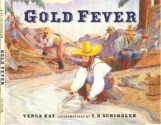
Beginnings are just as important in non-fiction as they are in prose. Here’s the evolution of my Gold Fever book beginning:
Moving westward,
Many miners.
People call them,
Forty-niners.
This was “okay,” but it didn’t reflect the flavor of the old west, didn’t tell how the miners were rushing to get out west before the gold was all gone and didn’t show how the people laughed at the miners. And I wanted all of that in the first verse. It took two years to find the “right” three words to make this verse work.
Dashing westward,
Many miners.
Townsfolk snicker,
Forty-niners.
What a difference those three words made in this beginning!
Every word must “sing” in a picture book, plus all your facts, your rhythm and your rhymes must be absolutely accurate when writing non-fiction rhyming picture books.
Rhythm & Facts
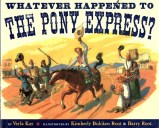
Rhythm in rhyming books of all kinds is where most rhyming books fail. If a sentence in your story doesn’t sound natural, like it would normally sound, then it shouldn’t be in your story. In Whatever Happened to the Pony Express? I had a horrible dilemma. My rhythm pattern for this story was:
DA da DA da,
da da DA.
DA da DA da,
da da DA.
No matter how I tried, I could NOT put the words, Pony Express, into my story, because the natural beat for them was: DA da da DA. (POny exPRESS). My solution? I put them into the title instead of the story.
In another of my books (Tattered Sails) I wrote about a family traveling from London to Boston in a 1600’s sailing ship. Here is the evolution of two verses in that story:
Crowded quarters,
Piled trunks.
Musty blankets,
Smelly bunks.
Piled is a tricky word. Is it pronounced with one or two syllables? This was my fix for it:
Crowded quarters,
Piles of trunks.
Musty blankets,
Smelly bunks.
But then… I discovered in my research that trunks were not in common usage on sailing ships until the 1700’s and my story took place in the 1600’s! So… I had to change this verse yet once again and since trunks was my rhyming word in that verse, I had to change the final line, also. After my changes it read like this:
Crowded quarters,
Candle-lamp.
Musty blankets,
Clothing, damp.
Rhythm & Making Words Sing
Foul water,
Slimy vats.
Wormy biscuits,
Lice and rats.
Again I had another tricky word to pronounce with the correct number of syllables – foul. This was my fix for it:
Tainted water,
Slimy vats.
Wormy biscuits,
Lice and rats.
Tainted is a two syllable word and it was a better, more descriptive and visual word than foul.
Broken Feather – the story of a Nez Perce boy – took eleven years to write!
Checking Facts
Many of the verses in this story had to be radically changed or cut altogether after I had it “fact-checked” by the Nez Perce tribe in Idaho and many of those changes left gaps in the story – creating MUCH rewriting:
Some Words changed or eliminated were:
Tepees – the Nez Perce lived in lodges most of the year, only using tepees when traveling to hunt during the summer months
Chiefs – the Nez Perce called them headmen or leadmen
Tomahawks & peace pipes – they weren’t “native” to the Nez Perce
The Ending of Broken Feather took 5 years to get “just right”
Reservation,
Barren, dry.
Broken Feather,
“Father, why?”
I loved this ending! But during fact checking I realized their reservation was not barren or dry, so it had to be changed. I changed it to:
Reservation,
Anguished cry.
Broken Feather,
“Father, why?”
This was a great ending for adults. Unfortunately, it did NOT work for kids! When I read it to a 5th grade class as a “test,” the children just sat there…waiting for the ending! So I added two more verses. The last one was the hardest of all to write.
Broken Feather,
Chanting loud.
We no give up,
Stand here proud.
As you can see, this is SO bad…. Although it was the “essence” of what I wanted to say in the last verse, the actual words are HORRIBLE and I would never have actually used them.
White clouds many,
Raindrops fall.
You stay proud, son,
Stand up tall.
This is a little better, but it still doesn’t do the job. The words are “okay” – but when writing picture books “okay” is just not good enough.
Broken Feather,
Standing tall.
We will bend — but —
Will not fall.
This is better. It’s much smoother and feels almost right, but again, “almost” is not perfect, and anything less than perfect is definitely not good enough.
Native warriors,
Chanting loud.
Broken Feather,
Standing proud.
This verse works! It says what I wanted to say using words that are powerful and evoke a strong image. It allows readers to “feel” what Broken Feather would have been feeling. This ending “sings.” Notice how closely it mirrors that first “bad” verse? Only two lines really changed – but what a difference those few words make in the story!
Broken Feather,
Chanting loud.
We no give up,
Stand here proud
Writing non-fiction rhyming picture books is truly an art and it cannot be rushed. Give it your all, make sure every single fact in your story is accurate, every beat is perfect, every line is filled with interesting facts and/or images, and every rhyme is perfect and you will have created something of which you can be extremely proud.
BIO
Verla Kay lives with her husband and two Himalayan cats in the state of Washington. She writes historical and non-fiction picture books in her own style of poetry she calls “cryptic rhyme.” She has had a total of eleven picture books published.
Verla Kay’s website, which she designed and maintains herself, has twice been named one of the 101 Best Websites for Writers by Writer’s Digest. She created and runs a message board, the Blueboard, which has become almost an “icon” for children’s writers and illustrators on the internet. In 2013, the Blueboard was acquired by SCBWI, but Verla still maintains it.
Verla is a former instructor for the Institute of Children’s Literature where she taught the basic “How to Write for Children” course. Since retiring from ICL in 2009, she has been concentrating on doing what she loves best – writing award-winning picture books, running her website, critiquing other writer’s manuscripts, giving author talks at schools and conferences, and giving back to children’s writers and illustrators by continuing to keep the Blueboard running smoothly for SCBWI.
WEBSITE
TWITTER @VerlaKay
Buy it Here
Buy it Here

Buy it Here

Buy it Here
Thank You Verla!
PLEASE like our guest bloggers on Facebook, follow them on Twitter, go to their websites and express your appreciation for their time and wisdom! Many have generously donated multiple prizes and this event would not be successful without their support, so please support them! Oh…and buy their books too!!

To be eligible for today’s prize drawing by Random.org you must comment at the bottom of the page where it says “Leave A Reply” AND add your FIRST and LAST name in the comment. If I don’t have your name or how to contact you via email, you can’t win.
You must be a member of the RhyPiBoMo Facebook Group and if you haven’t officially registered, you are not eligible to win.
Please follow the pledge rules daily to get the most out of this challenge!
The drawings will be done daily and announced on Wednesday of next week.
 Angie Karcher
what a great idea to bring quite “dull” history to life. History is fascinating but school books can kill it stone dead.
Verla, your books have always been a joy to read and share. Thank you for sharing your process. – Judy Rubin
I’m in awe of Verla Kay’s tight rhyme, and loved reading these examples with revisions. I also loved that she spelled out that it can take a LONG time to get a book in verse absolutely right. Great post! — Rebecca Colby
Jill Giesbrecht – Thanks for showing how you shape your lines. Non-fiction rhyming picture books are so fun!
Sue Morris
Wow, that is some post. I love seeing the progression of word choices. I knew it was difficult to perfectly rhyme, but had no idea how exponentially difficult non-fiction would become. Excellent post. Thank you, Vera.
How embarrassing. So very sorry VerLa. I really knew this, it’s just . . . my fingers have short attention spans. 😦
(Katelyn Aronson) Wow, Verla! Amazing how you not only painstakingly wrote each of those lines, but also how you kept track of the evolution of your poetry. Very helpful for the rest of us to see that process! Many thanks.
I love the concept of cryptic rhyme and found it hugely interesting reading your good and bad versions – thank you for sharing Verla.
Ramona Davey
That was so interesting! Thank you for sharing some examples of how your rhyme evolves.
Mona Pease
I”ve been a fan of Verla’s cryptic rhyme, forever! Thanks, Verla, for sharing so many of your tweaks and revisions. Great post!
Verla, I loved seeing your revisions and that is extremely helpful. Love your rhyme!
Great post and many thanks!
Like many others here, I’m a longtime fan of Verla’s cryptic rhyme. She was one of the writers who planted that early seed in my head about short, rhyming nonfiction. Thanks, Verla, for this awesome post, and for all you do for writers!
Cathy Lentes
Such great examples of working and reworking each line to get it just right. What persistence! And “cryptic rhyme,” what a fun description.
MaryLee Flannigan
Thank you Verla Kay for your blog today. I loved how you provided your 1st attempts and how you improved them to perfection.
Arin Wensley
Thank you for sharing the process you went through to get the perfect rhymes for your stories. It inspires me to take another look at my work. I love the idea of learning history through rhyme, perhaps I would’ve paid more attention.
Thank you so much for showing how your rhyme evolved. IT makes finding the “right words” harder – but when you do, WOW!
Thank you for sharing, Verla! This has been my favorite post so far! Seeing the progression of your writing from verses that were “okay” to ones that absolutely delight is SO helpful for this aspiring author. Such great, clear examples of the potential and power of tweaking even a few words. Can’t wait to check out these books and your website!
~Jen Garthe
Bravo, Verla! Thanks for showing us the difference between not good enough, good enough and BRILLIANT rhyme. Every one of your words –rhyming or not — sings with story. You are a rhyming master!
–Andria Rosenbaum
Verla, Thank you for sharing your process to create the best story, rhythm and rhyme. Each words is very important. And you make history entertaining for all ages. Manju Howard
David McMullin. Thank you so much, Verla, for this article. Using the examples was so helpful.
Thank you, Verla, for taking us on a learning journey as you took us through a revision of your writing! Your explanations and examples affirmed that writing is an ongoing process and it takes TIME to perfect your craft. We are so fortunate to have your books available to help bring history alive for children and adults alike. Today’s post is great!
Rosemary Basham
Wow! Just Wow!
Debbie Smart – Thank you, Verla, for sharing your knowledge and expertise with us! I love the Blueboards. I’ve met so many writing friends there! I LOVE this post! Thank you!
Kathy Mazurowski Great info. Thank you so much!
It was so helpful following your thought process for taking a perfectly acceptable rhyme to the next level and making it SING!
Anne Bielby — For me. This is the best post so far, rhyming nonfiction and great intro how to make it work. Thank you!
Pingback: Three Favorite Blog Posts from RhyPiBoMo 2016 - Linda Schueler
Verla, your generous description of your process is so helpful! Thank you for so much detail. You may not realize how much seeing your exact process helps another writer. Also, I’ve so loved the blueboards-found many answers there over the years. You’re a writer who truly pays it forward! Sherry Howard
Linda Hofke
I admire those who can write a GOOD rhyming nonfiction book. You do it time and time again. Thanks for sharing some examples from your work and the process you went through to find the perfect wording.
Maritza M. Mejia
Great ideas. Thank you Verla!
Mary Warth
Thank you Verla for such wonderful process examples!!
I can relate. Sure feels great when you get it right though!
Kirstine Call
Thanks Verla for sharing the revisions of your poetry. It’s such a great help to see the evolution of words and how a few changes make such a difference!
Wow! Very impressed with the hard work you put into making non-fiction, rhyming stories! Your blog was really helpful. Thank you. Pat Haapaniemi
Thanks, Verla! It was so helpful to hear about your process! I’ve just completed a rhyming picture book biography – and yes, balancing story, rhyme and historical accuracy felt like juggling cats! I will check out Blueboard – I’ve been an SCBWI member for several years and somehow missed this valuable resource! happy rhyming to you – Xoxo Susan Bernardo
Kristi Veitenheimer – I can’t begin to tell you how much this post helps! Seeing all of these examples brings the whole process to life and makes so much more sense than just “talking” about it. Thank you, Verla, for going taking the time and going into so much detail for us! Great guest post, Angie!
Shelley Kinder
Thank you, Verla, for sharing your journey. I loved reading all of your revisions in Broken Feather! Every non-fiction post I read gets me a little closer to TRYING to write a non-fiction story.
I so loved seeing the evolution of your edits. That is extremely helpful! Thank you for sharing!
Kristen Foote
Therese Nagi
Thank you Verla for sharing your revisions. I never realized that the amount of research and time that went into each of your books.
Thank you so much for sharing your before and after examples. So generous and so helpful!!
Daryl Gottier- Thanks so much, I’m a huge fan. Thanks for a window in to your process.
Your books sound lovely. I’m looking forward to reading them.
Thank you for your post. It helps me to see how your stories have evolved. You demonstrated how each word in a picture book counts. I will be viewing my own drafts with an improved eye.
Debbie McCue
Wow, Verla! This post was amazing. It is phenomenal how you showed the before and after verses and how being a diligent word smith can truly lead to the perfect rhythm and rhyme and evoke the perfect emotion.
My take home: persistence, perseverance, perfection.
Thanks,
Aimee Haburjak
Sara Gentry
Thank you for your insightful post. I particularly appreciated reading through the revisions and watching the progression. I was just able to reserve a few of your books at the library. I look forward to reading them!
Melissa Stoller —
Wow…what an incredible post. I loved seeing all your revision history and learning about how you strive for and achieve perfection with every word.
Thank you!
It was so helpful to see how your edits progressed, and how a few word changes can make a big difference.
Ann Kelley
Wow! and Wow! and Wow! Thank you very much for showing how much work goes into making outstanding rhyme. A few words make all the difference!
Donna Rossman:
Thank you so much, Verla, for sharing your revisions and your writing process!!! So very inspiring!!!
Wow! 11 years!! Thank you so much for giving us an insight into your writing process!
Patricia Toht
Verla Kay, you are a master at terse verse! I found it fascinating to read about the changes that you did after the fact-checking process. Thank you for a terrific post.
Deborah Allmand
Thank you Verla. It was so nice to see the progression of a manuscript. I love your books and own several.